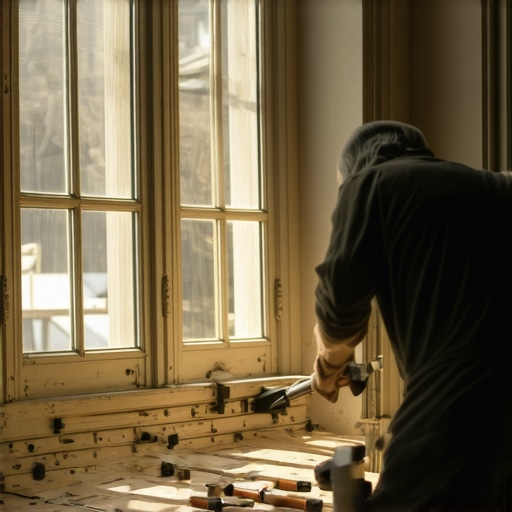
The Anatomy of a Failing Window: A Master Glazier’s Perspective
I recall a specific afternoon in a historic district of Chicago during a bitter January. A homeowner called me in a panic because their 19th-century sash windows were ‘sweating’ so much that water was pooling on the floor. I walked into that foyer with my hygrometer and a thermal camera. Within seconds, I showed them the interior humidity was spiked at 62 percent while the outside temperature was a brutal 5 degrees Fahrenheit. It was not the fault of the wood or the glass. It was a failure of the home’s envelope and a lack of understanding regarding the dew point. Those windows were not failing; they were simply the coldest surface in a house that was essentially a steam room. That is the reality of window repair: you must understand the physics of the hole in the wall before you touch a single muntin or glazing bead.
“The primary purpose of a window is to provide light and ventilation while acting as a barrier to the elements. Improperly sealed rough openings negate the thermal value of the glazing unit itself.” – ASTM E2112 Standard Practice for Installation of Exterior Windows
The Physics of Wood and Glass in Harsh Climates
When we talk about weather-beaten sash windows, we are talking about decades of expansion and contraction. In Northern climates, the enemy is heat loss and the subsequent condensation that rot induces. A sash is an operable component, and its relationship with the rough opening is governed by precise tolerances. If your sash is rattling, your U-Factor is effectively irrelevant because the air infiltration is doing all the thermal damage. The U-Factor represents the rate of heat loss. The lower the number, the better the window is at keeping heat inside. In an old sash, the glass is often a single pane of 1/8-inch float glass with a U-Factor of around 1.0. To restore these, we must look at the glazing compound. Over time, linseed oil putty loses its plasticizers, becomes brittle, and cracks. This creates a capillary path for water to reach the wood grain. Once moisture hits the end grain of the stile or rail, the rot begins. Window repair in this context is not just about aesthetics; it is about preventing the structural failure of the sash.
The Glazing Zoom: Why Modern Coatings Matter
Many homeowners think the only way to get efficiency is to replace windows entirely. That is often a fallacy pushed by high-pressure sales teams. We can achieve significant thermal gains by addressing the glass itself during a restoration. Modern Low-E (low-emissivity) coatings are designed to manage infrared radiation. In a cold climate, we want a coating on Surface #3. This reflects the long-wave infrared heat back into your living room while allowing the short-wave solar radiation to enter and provide passive heating. When a window cleaner scrapes away years of grime, they are often revealing glass that has been etched by hard water or environmental acids. If the glass is too far gone, we can retro-fit the sash with a Slim-IGU (Insulated Glass Unit) or a high-performance single pane with a hard-coat Low-E. This maintains the historic profile of the muntins while drastically reducing the radiant cold feeling that makes a room uncomfortable in winter.
The Installation Autopsy: Where the Rot Truly Starts
If you decide that the old sashes are beyond saving, you must understand the ‘Shingle Principle’ of installation. I have performed countless autopsies on 10-year-old ‘new’ windows that were completely rotted out. Why? Because the installer relied on a tube of caulk and the nailing fin. They ignored the sill pan. A sill pan is a flashing component that sits at the bottom of the rough opening, sloped to the exterior. If water bypasses the primary seal (which it eventually will), the sill pan catches it and directs it back out through weep holes. Without this, water enters the wall cavity, hits the header, and sits there. This is why a full-frame tear-out is often superior to a pocket replacement. In a pocket replacement, you are leaving the old, potentially compromised frame and just sliding a new box inside it. You are reducing your visible glass and potentially trapping moisture between the two frames.
“Installation is just as critical as the window performance itself. A high-performance window installed poorly will fail.” – AAMA Installation Masters Guide
Step-by-Step Restoration vs. Smart Replacement
To restore a weather-beaten sash, the process is methodical. First, we remove the sash from the weights and pulleys. We use an infrared heat stripper to remove the lead-based paint without vaporizing it. Then, we address the wood. If there is rot, we don’t just ‘caulk’ it. We use structural epoxies or perform a ‘Dutchman’ repair, where we cut out the diseased wood and glue in a new piece of seasoned lumber, usually Douglas Fir or White Oak for their rot resistance. Next comes the glazing. We apply a thin bed of modern glazing compound, set the glass with glazing points, and then pull a clean bead of putty. This bead must be allowed to skin over before painting, and the paint must lap onto the glass by exactly 1/16 of an inch. This ‘lap’ is the actual weather seal that prevents water from getting behind the putty. If you are a window cleaner, you know the frustration of seeing paint on the glass, but that tiny overlap is what keeps the window from rotting. If the wood is structurally compromised at the joints, that is when you look to replace windows with a material like fiberglass, which has a similar expansion coefficient to glass, ensuring the seals don’t break over time like they do in cheap vinyl units.
Conclusion: Precision Over Hype
Whether you are pursuing a meticulous repair or a total replacement, the technical details are what determine the lifespan of the project. Don’t be fooled by marketing speak about ‘gas fills’ that leak out over ten years. Focus on the flashing tape, the shim spacing, and the quality of the wood or composite frame. A window is a machine that operates in one of the most hostile environments: the boundary between your comfort and the chaos of the weather. Treat it with the engineering respect it deserves.