The Physics of Fenestration Failure
In twenty five years of hanging sash and squaring frames, I have seen every shortcut in the book. Most homeowners think a window is a static object, but it is actually a dynamic pressure vessel. When you have a draft or a suspected crack, you are not just looking at a cosmetic issue. You are looking at a failure of the thermal envelope. A window cleaner might notice a smudge that will not go away, but a master glazier knows that smudge is often internal condensation caused by a compromised seal. If you are wondering whether you need to repair or replace windows, the diagnosis starts with understanding how glass behaves under thermal stress. Glass expands and contracts. If the rough opening was too tight and the installer did not leave enough room for expansion shims, the frame squeezes the insulated glass unit, known as the IGU, until something gives.
The Condensation Crisis: A Master Glazier Narrative
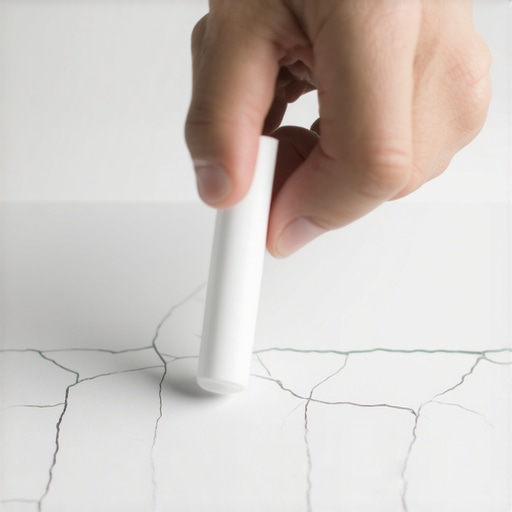
A homeowner called me in a panic because their new windows were ‘sweating’ and they were convinced the glass was cracked. I walked in with my hygrometer and showed them the humidity was 60 percent. It was not the windows; it was their lifestyle choices combined with a lack of mechanical ventilation. However, upon closer inspection with a piece of carpenter’s chalk, I found that the master bedroom window actually did have a hairline fracture. I ran the chalk over the surface of the glass, and the fine white dust settled into a microscopic fissure that was invisible to the naked eye. This crack was not from an impact. It was a thermal stress crack originating from the glazing bead where the glass had been nipped during a poor factory installation. This is the difference between a simple window cleaner observation and a technical autopsy of a window failure.
“Installation is just as critical as the window performance itself. A high-performance window installed poorly will fail.” AAMA Installation Masters Guide
The Chalk Test: Diagnostic Precision
Why use chalk? It is a low tech but highly effective method for identifying surface integrity. When you rub a piece of schoolroom chalk or a chalk line refill over a pane of glass and then lightly wipe the surface with a dry cloth, the calcium carbonate particles remain trapped in any depression. This is particularly useful for finding cracks in the outer lite of a double pane unit where reflections usually hide the damage. If you are deciding whether to perform a window repair or a full frame replacement, you must first locate the source of the air infiltration. Many times, the crack is not in the glass but in the secondary seal of the IGU. If the chalk test reveals a crack near the spacer bar, your argon gas fill has likely dissipated, and the window is now a liability to your heating bill. In cold climates like Chicago or Minneapolis, a compromised seal leads to a massive spike in the U-Factor, which measures the rate of heat transfer. A lower U-Factor is the gold standard for keeping the interior heat from escaping into the sub zero night.
The Anatomy of the Seal
Modern windows rely on a complex assembly of components. You have the sash, which holds the glass, and the muntins, which may provide structural or aesthetic grids. Within the IGU, you have the spacer, which separates the two panes of glass. Most high quality units use a warm edge spacer to reduce the dew point at the edge of the glass, preventing that telltale ring of frost in January. If you find a crack using the chalk method, you have broken the vacuum. Once the seal is gone, moisture enters the space between the panes. The desiccant inside the spacer can only absorb so much water before it becomes saturated. At that point, you get permanent foggy windows. You cannot simply clean this away. You must either replace the sash or the entire unit. When we talk about thermal performance, we are discussing the physics of Low-E coatings. In northern climates, we want the Low-E coating on surface number three to reflect long wave infrared radiation back into the room. A crack destroys this entire thermodynamic balance.
“The air barrier and water resistive barrier must be continuous across the window to wall interface to ensure long term durability.” ASTM E2112 Standard Practice
The Replacement Reality: Beyond the Chalk
If your chalk test confirms multiple cracks across several units, it is time to look at the frame material. Vinyl is a popular choice because it is budget friendly, but it has a high coefficient of thermal expansion. In areas with extreme temperature swings, vinyl can move so much that it loses its seal against the rough opening. Fiberglass is much more stable because it is made of glass fibers and resin, meaning it expands at the same rate as the glass itself. This reduces the stress on the glazing beads and the primary seals. When you replace windows, you are not just buying glass. You are buying an installation system. This includes the sill pan, which is a critical piece of flashing that sits at the bottom of the rough opening. Its job is to collect any water that gets past the primary seals and direct it out through the weep holes. Most ‘caulk and walk’ installers skip the sill pan, which is why so many windows fail within five years. They rely on a bead of sealant rather than the shingle principle of water management.
Water Management and the Shingle Principle
Water always wins. If your window does not have a proper drip cap at the head and a sloped sill at the bottom, gravity will eventually pull moisture into your wall cavity. The chalk test can also be used on the frame to find micro cracks in the mitered corners of vinyl windows. If the welder at the factory was not calibrated correctly, those corners can split. Once water enters the frame, it rots the wooden buck and the structural headers. I have seen headers turned to black mush because a simple window repair was ignored for too long. When we perform a full frame tear out, we expose the structural framing to ensure that the flashing tape is integrated with the house wrap. This creates a redundant drainage plane. If you are simply doing a pocket replacement where a new window is slid into an old frame, you are relying on the integrity of the old flashing. This is often a gamble that ends in mold. Always prioritize the management of the dew point within the wall assembly to prevent interstitial condensation.