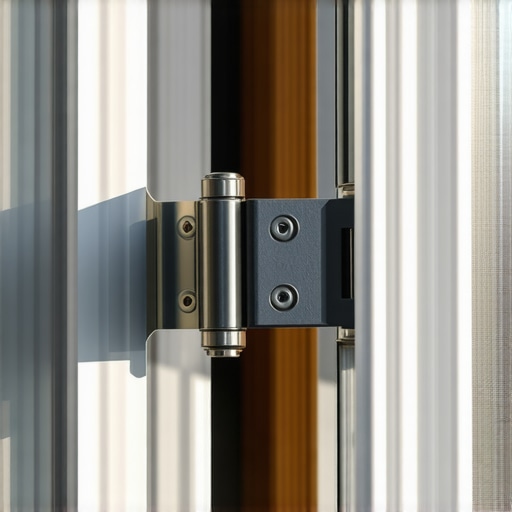
The Mechanical Reality of the High-Performance Sash
In the world of high-end fenestration, the casement window is the undisputed king of the thermal envelope. Unlike its cousin, the double-hung window, which relies on a sliding friction fit, the casement window utilizes a compression seal. When you turn that crank, you are pulling the sash against a bulb seal, creating an airtight barrier. However, that barrier is only as good as the mechanical hardware that drives it. If your hinges are grinding, sticking, or resisting the operator arm, you are not just fighting physics; you are compromising your home’s structural integrity. Many homeowners think a window is a static object, but an operable casement is a precision machine that requires the same respect you would give a fine timepiece.
A Narrative of Failed Expectations: The Condensation Crisis
A homeowner called me in a panic because their new windows were ‘sweating.’ I walked in with my hygrometer and showed them the humidity was 60%. It wasn’t the windows; it was their lifestyle, combined with a mechanical failure. They had stopped fully closing their casements because the hinges had become so stiff. Because the windows weren’t pulling tight against the weatherstripping, cold air was leaking in, cooling the glass surface below the dew point. This created a cycle of moisture and ice. The solution wasn’t to replace windows but to perform a deep-clean and lubrication of the hinge tracks. They were ready to spend ten thousand dollars on a problem that was solved with ten cents worth of the right lubricant. This is why understanding the mechanics of your sash is vital.
“Installation is just as critical as the window performance itself. A high-performance window installed poorly will fail.” – AAMA Installation Masters Guide
The Anatomy of Casement Hardware
To properly maintain a window, you must understand what you are looking at. The casement hinge is not a simple door hinge. It is usually a 4-bar linkage or a sliding track system. The sash is supported by a hinge shoe that slides along a stainless steel track. When the window is opened, the geometry of the bars determines the swing path. If dust, pollen, or construction debris enters this track, it acts as an abrasive. This increases the torque required to move the window, which eventually strips the gears in the operator or bends the linkage. This is where window repair costs start to skyrocket. We often see homeowners using a heavy-duty window cleaner that actually strips the factory-applied grease from these tracks, leaving the metal vulnerable to oxidation.
The Chemical Science of Lubrication
Stop reaching for the blue and yellow can of multi-purpose spray. In the glazing industry, we call that a ‘solvent,’ not a lubricant. It might free up a stuck hinge temporarily, but it will evaporate quickly and leave the metal drier than before. For a professional-grade window repair, you need a lubricant that stays put and resists the elements. I recommend a dry-film Teflon or a high-quality silicone spray. In extreme environments, a small amount of white lithium grease on the pivot points is acceptable, but be warned: grease attracts dirt. In a dusty environment, that grease will turn into a grinding paste that will eat through your glazing bead and hardware finishes.
Climate Impact: Why U-Factor Depends on Your Hinge
In Northern climates like Chicago or Minneapolis, the U-Factor is the most important metric on your NFRC label. A low U-Factor means the window is excellent at resisting heat loss. However, that rating is tested in a lab with a perfectly sealed window. If your hinges are so stiff that the multi-point locking system cannot fully engage, your real-world U-Factor is useless. Cold air will bypass the seals, and your Surface #3 Low-E coating won’t be able to do its job of reflecting heat back into the room. A well-oiled hinge ensures that the rough opening remains protected from the thermal bridging that occurs when a window sits slightly ajar. We want that sash to compress the seals by at least 25 percent to ensure the argon gas fill stays effective at reducing radiant heat transfer.
“Air leakage is a primary factor in the degradation of a building’s thermal envelope, often exacerbated by the failure of operable hardware to maintain seal compression.” – ASTM E2112 Standard Practice
Step-by-Step Maintenance Protocol
First, open the window to its maximum extent. Use a vacuum with a crevice tool to remove any dead insects or grit from the sill pan and the hinge tracks. Next, use a damp cloth to wipe down the stainless steel track. Inspect the weep hole at the bottom of the frame to ensure it is not clogged; a clogged weep hole leads to standing water, which is the natural enemy of your hardware. Once the track is clean, apply your dry-film lubricant to the sliding shoe and the pivot points of the arms. Do not over-lubricate. One or two drops are sufficient. Operate the window several times to distribute the film. You should notice a significant decrease in the effort required to turn the handle. If the window still feels tight, you may have a shim that has shifted in the rough opening, causing the frame to bow. This is a structural issue, not a lubrication issue.
When Lubrication Isn’t Enough: Knowing When to Replace Windows
There comes a point where no amount of oil will save a window. If you see ‘pitting’ on the metal, which looks like small craters, the protective plating has failed. If the sash is sagging to the point that it hits the frame when you try to close it, the hinges are likely bent or the screws have pulled out of the substrate. In these cases, window repair might be a temporary fix, but it is often more cost-effective to replace windows with modern units that feature heavy-duty 400-series stainless steel hardware. Modern fiberglass frames, for instance, offer much better stability than old vinyl, meaning your hinges won’t be stressed by the constant expansion and contraction of the frame material.
The Role of the Installer
A master glazier knows that the hinge is the pivot point of the entire home’s comfort. We don’t just ‘caulk and walk.’ We ensure the window is level, plumb, and square within 1/16th of an inch. If the frame is ‘cross-cabled’ or out of square, the hinges will always bind. This is why the ‘shingle principle’ of water management and proper flashing tape application is so important. If water gets behind the frame because of poor flashing, it will eventually rot the wood buck or rust the hardware from the inside out. Your maintenance routine is the final layer of defense for a system that starts at the rough opening.
Final Thoughts on Hardware Health
Maintaining your casement windows is a technical task, not a chore. By ensuring that your operable units move freely, you are protecting your investment and your utility bill. Whether you are in a humid coastal zone fighting salt spray or a frigid northern zone fighting ice, the mechanical health of your sash is the key to a high-performance home. Don’t wait for the handle to snap off in your hand. Clean those tracks, choose the right lubricant, and keep your home’s thermal envelope intact. If you find yourself struggling with hardware that refuses to cooperate, it may be time to consult a professional for a comprehensive window repair or to discuss the benefits of a full-frame replacement.