The Truth About DIY Double Glazing Repair Kits: Technical Reality vs Marketing Myths
There is a specific kind of frustration that comes with looking through a window and seeing a permanent veil of mist. It is not on the outside where a window cleaner could reach it, and it is not on the inside where you can wipe it away with a towel. It is trapped. This is the death knell of an Insulated Glass Unit (IGU). In my twenty five years as a master glazier, I have seen every shortcut in the book. A homeowner recently called me in a panic because their new windows were sweating. I walked in with my hygrometer and showed them the humidity was 60 percent. It was not the windows; it was their lifestyle choices combined with a lack of proper ventilation. They were about to buy a DIY defogging kit, thinking it would solve the problem. I had to explain that drilling holes into a sash is like trying to fix a flat tire by poking more holes in it to let the air circulate. You might clear the mist, but you have destroyed the performance of the unit.
The anatomy of a modern double glazed window is a feat of engineering that many homeowners take for granted. We are talking about two panes of glass separated by a spacer bar, usually containing a molecular sieve desiccant. This desiccant is designed to suck up any microscopic amounts of moisture that were present during the manufacturing process. The perimeter is then sealed with a primary seal of polyisobutylene (PIB) and a secondary seal of silicone or polysulfide. When you see condensation between the panes, it is a signal that this hermetic seal has failed. The desiccant has reached its saturation point. In the trade, we call this a blown unit. At this stage, the window is no longer providing the thermal resistance it was designed for. While many search for a window repair solution that involves a window cleaner or a cheap kit, the physics of the situation are much more complex.
“The durability of the perimeter seal is the primary factor in the life expectancy of an insulating glass unit. Once the seal is breached, the thermal performance is permanently compromised, and the unit no longer meets the initial design specifications for energy efficiency.” – NFRC Performance Standards Guide
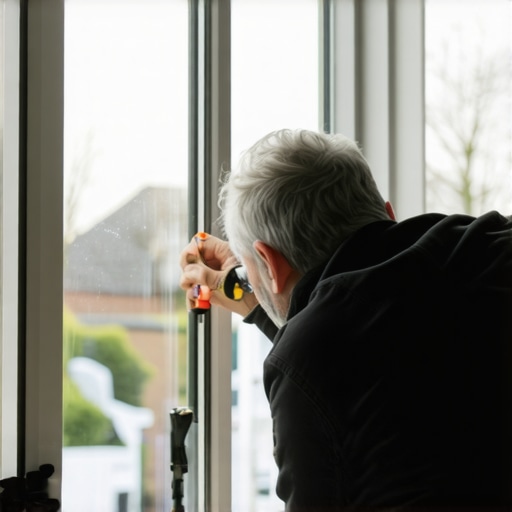
In cold northern climates like Chicago or Minneapolis, the U-Factor is the most important number on your NFRC label. This number represents the rate of heat loss. A failed seal turns your high performance window into a thermal liability. The DIY kits marketed online suggest that you can drill a small hole in the glass, spray a cleaning solution inside, and then install a tiny one way valve or vent. From a glazier’s perspective, this is scientific heresy. By drilling that hole, you are introducing a permanent path for air exchange. You are essentially turning your insulated window into a single pane window with a secondary glass layer that has a hole in it. The argon or krypton gas that was once trapped inside, which provided superior thermal resistance, is long gone. The convective loop within the gap is now unregulated, leading to massive heat loss during the winter months.
We must also discuss the phenomenon of solar pumping. Throughout the day, the air or gas inside the IGU heats up and expands, causing the glass to bow outward. At night, it cools and contracts, causing the glass to bow inward. This constant movement puts immense pressure on the glazing bead and the primary seal. If you have drilled a hole and installed a vent, you are allowing outside air, which contains moisture, to be sucked into the unit every single night. Over time, this moisture will corrode any Low E coatings on the internal surfaces of the glass. Low E coatings are microscopically thin layers of metal, usually silver, that reflect long wave infrared radiation. When exposed to fresh air and humidity via a DIY vent, these coatings will oxidize and turn a nasty shade of brown or purple, a process known as edge deletion failure. At that point, no amount of window repair will save the glass; you will be forced to replace windows entirely.
“Installation is just as critical as the window performance itself. A high-performance window installed poorly or modified in the field will fail to provide the intended thermal envelope protection.” – AAMA Installation Masters Guide
The rough opening of your window is another area where DIY enthusiasts often fail to understand the complexity. If you are considering replacing windows because of failed seals, you must ensure the sill pan is properly integrated with the flashing tape. Water management is a science. A window is a hole in your building envelope, and the only thing keeping your muntins and headers from rotting is a properly executed shingle principle where every layer overlaps the one below it. Many people think they can just shim a window into place and slap some caulk on the outside. We call these caulk and walk installers, and they are the reason I spend half my year doing forensic repairs on five year old homes. If the weep holes in the frame are blocked or if the window is not level, water will back up into the operable parts of the frame and eventually find its way into your wall cavity.
For those in the South where the sun is the primary enemy, the logic shifts to the Solar Heat Gain Coefficient (SHGC). If your seal fails in a place like Phoenix, you are not just losing the gas; you are losing the ability of the window to keep the radiant heat out. DIY kits do nothing to restore the SHGC. In fact, by removing the gas and introducing oxygen, you are speeding up the degradation of the coatings that reflect the sun’s energy. This leads to higher cooling bills and faded furniture. When you replace windows, you are investing in a thermally broken system that acts as a barrier. A DIY kit is a cosmetic fix for a structural and thermal problem. It is like painting over rust on a bridge. It might look better for a few months, but underneath, the integrity is still failing.
Ultimately, the choice between a temporary fix and a permanent solution comes down to value. A DIY kit might cost sixty dollars, but it leaves you with a window that has zero insulating value. A professional IGU replacement, where a glazier removes the glazing bead, takes out the failed glass unit, and drops in a new, factory sealed unit, restores the window to its original performance. This is far cheaper than a full frame replacement and much more effective than a drill and vent kit. Do not be fooled by the marketing. If your windows are fogging, skip the window cleaner and the drill bits. Call a professional who understands the difference between a shim and a sill pan. Your home’s envelope depends on it.