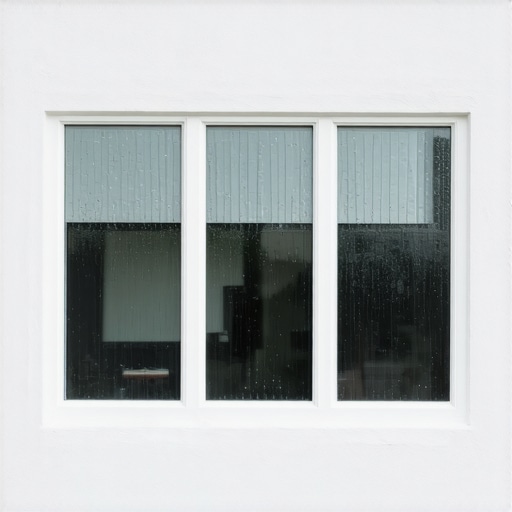
The Subterranean Moisture Mystery: Beyond the Surface
In my 25 years of standing in muddy trenches and analyzing the thermal performance of building envelopes, I have learned that a window is never just a window. It is a complex thermal bridge that serves as the frontline in a constant battle against the laws of thermodynamics. When a homeowner calls me about dampness in their lower level, they usually expect a simple leak. However, the reality is often found in the invisible physics of psychrometrics. A homeowner called me in a panic because their new basement windows were ‘sweating.’ I walked in with my hygrometer and showed them the humidity was 65 percent in a room where the air temperature was 60 degrees. It was not the windows that were failing; it was their lifestyle and the inherent thermal characteristics of a ground-coupled space. The windows were simply the first surface to reach the dew point.
The Physics of Condensation on the Glazing Surface
To understand why your basement windows are damp, we must look at the U-Factor and the Condensation Resistance (CR) rating. In a basement, the glass is often inches away from earth that stays a constant 50 to 55 degrees. This creates a massive temperature differential. If your basement air is 70 degrees with a relative humidity of 50 percent, the dew point is approximately 50.5 degrees. If the center-of-glass temperature on that window drops below that mark, moisture will manifest. This is Glazing Zooming in action: we are talking about the molecular transition of water vapor into liquid phase at the boundary layer of the glass. Using a quality window cleaner might remove the aesthetic mess, but it does nothing to alter the thermal conductivity of the sash or the glazing bead.
“Installation is just as critical as the window performance itself. A high-performance window installed poorly will fail.” – AAMA Installation Masters Guide
The Anatomy of Basement Window Failure
Often, the problem is not condensation but actual water infiltration through the rough opening. Many builders skip the sill pan in basement installations, assuming the concrete is an impenetrable barrier. It is quite the opposite. Concrete is porous. Without a properly integrated flashing tape and a sloped sill pan, water that hits the exterior siding or masonry drains directly into the rough opening. I have seen countless operable hopper windows where the weep hole is clogged with mulch or debris, forcing water to back up over the internal dam and onto the basement floor. This is why a simple window repair often requires a full excavation of the exterior drainage plane.
The Thermal Trap: Why Metal Frames Fail
If you have old steel or aluminum frames in your basement, you are essentially living with a thermal radiator that works in reverse. These materials have extremely high conductivity. In a cold climate like Chicago or Minneapolis, that metal frame will always be the coldest part of the wall. This is where replace windows becomes a necessity rather than a suggestion. Modern vinyl or fiberglass frames use multi-chambered designs to trap air, which acts as an insulator. When we replace windows in these environments, we look for units with warm-edge spacers. Traditional aluminum spacers between the glass panes act as a thermal bridge, causing the edges of the glass to be significantly colder than the center, which leads to perimeter condensation and eventual mold growth on the sash.
“The thermal performance of a fenestration product is significantly impacted by the conduction through the frame and the edge-of-glazing area.” – NFRC 100 Procedure
The Solution: Comprehensive Water Management
True resolution requires a three-pronged approach. First, you must manage the interior environment. A dehumidifier is your best friend in a basement. Second, you must ensure the rough opening is managed correctly. This means checking that the shim placement allows for proper expansion and contraction without compromising the sealant joint. Third, look at the exterior grade. If water is pooling near the window, no amount of flashing tape will save you from hydrostatic pressure. We often install a custom-bent drip cap over the top of the window to direct water away from the head casing. This is the difference between a master glazier and a common installer. We do not just slap on some caulk and walk away. We manage the flow of energy and moisture. If you are considering a window repair, check the glazing bead for signs of seal failure. If the vacuum between the panes is gone, the argon gas has escaped, and your insulating value has plummeted. At that point, the window is no longer a barrier; it is just a cold piece of glass waiting to get wet.
Technical Breakdown of Window Ratings
When selecting new units for a damp basement, ignore the marketing jargon. Focus on the NFRC label. You want a low U-Factor (0.27 or lower) to keep the interior glass surface warm. You also want a high Visible Transmittance (VT) because basements are naturally dark, but be wary of the Solar Heat Gain Coefficient (SHGC) if you have large egress windows. In cold climates, a higher SHGC can actually help warm the space in the winter, but in a basement, the priority is almost always preventing the glass from reaching that critical dew point temperature. Proper shim leveling and the use of high-quality closed-cell backer rod before applying sealant ensures that the perimeter of the window is as airtight as the glass itself. This prevents air leakage, which is a major contributor to localized condensation spots.