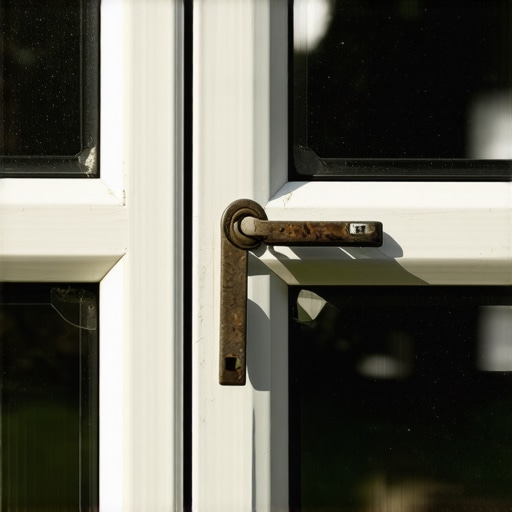
The sound is unmistakable to anyone who has spent twenty five years in the glazing trade. It is a dry, metallic grinding followed by a sudden, sickening lack of resistance as the handle spins freely in your palm. To the average homeowner, a stripped window handle is a minor annoyance, but to a master glazier, it is a diagnostic indicator of a systemic failure within the fenestration unit. When you feel that spline give way, you are not just looking at a broken piece of zinc hardware; you are witnessing the result of physics, friction, and often, a failure of the original installation. I once walked into a luxury residence where every single operator handle was stripped on the south facing wall. The homeowner was convinced the hardware was defective. I walked over with my digital level and discovered the truth: the house had settled, the rough opening was out of square by nearly three quarters of an inch, and the sash was dragging against the frame. They were trying to force a rectangular sash into a trapezoidal hole. Every time they cranked the handle, they were fighting a war against gravity and structural movement, and the handle lost every time.
“Installation is just as critical as the window performance itself. A high-performance window installed poorly will fail.” – AAMA Installation Masters Guide
The Anatomy of the Failure: Splines and Spindles
To understand why your handle is spinning, you must understand the interface between the handle and the operator. Most residential casement and awning windows utilize a worm gear operator. The handle is typically a die cast zinc alloy, which is a relatively soft metal. This handle fits over a hardened steel spindle protruding from the operator mechanism. This spindle is covered in tiny teeth called splines. In the glazing world, we deal with specific counts, usually an 11/32 inch or 3/8 inch spline. When you turn the handle, the soft zinc splines of the handle grip the hard steel splines of the spindle. If the sash is moving freely, the torque required is minimal. However, if the sash is stuck due to frozen weatherstripping, a lack of lubrication, or a racked frame, the torque increases. Because the handle is softer than the spindle, the spindle acts like a lathe, effectively machining away the zinc teeth inside the handle until it is smooth. Once those splines are gone, no amount of tightening the set screw will restore the connection. You are left with a handle that spins and a window that stays shut. This is why proper window repair starts with diagnosing the resistance, not just replacing the handle.
The North Climate Factor: Why Cold Weather Kills Hardware
In colder regions like Minneapolis or Chicago, the enemy of window hardware is thermal contraction and ice. During a deep freeze, the moisture in the air can condense on the exterior glazing bead and seep into the tracks or the weep holes. If that moisture freezes, it creates a mechanical bond between the sash and the frame. Furthermore, the U-Factor of your window dictates how much heat is lost through the glass. Low-E coatings on Surface #3 are designed to reflect heat back inside, but the edge of the glass remains the coldest point. If you do not have warm edge spacers, condensation forms at the base of the sash, drips into the operator track, and freezes solid. When a homeowner attempts to open an operable window that is frozen shut, the force they apply to the handle is translated through a gear ratio that can multiply that force ten times. The gear remains stationary, the sash remains frozen, and the handle splines are the sacrificial lamb in this mechanical struggle. This is why it is critical to ensure your windows are clear of ice and that the weatherstripping is supple before attempting to operate them in sub-zero temperatures.
[image_placeholder_1]
Diagnosing the Root Cause Before You Repair
Before you go searching for a replacement handle, you must determine why the original one failed. Is it simple age, or is there a mechanical obstruction? Start by removing the stripped handle. Usually, there is a small set screw on the base of the handle that requires a flathead screwdriver or an Allen wrench. Once the handle is off, look at the spindle. If the spindle teeth are clean and sharp, the problem is just the handle. If the spindle is rounded off, you are looking at a full operator replacement, which involves removing the wood trim or the vinyl glazing bead to access the mounting screws. Next, attempt to turn the spindle with a pair of pliers. If it moves easily and the sash glides open, you are in luck. If it is difficult to turn, the issue lies in the tracks. This is where a professional window cleaner or maintenance tech comes in. Over years, dust, pet hair, and environmental debris accumulate in the stainless steel tracks. This debris mixes with the factory grease to create a thick, abrasive paste that increases friction. Regular maintenance with a specialized window cleaner and a dry PTFE lubricant can prevent the torque buildup that leads to stripped hardware.
“Standard practice for installation requires that all operable parts be maintained and lubricated to ensure long term performance and water shedding capabilities.” – ASTM E2112
The Step by Step Fix for a Stripped Handle
If you have determined that the operator is still functional, the fix is straightforward but requires precision. First, identify the manufacturer. Look for names like Truth, Caldwell, or Roto stamped on the operator arm. Not all 11/32 inch splines are created equal, and the offset of the handle matters for clearance against the windowsill. Once you have the correct replacement part, clean the spindle with a wire brush to remove any zinc shavings left behind by the old handle. Slide the new handle onto the spindle. Ensure it is seated fully. If the handle has a set screw, ensure it aligns with the flat spot on the spindle if one exists. Tighten the screw firmly but do not over torque it. If your window is a casement style, check the snubber and the hinges. If the hinges are dry, the operator has to work harder. Apply a few drops of high quality machine oil to the pivot points. If the window still feels heavy, you might need to adjust the shims in the rough opening. A window that was installed without a proper sill pan or one that was nailed too tightly through the fin can become distorted over time, leading to the exact friction that strips handles.
When Window Repair Isn’t Enough: The Case for Replacement
There are times when a stripped handle is the final warning sign of a window that has reached the end of its life. If you find yourself performing the same window repair every two years, it is time to look at the frame. If the frame is wood and you see black rot at the corners, the structural integrity is gone. If it is a vinyl window and the corners have cracked due to extreme thermal expansion, the sash will never sit square in the frame again. In these cases, you should consider the ROI of to replace windows entirely. Modern fiberglass frames offer a much higher resistance to thermal movement than vinyl, and their strength allows for thinner profiles and more glass area. When you replace windows, you aren’t just getting a new handle; you are getting a modern glazing system with better SHGC ratings and improved U-Factors that reduce the thermal stress on the hardware. Remember, a window is a hole in your thermal envelope. If the hardware is failing, the envelope is likely compromised as well. Don’t just keep replacing handles on a sinking ship; sometimes the most professional thing you can do is recognize when the system has failed beyond the point of a simple fix.