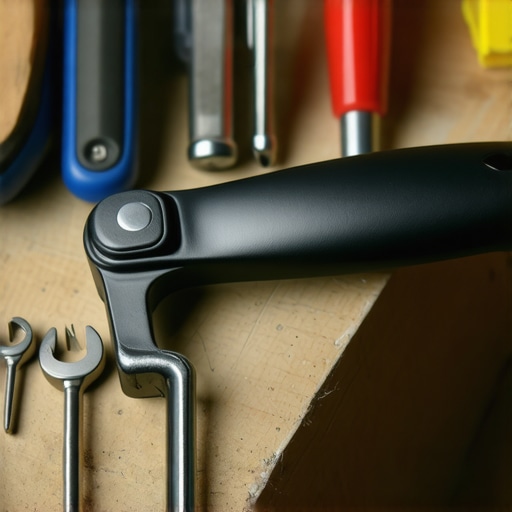
The Mechanical Autopsy of a Stripped Casement Operator
You turn the handle and you feel that sickening lack of resistance. The handle rotates but the sash remains stubbornly stationary. In my twenty-five years of glazing, I have seen homeowners resort to everything from vice-grips to duct tape to secure an operable window that has lost its mechanical connection. This isn’t just a nuisance; it is a breach in your home’s thermal envelope. A window that cannot be tightly cranked against its weatherstripping is a window that is actively failing its U-factor rating. I recall sitting across from a homeowner who had been told by a high-pressure salesman that his entire north-facing casement array needed a full-frame replacement because the cranks were ‘shot.’ The quote was fifteen thousand dollars. I walked over with a flat-head screwdriver and a hex key, spent ten minutes tightening a set screw and lubricating the tracks, and saved him the cost of a used car. The ‘Tin Man’ salesman didn’t know the difference between a stripped spline and a structural failure, or more likely, he didn’t care.
“Installation is just as critical as the window performance itself. A high-performance window installed poorly will fail.” – AAMA Installation Masters Guide
To understand why your window crank is spinning, we have to look at the physics of the operator. Most casement windows utilize a worm gear system. When you turn the handle, you are rotating a worm gear that drives a larger gear attached to the operator arm. This arm then slides along a track on the bottom of the sash. The point of failure is usually at the connection between the handle and the operator stud, known as the spline. The spline is a series of small grooves designed to lock the handle to the stud. If the window is difficult to open because of paint-binding, dirt in the tracks, or a sash that has dropped out of square in the rough opening, the user applies excessive torque. This torque eventually shears off the soft metal teeth inside the handle or on the operator stud itself.
Phase 1: Diagnosing the Spline and Handle Integrity
Before you consider a window repair or decide to replace windows entirely, you must isolate the component that has failed. Remove the handle by loosening the set screw located at its base. Inspect the interior of the handle. If the grooves are worn smooth, the handle is your culprit. This is the best-case scenario. However, if the teeth on the operator stud are flattened, you are looking at a full operator replacement. In cold climates like Chicago or Minneapolis, this hardware failure often happens in late autumn. Moisture trapped in the track freezes the sash to the frame; the homeowner tries to force it open, and the mechanical link is the first thing to snap. This is why a regular window cleaner should be instructed to clear the weep holes and tracks of debris every season. A clean track reduces the friction coefficient, meaning less torque is required to move the sash, which preserves the life of the gear teeth.
Phase 2: Inspecting the Operator Arm and Track
If the handle and spline look healthy but the window still spins, the issue lies deeper in the gearbox or the linkage. Open the window manually if possible. You may need to go outside and gently pull the sash while someone turns the crank. Once open, inspect the operator arm. Is it still attached to the track on the sash? Often, the nylon slider at the end of the arm has cracked or popped out. If the slider is intact, look at the gearbox itself. If you see metal shavings or if the stud moves in and out when pulled, the internal worm gear has stripped. At this point, no amount of lubricant will save it. You must unbolt the operator from the sill and install a new unit. When doing this, ensure the new unit is compatible with your specific brand of window. Not all operators are created equal; the gear ratios and arm lengths vary significantly between manufacturers.
[image_placeholder]
The Thermal Logic of a Tight Seal
In northern climates, the primary enemy is heat loss. A casement window is designed to be pulled tight against the bulb seal. This compression is what achieves the window’s rated U-factor. When an operator is failing, it often fails to provide that final millimeter of compression. This allows cold air to infiltrate, lowering the interior surface temperature of the glass and reaching the dew point. Once you hit the dew point, condensation forms on the glazing bead. If left unchecked, this moisture wicks into the wood or rots the drywall under the sill. This is where the physics of ‘warm-edge’ spacers and Low-E coatings come into play. A window that won’t close properly renders even the most expensive triple-pane glazing useless. You are essentially trying to heat the outdoors through a mechanical gap.
“The standard practice for installation and maintenance requires that all operable hardware be maintained to ensure the air barrier remains intact.” – ASTM E2112 Standard Practice
Maintenance and Prevention: The Glazier’s Secret
To prevent future hardware failure, you must treat your windows like any other mechanical system in your home. Use a dry silicone spray on the tracks and the operator arm. Avoid heavy greases that attract dust and grit, which act like sandpaper on the nylon sliders. If you find that your sash is dragging on the sill, it’s not a crank problem; it’s a shim problem. Over time, the house may settle, or the rough opening may shift, causing the window to lose its squareness. You may need to adjust the hinges to lift the sash. This is a technical task that requires understanding how to move the ‘toe’ and ‘heel’ of the sash within the frame. If the sash is not square, the operator has to fight gravity and friction every time it moves, leading to the ‘spinning crank’ syndrome.
When Repair Transitions to Replacement
There comes a point where window repair is no longer the most cost-effective path. If the operator has failed because the wooden sash has rotted at the corners, there is nothing for the new hardware to bite into. If you see ‘fogging’ between the panes of glass, your seal has failed. In these cases, it’s time to replace windows. When you do, look for fiberglass frames. Fiberglass has a similar expansion coefficient to glass, meaning the frame and the glazing move together during thermal cycles. This puts significantly less stress on the hardware and the seals compared to vinyl, which expands and contracts aggressively, often leading to the very mechanical failures we are trying to fix today. Do not be swayed by marketing jargon; look at the NFRC label and focus on the air infiltration rating. A window is only as good as its ability to stay closed and locked.