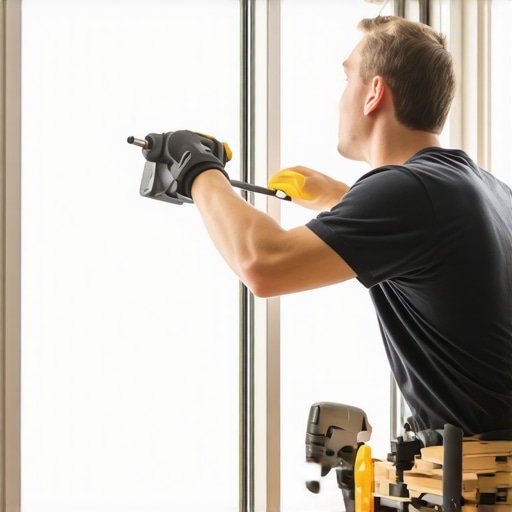
The High Cost of a Crooked Frame
In my twenty five years as a master glazier, I have seen multimillion dollar homes ruined by a five cent mistake. Most people think a window is a static object, but it is actually a dynamic thermal barrier that must withstand wind loads, thermal expansion, and the relentless pull of gravity. When a window frame is crooked, the entire system fails. The sash no longer meets the weatherstripping with uniform pressure, the locking mechanism undergoes mechanical stress, and the air infiltration rate skyrockets. I am not talking about a little draft. I am talking about a measurable loss in the thermal efficiency of the home, where the U-Factor of a high performance window is effectively negated by a poor install. If you are doing a window repair or a full replace windows project, the difference between a window that lasts fifty years and one that leaks in five is the shim. This $3 shimming trick is the secret to ensuring your rough opening does not become a gateway for rot.
The Narrative Matrix: A Detroit Lesson in Structural Failure
I pulled a vinyl window out of a house in Detroit and the header was completely black with rot. Why? The previous installer relied on the nailing fin instead of proper flashing tape and forgot the most basic rule of gravity: water always finds the low point. The window had been installed without shims on a sill that sloped toward the interior. Over three winters, the freeze-thaw cycle pushed moisture behind the cladding, and because the frame was racked about a quarter inch out of square, the weep holes were blocked by the trim. The homeowner thought they needed a window cleaner to fix the fogging, but the fogging was actually moisture trapped in the wall cavity. That $3 pack of composite shims would have saved them $12000 in structural repairs. This is why we never caulk and walk. We level, we plumb, and we square.
“Installation is just as critical as the window performance itself. A high-performance window installed poorly will fail.” AAMA Installation Masters Guide
The Physics of the Rough Opening
To understand why shimming matters, you have to understand the rough opening. A rough opening is rarely perfect. Wood dries, headers sag, and studs bow. When you drop a new unit into that space, you are placing a rigid rectangle into an irregular polygon. If you simply screw the window into the studs, you will bow the jambs. This creates a gap between the sash and the frame. In cold climates like Chicago or Minneapolis, this is a disaster. The U-Factor, which measures the rate of heat loss, depends on a tight seal. When the frame is bowed, you get air infiltration. Cold air enters the house, hits the warm interior glass, and reaches the dew point. This results in condensation, mold, and eventual wood rot. A shim acts as the bridge between the imperfect house and the perfect window. It allows you to transfer the weight of the glass to the structural framing without distorting the window geometry.
The $3 Shimming Trick: Opposing Wedge Mechanics
The trick is not just shoving a piece of wood into a gap. True professionals use composite shims because wood shims compress and rot over time. The trick involves the opposing wedge technique. You take two shims and slide them against each other from opposite sides of the frame. This creates a flat, parallel surface that supports the window without putting a twist into the jamb. If you only use one shim, you are creating a point load that will eventually cause the frame to rack. You must place these pairs at every screw location. This ensures that when you tighten the fastener, you are not pulling the frame toward the stud; you are compressing the shim. This maintains the integrity of the weatherstripping seal. For an operable sash, this is the difference between a window you can open with one finger and one that requires two hands and a prayer. If the frame is not square to within one sixteenth of an inch, the constant force balances or the casement gears will wear out prematurely.
“Fasteners shall be located to ensure the window is secured to the structural member without compromising the air and water barrier.” ASTM E2112 Standard Practice
Thermal Logic in Cold Climates
In Northern regions, the enemy is heat loss. Every gap in your window install is a thermal bridge. When we use the shimming trick, we create a consistent gap that can be filled with low expansion closed cell foam. Do not use high expansion foam, as it will bow the jambs just as badly as a misplaced screw. The goal is to create a continuous air barrier. When the window is level and the shims are properly placed, the sash sits perfectly in the frame. This allows the Low E coating on surface number three of the glass to do its job. It reflects the long wave infrared radiation back into the room. If the window is crooked, the air seal is broken, and no amount of expensive glass will keep the room warm. The air will simply flow around the insulated glass unit. This is why window repair often requires a full re-shimming of the unit rather than just replacing the glass.
The Role of the Window Cleaner and Maintenance
Even the best window cleaner will tell you that a crooked window is a maintenance nightmare. When a frame is racked, water does not flow toward the weep holes. Instead, it pools in the tracks. This water mixes with dust and debris, creating a sludge that clogs the drainage system. Eventually, this water overflows the interior dam and enters the subfloor. By using our shimming trick to ensure the sill is perfectly level, you allow the window to self-clean. The weep holes function as designed, and the window cleaner only has to worry about the glass, not the mold growing in the hardware tracks. A properly leveled window also reduces the stress on the glazing bead, which prevents the seal from failing and the gas fill from leaking out.
How to Implement the Trick: Step by Step
- Verify the Rough Opening: Use a six foot level to check the sill. If it is more than an eighth of an inch out of level, you must start with a base shim.
- The Horseshoe Placement: Place your composite shim pairs at the corners and then every twelve inches. Never place a shim directly under the center of a large window; it can cause the sill to bow upward.
- Check the Diagonals: This is the most important part of the trick. Measure from the top left corner to the bottom right, then the top right to the bottom left. If these two numbers are not identical, your window is a parallelogram, not a rectangle. Adjust your shims until they match.
- The Fastener Tension: Tighten your screws until they just touch the shim. Do not over-drive them. The shim is there to provide the resistance.
Conclusion: Precision Over Speed
Window installation is a game of millimeters. Most installers want to get in and out as fast as possible, but the master glazier knows that the shimming process is where the battle is won. Whether you are performing a simple window repair or you are ready to replace windows in an entire building, the $3 shimming trick is your primary defense against structural failure and energy loss. Do not settle for caulk and walk. Take the time to square the frame, level the sill, and protect the home for the next generation. Precision in the rough opening leads to performance in the glass.