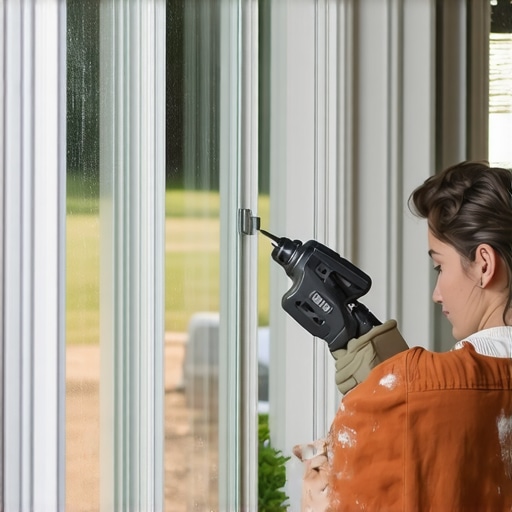
There is a specific sound a house makes when it is struggling to breathe, and usually, that sound is the groan of a sash that has been fused to its frame by decades of neglect and poorly applied latex. In my twenty-five years as a glazier, I have seen it all, but nothing frustrates me more than a window that has been effectively decommissioned by a ‘caulk-and-walk’ painter. I pulled a vinyl window out of a house in Portland once and the header was completely black with rot. Why? The previous installer relied on the nailing fin instead of proper flashing tape, but the homeowner had also painted the interior sash shut, thinking they were stopping a draft. Instead, they trapped moisture against the wood, creating a petri dish for decay within the rough opening. This is why we don’t just ‘paint’ windows; we maintain them.
The Anatomy of a Painted-Shut Sash
Before you grab a pry bar and destroy your glazing bead, you must understand the physics of what you are fighting. A window that is stuck is essentially a victim of chemical bonding and mechanical friction. When fresh paint is applied and the window is closed before it has fully cured, the two surfaces undergo a process called ‘blocking.’ The resins in the paint fuse together, creating a bond that can be stronger than the wood fibers themselves. This is particularly problematic in cold northern climates like Minneapolis or Chicago, where the internal humidity is high and the external temperatures are plummeting. The U-Factor of your window—the rate at which it conducts non-solar heat flow—is compromised when the sash cannot move to allow for proper ventilation or when the paint creates a bridge that conducts cold directly into the frame.
“Installation is just as critical as the window performance itself. A high-performance window installed poorly will fail, and a window that cannot be operated for maintenance or ventilation is a failed unit by definition.” – AAMA Installation Masters Guide
We see this often in historic homes where the muntins and sashes are made of old-growth Douglas fir or White Oak. These woods are incredibly durable, but they expand and contract with the seasons. When you seal that movement with paint, something has to give. Usually, it is the hardware or the wood itself that cracks under the pressure. To perform a proper window repair, you have to approach the problem like a surgeon, not a demolition crew.
The Glazier’s Toolkit: Breaking the Bond
You do not need a sledgehammer; you need precision. The most important tool in my bag for this job is the ‘paint zipper’ or a high-quality stiff-blade putty knife that has been ground down to a razor edge. We are looking to break the ‘bridge’ of paint at the stop and the parting bead. If you look at where the sash meets the frame, you will see a line of paint that has filled the gap. This is where the thermal bridging is most aggressive. By scoring this line with a utility knife, you are creating a ‘kerf’ that allows the wood to move independently again. In technical terms, we are restoring the ‘Operable’ status of the fenestration unit.
Once the perimeter is scored, we use a specialized tool called a sash saw or a very thin pry bar to gently separate the sash from the stool. Do not apply pressure to the glass. If you put pressure on the glazing bead, you risk cracking the pane, especially if it is older single-pane glass that has become brittle over the years. We are aiming for the ‘Rough Opening’ logic: we want the sash to sit squarely within its intended space without being bound by external coatings.
Thermal Logic: Why Operability Matters
In northern climates, the enemy is Heat Loss and Condensation. When a window is painted shut, homeowners often think they are doing themselves a favor by ‘sealing’ the house. However, windows are designed to manage moisture. Most wood windows have a weep hole system or at least a design that allows for the drainage of incidental moisture. When paint clogs these areas, water is trapped against the sill pan, leading to the rot I mentioned earlier. Furthermore, a window that cannot open prevents the use of natural ventilation to lower indoor humidity. High indoor humidity leads to condensation on the cold Surface #3 of the glass (the interior-facing surface of the inner pane). This water then runs down and pools on the sash, further accelerating the rot process.
“The integrity of the building envelope depends on the functional operability of fenestration units. A window that cannot open is a life-safety hazard and a failure of the thermal management system.” – ASTM E2112 Standard Practice
If your window is so far gone that the wood is soft or the muntins are crumbling, it might be time to replace windows entirely. Modern fiberglass frames offer much better thermal stability than wood and won’t expand nearly as much, meaning they are less likely to stick. However, if the frame is solid, a restoration is almost always the better ROI. A well-restored wood window with a high-quality storm window can rival the U-Factor of a mid-grade double-pane vinyl unit.
The Step-by-Step Restoration Process
First, score the interior and exterior paint lines where the sash meets the stops. Use a vacuum with a HEPA filter if the house was built before 1978, as you are likely dealing with lead-based paint. Second, use a sash tool to gently ‘rock’ the window. You are looking for even a millimeter of movement. Once you have movement, you can use a shim to keep the gap open while you work your way around the frame. Third, once the window is open, you must address the tracks. This is where a good window cleaner and some paraffin wax come into play. Clean out the decades of dust, paint chips, and old grease. Sand the edges of the sash and the inside of the tracks until you see bare wood. Apply a thin layer of wax to the tracks; this will prevent the paint from sticking in the future and provide a smooth, low-friction glide.
When to Give Up and Call a Pro
Sometimes the paint isn’t the only thing holding the window shut. If the house has settled, the rough opening may have shifted from a rectangle to a parallelogram. In this case, the sash is being ‘pinched’ by the weight of the house. You can identify this if the window is stuck at the top on one side and the bottom on the other. This isn’t a paint issue; it’s a structural one. Similarly, if the sash cords are broken and the weights have fallen inside the pocket, the window might stay shut because it has become wedged against the pulleys. At this point, you aren’t just doing a window repair; you are doing a mechanical overhaul. Don’t be the person who tries to force it and ends up with a handful of broken glass. The cost of a professional glazier is far less than an emergency room visit for a severed tendon.