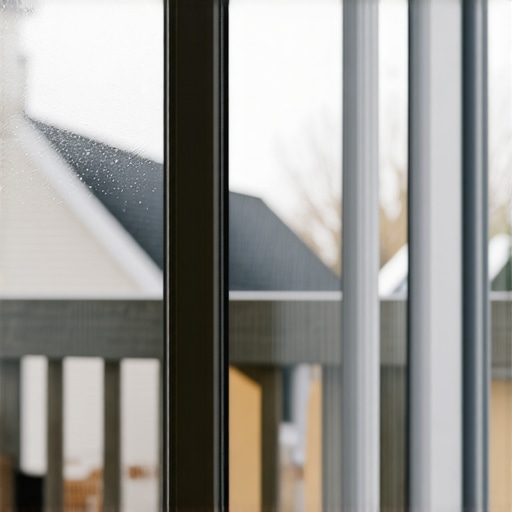
The Science of Window Sweat
A homeowner called me in a panic because their new windows were sweating. I walked in with my hygrometer and showed them the humidity was 60 percent. It was not the windows; it was their lifestyle. This is a common story in the glazing industry. You spend thousands to replace windows, expecting a perfectly clear view, only to find the glass obscured by a layer of fog or even beads of water running down the sash. To understand why this happens, we have to look past the surface and examine the thermal dynamics of your home envelope. Condensation is the byproduct of a physics equation involving the dew point, relative humidity, and the surface temperature of the glazing unit. When warm, moisture-laden air hits a cold surface, it reaches its saturation point and releases that water. In older homes, the drafty rough opening acted as a natural ventilation system. When you install high-performance units, you seal that escape route, and the moisture that used to leak out now stays inside, searching for the coolest surface to settle on.
Installation is just as critical as the window performance itself. A high-performance window installed poorly will fail. – AAMA Installation Masters Guide
The Anatomy of an Insulated Glass Unit
To combat this, we must look at the IGU or Insulated Glass Unit. Modern units are not just two panes of glass. They are sophisticated assemblies featuring warm-edge spacers, gas fills, and Low-E coatings. In cold climates, the U-Factor is the most critical metric. This measures the rate of heat loss. A lower U-Factor means the interior pane of glass stays warmer, which keeps it above the dew point and prevents sweating. If your window repair technician mentions a failed seal, they are referring to the polyisobutylene primary seal and the silicone or polysulfide secondary seal that keeps the argon gas trapped between the panes. When this seal fails, moisture enters the cavity, leading to internal condensation that no window cleaner can remove. This is a permanent failure of the unit.
The Role of the Spacer and Thermal Bridging
The spacer is the component that separates the two panes of glass. In the old days, these were made of aluminum, which is a highly conductive material. This created a thermal bridge at the edge of the glass, making the perimeter much colder than the center. This is why you often see a ring of moisture around the edge of the sash. Advanced warm-edge spacers use stainless steel or structural foam to break that thermal bridge. When we perform a window repair or a full replacement, we look for units that utilize these non-conductive materials. If the glass surface temperature drops below 55 degrees Fahrenheit in a room with 40 percent humidity, you will see water. It is a mathematical certainty.
Condensation is not a window defect; it is a manifestation of excess humidity in the home atmosphere. – NFRC Performance Bulletin
Environmental Factors and Home Performance
Sometimes the issue is not the window at all but the way the house is breathing. New construction often suffers from high moisture levels because the wood framing and concrete foundation are still curing, releasing gallons of water vapor into the air. If you have recently performed a window repair to tighten your home, you may have inadvertently trapped this moisture. High-output activities like cooking, showering, or even the respiration of several pets can push the relative humidity beyond the limits of what a window can handle. Using a window cleaner with anti-fog properties is a temporary fix, but the real solution lies in mechanical ventilation. An Heat Recovery Ventilator or HRV is often necessary in modern, airtight homes to exchange stale, moist air with fresh, dry outdoor air without losing all the thermal energy you have paid to create.
Technical Specifications for Cold Climates
In northern regions, we focus on Low-E coatings on Surface 3. This is the interior-facing surface of the outer pane. By placing the coating here, we reflect long-wave infrared radiation back into the room. This raises the temperature of the glass. When you choose to replace windows, you must verify the NFRC label for the Condensation Resistance rating. This value, ranging from 1 to 100, tells you how well the unit resists moisture formation. A higher number is better. If your installer does not talk about the CR rating, they are just a salesman, not a glazier. You also need to ensure the weep hole system in the frame is clear. If water sits in the tracks because of a blockage, it increases the local humidity at the base of the sash, leading to localized sweating and potentially wood rot if you have timber frames.
Installation Integrity and the Rough Opening
Even the best glass will sweat if the air is leaking around the frame. During a window repair or installation, the gap between the window frame and the rough opening must be properly insulated. We use low-expansion closed-cell foam to seal this gap. If there is a void, cold air can circulate around the frame, cooling the glazing bead and the edge of the glass. This localized cooling is a primary cause of condensation that homeowners mistake for a product defect. A proper sill pan and flashing tape system ensure that any water that does manage to get past the primary seals is directed back outside, rather than soaking into the subfloor. Precision during the shim process is also vital. If the frame is twisted or out of square, the weatherstripping will not compress correctly, allowing a jet of cold air to hit the glass and drop the surface temperature instantly.