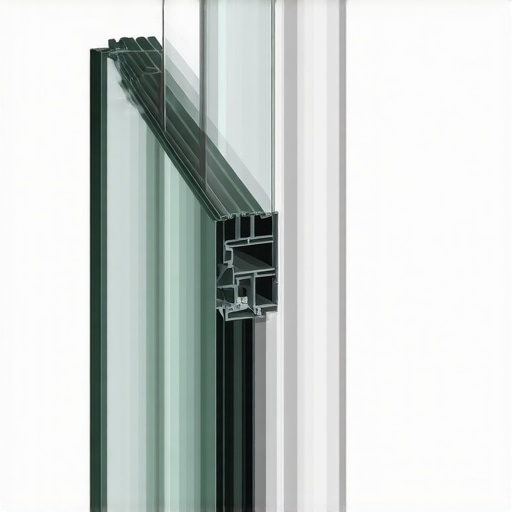
The Physics of the Insulated Glass Unit
In my two and a half decades of glazing, I have seen thousands of homeowners mistake a failing window for a dirty one. They call a window cleaner to scrub away what they think is exterior grime, only to realize the haze is trapped between the panes. A window is not a static object; it is a pressurized vessel. When you have a double-pane or triple-pane setup, you are looking at an Insulated Glass Unit, or IGU. This unit relies entirely on the integrity of the spacer and the sealant system to maintain a thermal barrier. If that seal fails, your expensive window becomes little more than a poorly performing translucent wall.
The Condensation Crisis: A Master Glazier Narrative
I recall a specific incident where a homeowner in a frigid northern climate called me in a panic because their three-year-old windows were ‘sweating’ profusely on the interior. They were convinced the units were defective. I walked into the living room with my hygrometer and a thermal imaging camera. The interior humidity was hovering at 60 percent while the outside temperature was five degrees Fahrenheit. I had to explain that it wasn’t a spacer failure yet, but their lifestyle was creating a dew point nightmare on the glass surface. However, that constant moisture on the glazing bead was eventually going to migrate into the primary seal of the IGU, causing the very failure they feared. It was a lesson in psychrometrics: windows do not create moisture, they only provide the cold surface where it manifests. If that moisture sits too long, it attacks the polyisobutylene seal, leading to the eventual collapse of the spacer system.
“Installation is just as critical as the window performance itself. A high-performance window installed poorly will fail.” – AAMA Installation Masters Guide
Understanding the IGU Anatomy and Spacer Tech
To spot a failure before the fog appears, you must understand what holds the glass together. The spacer is the structural heart of the IGU. In the old days, we used hollow aluminum spacers filled with desiccant beads. These were notorious for ‘thermal pumping.’ As the sun hits the glass, the gas inside (typically Argon in northern climates) expands, putting pressure on the seals. At night, the gas contracts. This constant movement eventually stresses the primary seal. Modern ‘warm-edge’ spacers, made of stainless steel or structural foam, are much better at handling this movement while reducing the U-Factor at the edge of the glass. The U-Factor is the rate of heat loss; in a cold climate, you want this number as low as possible to prevent the interior pane from reaching the dew point.
Early Warning Signs: Sightline Creep and the Rainbow Effect
Before the ‘fog’ or permanent calcium deposits appear, there are subtle visual cues. One of the most common is ‘sightline creep.’ If you look at the edge of the glass where it meets the sash or the glazing bead, you might see the black primary sealant beginning to ooze or move into the visible area of the glass. This indicates that the sealant has chemically broken down or is being physically displaced by the pressure of the gas expansion. Another sign is the ‘rainbow effect,’ technically known as Newton’s rings. This happens when the two panes of glass actually touch in the center due to a loss of gas pressure or a vacuum effect. If you see a circular, oily-looking rainbow in the middle of your window, your spacer has already failed, and the panes are collapsing inward. This significantly compromises the thermal performance because you no longer have an insulating air gap.
The Role of Low-E Coatings in Cold Climates
For those of us working in the North, we prioritize reflecting heat back into the house. This is achieved by applying a Low-E (low-emissivity) coating on Surface #3. In a standard double-pane unit, Surface #1 is the exterior, Surface #2 is the inner side of the outer pane, Surface #3 is the outer side of the inner pane, and Surface #4 is the interior. By placing the coating on Surface #3, we allow the sun’s short-wave infrared energy to enter while reflecting the long-wave infrared heat from your furnace back into the room. If the spacer fails and air replaces the Argon gas, the moisture in that air will eventually oxidize the silver-based Low-E coating. This leads to ‘white rust’ or a permanent discoloration that no window cleaner can ever remove.
“The air leakage and moisture penetration resistance of a window assembly are heavily dependent on the interface between the IGU and the frame.” – ASTM E2112 Standard Practice
The Repair vs. Replace Dilemma
When a spacer fails, many salesmen will tell you that you need to replace windows entirely. That is often a ‘Tin Man’ tactic. If the frame—whether it is vinyl, fiberglass, or wood—is still structurally sound and the rough opening shows no signs of rot, you can often perform a window repair by simply replacing the IGU. This involves removing the glazing beads, cutting the old unit out of the sash, and shimming a new, factory-sealed IGU into place. We ensure the weep hole in the sash is clear so that any water that gets past the exterior seals can drain out rather than sitting against the new spacer. However, if the failure is due to a warped sash or a frame that was never plumb, level, and square, a full-frame replacement is the only way to guarantee a long-term fix. We must use high-quality flashing tape and a proper sill pan to ensure that even if the new window eventually leaks, the water is directed back to the exterior. Do not settle for a pocket replacement if your original frame is failing; you are just putting a new IGU into a rotting hole.
Evaluating Your Windows: A Checklist
To inspect your own units, start by checking the perimeter of the glass for any distorted sealant. Use a flashlight at an angle to look for ‘scudding’ or faint streaks inside the glass that don’t move when you clean the exterior. Check the operable parts of the window; if a sash is difficult to move, it may be putting undue stress on the IGU when you force it, leading to seal failure. Finally, look at the NFRC label if it’s still there. If your windows are twenty years old and use a standard metal spacer, the desiccant is likely saturated, and a failure is imminent. Investing in high-performance glass with a warm-edge spacer and Argon fill is not just about the ROI in energy savings; it is about the comfort of sitting near a window in January without feeling the bite of the cold.