The Maintenance Free Myth and the Reality of UV Degradation
For twenty five years, I have listened to salesmen tell homeowners that vinyl windows are a set it and forget it solution. They use the phrase maintenance free like it is a magic spell. I once sat across from a high pressure salesman who was trying to convince a couple in a sun drenched suburb that their new vinyl units would look identical in thirty years. I had to step in and explain that while vinyl does not rot like wood, it is a polymer. And polymers are subject to the laws of chemistry. Specifically, the law of photo degradation. When a vinyl sash is exposed to intense solar radiation, the ultraviolet rays begin to break the carbon bonds in the polyvinyl chloride structure. This leads to what we in the glazing trade call chalking. If you have ever rubbed your hand across a faded window frame and ended up with a white powdery residue on your skin, you have seen the physical evidence of your window frame slowly sacrificing itself to the sun.
The Anatomy of Vinyl Degradation
To understand how to fix a faded frame, you have to understand what is happening at the microscopic level. Most high quality vinyl windows use titanium dioxide as a stabilizer. This chemical acts as a sunscreen for the PVC, reflecting UV rays and preventing the polymer chains from snapping. However, in southern climates where the solar heat gain coefficient is a critical metric for energy performance, the exterior surface of the frame can reach temperatures exceeding 160 degrees Fahrenheit. This heat accelerates the migration of plasticizers to the surface. When these plasticizers evaporate, the vinyl becomes brittle and the surface develops micro pitting. This is where the shine goes to die. The light that used to reflect off a smooth surface is now hitting a jagged, pitted landscape, causing it to scatter. This is why your windows look dull. This is not just a cosmetic issue. If left unchecked, the glazing bead can become brittle and snap, or the weep hole system can become clogged with oxidized debris, leading to water backup and potential rot in the rough opening.
“Installation and maintenance are just as critical as the window performance itself. A high performance window that is not properly maintained will fail to meet its life expectancy.” – AAMA Installation Masters Guide
Step One: The Chemical Cleanse
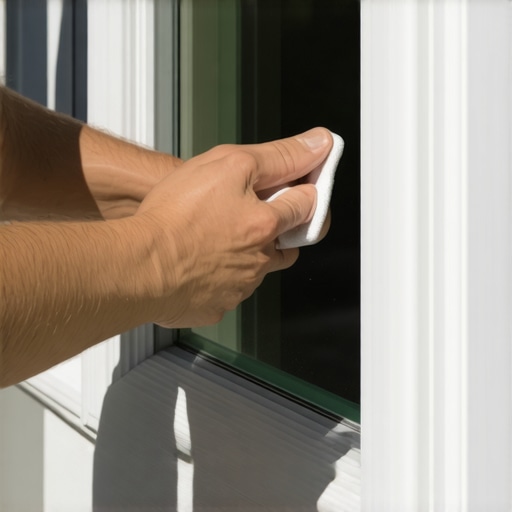
You cannot restore what you have not cleaned. But do not reach for the pressure washer. I have seen too many DIYers blow out the seals on their insulated glass units because they used too much PSI. Start with a dedicated window cleaner that is pH neutral. You want to avoid anything with ammonia or bleach, as these can further react with the PVC and cause yellowing. When you clean the frame, pay close attention to the tracks. Use a vacuum to remove grit from the sill pan and ensure the weep holes are clear. If water cannot escape the frame, it will find a way into your walls. Once the surface dirt is gone, you will likely still see the fading. This is the oxidation layer. To remove this, you need a mild abrasive. I often recommend a specialized soft scrub or even a fine automotive rubbing compound. Work in small sections of the sash, using a circular motion. You are essentially performing a micro dermabrasion on the window. You are stripping away the dead, oxidized polymer to reveal the fresh PVC underneath.
Step Two: Restoring the Surface Integrity
Once you have removed the chalking, the frame will look better, but it will be porous. If you leave it like this, it will fade again within months. This is where the restoration becomes technical. You need to apply a UV resistant protectant. In the trade, we look for products that contain cross linking polymers. These products do not just sit on top of the vinyl; they bond with it, filling the micro pits we discussed earlier. As you apply the protectant, ensure you do not get it on the glass or the weatherstripping. If you get oils on the felt or rubber weatherstripping, it can cause the material to degrade or become sticky, which will make the operable parts of the window difficult to move. A properly lubricated sash should slide with minimal effort. If you find you are straining to open the window, it is a sign that either the balance system is failing or your cleaning process has ignored the mechanical tracks.
When Restoration Fails: The Case for Replacement
There comes a point where no amount of window cleaner or polishing compound can save a frame. If you see visible warping in the main frame or if the sash is no longer square within the rough opening, restoration is a waste of money. Vinyl has a high coefficient of thermal expansion. In climates with extreme temperature swings, the vinyl can expand and contract so much that it pulls away from the glass, compromising the glazing bead. If you see a gap between the vinyl and the glass, you have an air leak that no caulk can fix. This is when you need to replace windows. A modern replacement window with a low SHGC (Solar Heat Gain Coefficient) and a Low E coating on surface number two will do more for your comfort than a bottle of polish ever could. When we do a full frame replacement, we ensure the sill pan is properly flashed and the unit is shimmed to perfection. A poorly installed window, even if it is brand new, will perform worse than an old window installed by a master.
“The air leakage rate of a fenestration product shall be determined in accordance with ASTM E283.” – NFRC 400 Procedure
The Physics of the South: SHGC and Surface Temperatures
In hot climates, the goal of any window repair or restoration is to manage heat. While we are talking about the frames, the glass is doing most of the work. If your vinyl is fading, it is a signal that your glass is also likely underperforming. Old single pane or clear double pane glass allows a massive amount of infrared radiation to enter the home. This radiation hits your furniture, your floors, and the interior side of your window frames, heating them up. This creates a secondary heat source inside your house. When you restore the frames, you are helping the exterior longevity, but you are not fixing the thermal bridge. If your goal is true energy efficiency, you have to look at the U factor. A lower U factor means better insulation. In the south, however, the SHGC is the king of metrics. You want a window that blocks the heat while letting in the light. This is why I prefer vinyl or fiberglass frames over aluminum, as aluminum acts as a thermal conductor, bringing the blistering outside heat directly into your living room.
Maintaining the Mechanical Components
A window is a machine. It has moving parts that require maintenance. While you are restoring the shine to the vinyl, check the hardware. Lubricate the pivot pins and the balance covers. If you have a double hung window, ensure the tilt latches are functioning correctly. I have seen many homeowners break a sash because the tilt latch was stuck and they tried to force it. This often leads to a cracked glazing bead or even broken glass. If the hardware is corroded from salt air in coastal regions, window repair becomes more than just a cosmetic task. You may need to replace the stainless steel components to ensure the window remains operable during a storm. A window that cannot be closed and locked properly is a security risk and a major source of air infiltration.
The Master Glazier Conclusion
Restoring faded vinyl is about more than just aesthetics; it is about extending the lifecycle of a critical component of your home’s envelope. By removing oxidation and applying a UV barrier, you protect the structural integrity of the PVC. But remember, the window is a system. The glass, the frame, the shims, and the flashing must all work in harmony. If you maintain the surface but ignore the weep holes, you will end up with rot. If you polish the sash but ignore the air leaks, you will end up with high energy bills. Take the time to do a thorough inspection every spring. Clean the glass with a quality window cleaner, check the seals, and keep that vinyl protected from the sun. In the long run, it is much cheaper to maintain a window than it is to replace one. But when the time comes that the vinyl is truly spent, do not hesitate. Technology has come a long way, and a new high performance unit will pay for itself in comfort and reduced strain on your HVAC system.