The Sound of a Failing System
That high-pitched screech every time you open your patio door is more than just an annoyance. It is the sound of friction destroying your hardware. In my twenty-five years as a master glazier, I have seen homeowners ready to drop five thousand dollars to replace windows and doors just because they could no longer stand the auditory assault of a dry track. Before you call a salesman, you need to understand the mechanical autopsy of a sliding unit. Most people reach for a can of spray oil, but as any veteran in the glazing trade will tell you, that is the quickest way to turn a minor squeak into a permanent mechanical failure. Oil is a magnet for the particulate matter that floats through your home. Within weeks, that oil becomes a grinding paste that eats through the tandem rollers and the stainless steel track.
The Condensation Crisis and the Sticky Track
A homeowner in Minneapolis once called me in a total panic because her new sliding doors were ‘sweating’ and the handle was nearly impossible to turn. I walked in with my hygrometer and showed her that the indoor humidity was hitting 60 percent. It was not a manufacturing defect; it was her lifestyle. The high humidity was causing micro-corrosion on the track surfaces, which in turn increased the friction coefficient. She thought she needed a total window repair or a complete replacement. I showed her that the moisture was aggravating the dust in the track, creating a sludge that no standard window cleaner could resolve. This is the reality of fenestration in cold climates: when the U-Factor is low and the temperature drops, the Operable parts of your home are the first to show signs of stress. We had to address the air quality before we could address the door mechanics.
Why Graphite Wins the Friction War
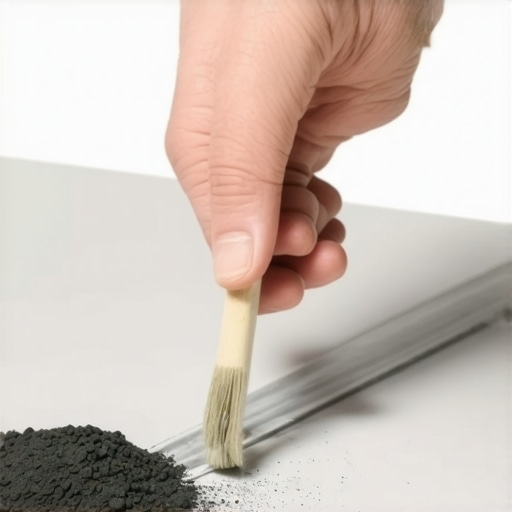
The solution is a two-dollar tube of dry graphite. Unlike wet lubricants, graphite is a dry mineral that provides a lubricious surface without the tackiness that captures grit. When you apply graphite to a sliding door, you are essentially providing a sacrificial layer of carbon. This carbon fills the microscopic pits in the metal track, allowing the rollers to glide rather than grind. If you are dealing with a North-facing door in a cold climate, the thermal contraction of the aluminum or vinyl frame can tighten the tolerances of the Rough Opening. This pressure is transmitted directly to the track. A dry lubricant like graphite maintains its efficacy even when the temperature drops to thirty below, whereas petroleum-based products will thicken and seize. It is a fundamental principle of window repair that the simplest mechanical solution is often the most durable.
“Installation is just as critical as the window performance itself. A high-performance window installed poorly will fail.” AAMA Installation Masters Guide
The Anatomy of the Sliding System
To fix a squeaky door, you must understand the components. We are talking about the Sash, the track, and the tandem rollers. The Sash is the moving part of the door. It sits on rollers that are often adjustable. If your door is squeaking, it might be because the frame has settled, and the Sash is now rubbing against the Sill Pan. This is where the Shim becomes vital. During the original installation, if the installer did not properly level the sill, the door will never slide correctly, regardless of how much lubricant you apply. You can check this by looking at the reveal where the door meets the side jamb. If the gap is wider at the top than the bottom, your door is out of square. You need to adjust the rollers to compensate for this shift before applying your graphite.
Step-by-Step Maintenance Protocol
First, you must be a meticulous window cleaner. Use a vacuum with a crevice tool to remove every speck of debris from the track. Use a stiff nylon brush to agitate the dirt around the Weep Hole areas. If the Weep Holes are clogged, water will back up into the Sill Pan, leading to the kind of rot that necessitates you replace windows entirely. Once the track is surgically clean, wipe it down with denatured alcohol. This ensures no residual oils remain. Next, apply a thin line of dry graphite along the length of the track where the rollers make contact. Move the door back and forth several times to distribute the powder. You will notice an immediate change in the haptic feedback of the handle and a total silencing of the screech. This is the difference between a ‘caulk-and-walk’ fix and a professional-grade repair.
“The performance of a door is measured not just by its glass, but by the air infiltration rating of its operating components.” NFRC Rating Standards
When Graphite Isn’t Enough: The Replacement Threshold
Sometimes, the squeak is a symptom of a terminal illness. If you see metal shavings in the track, your rollers have likely flat-spotted. This happens when the bearing inside the roller fails and the wheel stops spinning, dragging across the metal instead. In this scenario, you are looking at a hardware replacement. If the frame itself is warped or the glass seal has failed, leading to fogging between the panes, it might be time to replace windows. When selecting a replacement, look for units with a high condensation resistance factor and a robust U-Factor if you live in a heating-dominated climate. Don’t be swayed by high-pressure sales tactics about triple-pane glass if your main issue is mechanical. A well-built double-pane window with a properly designed thermal break in the frame will often outperform a cheap triple-pane unit in real-world conditions.
The Final Word on Water Management
Never forget that your sliding door is a hole in your building envelope. Every time you perform a window repair or maintenance, you are protecting the structural integrity of your home. Ensure that your Flashing Tape is intact if you ever have the trim off, and always check that the Drip Cap is doing its job above the door. Water is the enemy of all fenestration. By keeping your tracks clean and lubricated with dry graphite, you reduce the physical stress on the frame, ensuring that the seals remain tight and the water stays where it belongs: outside. This two-dollar investment is not just about silence; it is about extending the life of one of the most expensive components of your home’s exterior.