The Fragility of High-Performance Glazing
Most homeowners view a window as a static, indestructible sheet of glass. As a master glazier with a quarter-century in the field, I see it differently. A window is a complex thermal valve. When you add a tint or a high-performance film to that glass, you are essentially applying a precision-engineered optical filter to your building envelope. The common mistake is treating this specialized surface like a standard pane of soda-lime glass. Using the wrong window cleaner or an aggressive technique doesn’t just smudge the surface; it can cause a catastrophic failure of the film’s molecular structure, leading to costly window repair or the premature need to replace windows entirely.
The Narrative: A Spectrally Selective Disaster
I recall a specific consultation in a sun-drenched coastal estate where the homeowner had invested over twenty thousand dollars in spectrally selective ceramic films to mitigate the punishing solar heat gain. Six months later, I was called back because the windows looked ‘cloudy.’ I didn’t need a microscope to see what happened. I pulled out my hygrometer to check the interior environment, but the culprit was sitting in the janitorial closet: a gallon of industrial-strength ammonia and a stack of green abrasive scouring pads. The cleaning crew had effectively stripped the sacrificial hard-coat off the film, leaving the micro-porous polyester exposed to oxidation. I had to explain that while the glass was fine, the ‘skin’ of the window was dead. They weren’t looking at dirt; they were looking at millions of microscopic scratches that had permanently diffused the light. This is why understanding the chemistry of your window is as important as the installation itself.
“Installation and subsequent maintenance of fenestration products are just as critical as the initial performance ratings. A high-performance glazing system subjected to improper chemical exposure will fail to meet its design life.” AAMA Installation Masters Guide
The Science of Solar Control: Why the Film is There
In hot, southern climates, the primary enemy is the Solar Heat Gain Coefficient (SHGC). This number represents the fraction of solar radiation admitted through a window, both directly transmitted and absorbed and subsequently released inward. A standard clear double-pane unit might have an SHGC of 0.70, meaning 70 percent of the sun’s heat is entering your home. By applying a high-quality film, we aim to drop that number below 0.25. This is achieved through spectrally selective sputtering, where atoms of metals like silver or titanium are embedded into the polyester layers. These layers are designed to reflect long-wave infrared radiation while allowing visible light to pass through. However, these metallic layers are incredibly thin. The only thing protecting them from the atmosphere is a thin, clear-coated top layer. When you use a window cleaner containing ammonia or vinegar, you are introducing a solvent that can penetrate the edges of the film near the glazing bead and begin the process of delamination. Once the bond between the film and the glass is compromised, moisture can get trapped, leading to the dreaded ‘bubbling’ effect that no amount of squeegeeing can fix.
Blueprint: The Technical Cleaning Protocol
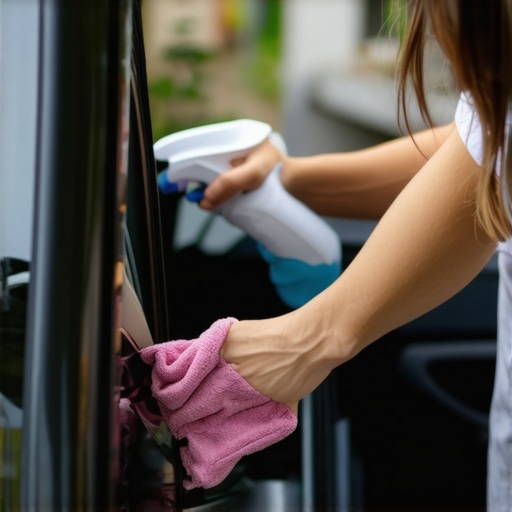
If you want to avoid a total window repair scenario, you must follow a pH-neutral cleaning regimen. The goal is to remove atmospheric pollutants without reacting with the film’s top coat. First, ensure the window is cool to the touch. Cleaning a hot window causes the solution to evaporate too quickly, leaving behind mineral deposits that act as abrasives. Use a solution of distilled water and a drop of professional-grade, non-ionic soap. Avoid any product that boasts ‘streak-free shine’ through the use of alcohols or acids. When you move the squeegee, ensure the rubber blade is soft and free of nicks. A hard or old blade can catch on the film, especially near the sash edges where the film is often trimmed with a slight margin. If you see water accumulating at the bottom, don’t let it sit. On many operable windows, such as casements or sliders, water can migrate into the rough opening if the weep hole system is clogged, but for the film itself, the danger is capillary action drawing water behind the edge of the tint.
“The maintenance of the water-resistive barrier and the integrity of the glazing seals are paramount. Any chemical intervention that degrades these seals can lead to systemic moisture intrusion.” ASTM E2112 Standard Practice
Identifying Seal Failure vs. Film Damage
Sometimes, what looks like a dirty or ruined film is actually a failure of the Insulated Glass Unit (IGU). If you see fogging or ‘calcium trails’ between the two panes of glass, no amount of cleaning will help. This is a seal failure, often caused by the shim placement putting undue stress on the frame or a lack of a proper sill pan allowing moisture to rot the muntin supports. In these cases, you don’t just need a cleaner; you need to replace windows or at least the IGU. However, if the distortion is strictly on the surface, you are likely dealing with ‘haze’ caused by improper cleaning. You can test this by looking at the glass from a 45-degree angle under bright light. If you see circular patterns, those are ‘swirl marks’ from a dry cloth or a dirty paper towel. Always use high-density microfiber towels, and never use them in a circular motion; always go top-to-bottom or side-to-side to ensure any remaining particulates are moved off the surface rather than ground into it.
The Math of Preservation
The ROI on high-performance windows and films is measured in decades, not years. If you degrade the film through poor maintenance, you are essentially throwing away the energy savings that the low SHGC provides. A window with a ruined film can actually absorb more heat if the reflective layers are damaged but the dark pigment remains. This increases thermal stress on the glass, which, in rare cases, can lead to thermal shock fractures. To avoid this, think of your window maintenance as part of the building’s mechanical health. Use the right tools, respect the chemistry of the coatings, and remember that the flashing tape and sill pan protect the structure, but the cleaning protocol protects the performance. Don’t let a five-dollar bottle of ammonia turn into a five-thousand-dollar replacement project.