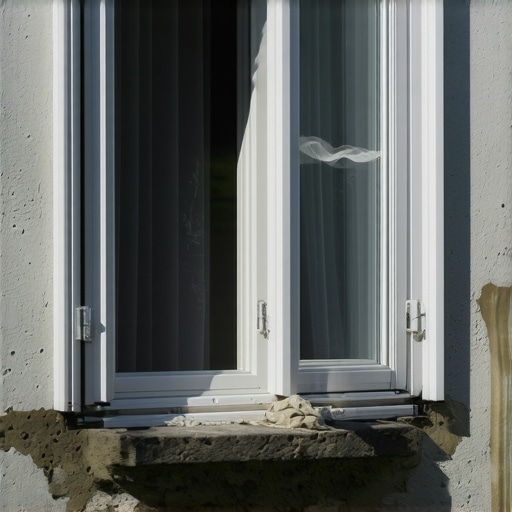
The Anatomy of the Midnight Rattle
The sound of a window rattling during a windstorm is more than just an annoyance; it is a diagnostic signal. It is the sound of a failure in the building envelope. When wind hits your glass, it creates a pressure differential. If there is a gap between the sash and the frame, or if the glazing bead has lost its compression, that pane of glass will vibrate like a reed in a woodwind instrument. In my 25 years in the glazing industry, I have seen homeowners try to silence these ghosts with everything from folded cardboard to duct tape. But solving the problem requires understanding the physics of the Rough Opening and the mechanical tolerances of your window unit.
The Rot Repair: A Lesson in Flashing
I remember pulling a vinyl window out of a house in a windswept suburb last November. The homeowner complained of a persistent rattle and a faint smell of earth. When I pried back the interior trim, the header was completely black with rot. Why? The previous installer had relied on the nailing fin and a heavy bead of cheap caulk instead of proper flashing tape and a dedicated sill pan. The window was rattling because the wood around it had softened to the point where the shims were no longer under compression. The air infiltration was so high that it was essentially a controlled leak. This is why window repair is often more about what you can’t see than the glass itself. If your window is moving, your house is likely drinking water every time it rains.
“Installation is just as critical as the window performance itself. A high-performance window installed poorly will fail.” – AAMA Installation Masters Guide
The Physics of the Rattle: Air Infiltration and U-Factor
In cold northern climates, a rattling window is a heat-loss engine. We talk about the U-Factor, which measures the rate of heat transfer. A low U-Factor is essential for keeping your furnace from running 24/7. However, U-Factor is measured under static conditions. Once the wind starts blowing and the sash begins to move, the effective insulation value of that window plummets. This movement is often caused by the degradation of the weatherstripping or a shift in the house’s foundation that has pulled the frame out of square. When you decide to replace windows, you are looking for a unit with a low Air Infiltration rating, often listed on the NFRC label. If the air can’t get in, the window can’t rattle.
The Foam Trick: Using Backer Rods for Compression
If you aren’t ready for a full-frame replacement, there is a technical ‘foam trick’ that actually works without ruining your window’s operation. Many people reach for a can of expanding spray foam, which is a disaster. High-expansion foam can exert enough pressure to bow a vinyl frame, making it impossible to open or close the sash. Instead, professional glaziers use a closed-cell backer rod. This is a flexible foam rope that comes in various diameters. By carefully tucking a small-diameter backer rod into the channel where the sash meets the frame, you create a customized gasket. This provides the necessary compression to stop the vibration while still allowing the window to be operable. You want to choose a diameter slightly larger than the gap to ensure a friction fit that dampens the wind’s energy.
“Proper sealing of the window perimeter is essential to maintain the integrity of the thermal barrier and to prevent air and water leakage.” – ASTM E2112 Standard Practice
When to Repair and When to Replace
Sometimes the rattle is coming from the glazing bead, the small strip of vinyl or wood that holds the glass inside the sash. If this becomes brittle, the glass itself will shake within the frame. A professional window cleaner might notice this first, as the glass feels loose under the pressure of a squeegee. In these cases, a simple window repair involves removing the bead and applying a fresh bed of glazing silicone before snapping the bead back in. However, if the rattle is due to the frame material science failing—such as cheap vinyl expanding and contracting so much that it has permanently warped—then repair is a fool’s errand. Fiberglass frames offer much better stability because they expand at nearly the same rate as the glass itself, maintaining a tight seal through forty-degree temperature swings.
Water Management and the Shingle Principle
Every window installation must follow the shingle principle: every layer of the building envelope must overlap the one below it. When you use foam or sealant to stop a rattle, you must ensure you aren’t blocking the weep hole. These small vents at the bottom of the frame are designed to allow water that enters the track to escape to the exterior. If you plug these with foam in an attempt to stop a draft, you are effectively turning your wall into a fish tank. The technical mastery of window installation lies in managing the air without trapping the water. If your windows are rattling, it’s an invitation to inspect the entire system before a small vibration becomes a structural failure.