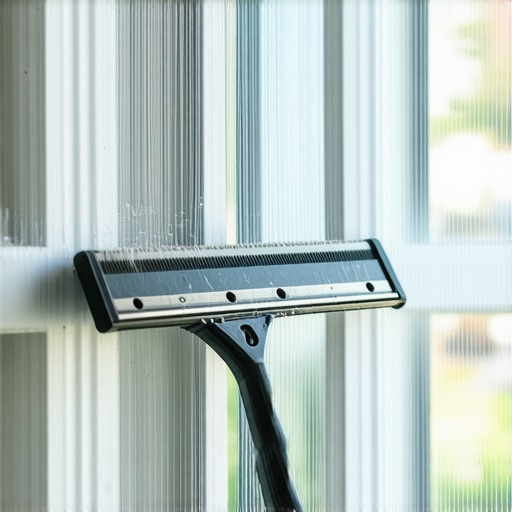
The Frustration of the Invisible Streak
You have spent three hours on a ladder, your forearms are burning, and the sun is hitting the glass at just the right angle to reveal a roadmap of vertical lines and rubber chatter marks. To most homeowners, this is a nuisance. To a Master Glazier with 25 years in the field, those marks are a diagnostic report on the health of your glazing system and your maintenance technique. When we talk about a window, we are talking about a precision-engineered thermal barrier. If your squeegee is skipping, it is not just your technique; it is often a battle against surface tension, mineral deposits, and the physical integrity of the operable sash. Most people reach for more soap, but as someone who has handled thousands of rough opening installs, I can tell you that the solution lies in understanding the molecular behavior of water on soda-lime glass.
The Condensation Crisis: A Narrative Autopsy
I recall a specific call-out in a suburb of Chicago during a brutal January freeze. A homeowner called me in a panic because their new windows were ‘sweating’ and developed a grey, cloudy film that no window cleaner could remove. They were convinced the units were defective. I walked in with my hygrometer and showed them the interior humidity was spiking at 60%. It was not the glass; it was their lifestyle choices combined with a failure to understand the dew point. The ‘marks’ they saw after cleaning were actually microscopic etchings from the minerals in that condensation. This is a classic case where the window was performing its job as a thermal break, but the environmental conditions were causing the glass surface to degrade. When you try to run a squeegee over glass that has been subjected to constant moisture cycling, the rubber blade catches on the mineral crust left behind by evaporated particulates. This is why a simple wipe-down is never enough for a window that has been neglected in a cold climate.
“Installation is just as critical as the window performance itself. A high-performance window installed poorly will fail to maintain the surface temperatures required to prevent condensation and subsequent glass staining.” – AAMA Installation Masters Guide
The Science of the Squeegee Mark
To stop the streaks, you must understand the Glazing Bead and the physics of the ‘chatter.’ A squeegee mark is essentially a failure of lubrication. When the rubber blade, or the durometer of the tool, encounters a section of glass with high friction, it jumps. This is often caused by the window cleaner solution drying too fast or the presence of ‘hydrophilic’ contaminants. In colder northern climates, we prioritize the U-Factor, which measures the rate of heat loss. Because we want to keep heat inside, we often use Low-E coatings on Surface #3. However, if that coating is on the exterior (Surface #1) for specific solar control reasons, the glass surface becomes much more ‘grabby’ for a squeegee. The microscopic texture of the coating increases the surface area, making it harder for a standard rubber blade to glide. This is where window repair specialists often see damage; homeowners use abrasive pads to try and ‘fix’ the friction, effectively stripping the expensive metallic oxides off the glass.
The Anatomy of a Failed Cleaning: Blueprint B Analysis
If you are seeing persistent marks near the edges of the pane, look at your Sill Pan and Weep Hole system. If these are clogged, water backs up into the Glazing Bead area. This stagnant water breeds surfactants and organic matter that bleed out onto the glass every time it rains. You can clean the center of the pane all day, but if the perimeter is compromised, your squeegee will pull those contaminants across the surface, leaving a trail of grey sludge. A true professional doesn’t just look at the glass; they look at the Flashing Tape integrity and the Rough Opening tolerances. If the frame is racked or twisted because it wasn’t shimmed correctly, the glass is under localized pressure. This pressure can slightly bow the pane, creating a microscopic ‘valley’ where the squeegee blade loses contact, leaving a heavy line of water behind. This is a structural issue masquerading as a cleaning problem.
“Standard practice for the installation of exterior windows requires that the fenestration be installed level, plumb, and square to ensure proper drainage and glass surface integrity.” – ASTM E2112
Technical Zooming: Surfactants and Surface Energy
Let’s talk about the chemistry of the glide. Most people use too much dish soap. Soap is a surfactant designed to reduce the surface tension of water, but in high concentrations, it leaves a sticky film that attracts dust the moment you finish. To a glazier, the ideal cleaning solution is a balance of deionized water and a tiny amount of professional-grade slip agent. We need enough ‘slip’ for the blade to move but enough ‘grip’ for it to actually shear the water off the glass. If you are in a hard-water area, the calcium and magnesium ions in your tap water are bonding with the glass. This is why you need to replace windows that have become ‘foggy’ over time; it is often not a seal failure, but permanent stage-four glass corrosion. If you want to stop the marks, you must use a squeegee with a fresh rubber blade. We change our blades daily. A blade that has even a microscopic nick from hitting a muntin or a piece of stray glazing bead will leave a line every single time.
Climate Logic: The Cold Weather Challenge
In regions like Minneapolis or Toronto, the cold temperature of the glass changes the elasticity of the squeegee rubber. A blade that works perfectly in July will become stiff and brittle in November. This leads to ‘edge leakage’ where the blade cannot conform to the slight variations in the glass surface near the sash. If you are cleaning in the cold, you need a softer rubber (lower durometer). Furthermore, the U-Factor of your window dictates how fast your cleaning solution will freeze or evaporate. A single-pane window in the winter is a nightmare to clean because the solution freezes on contact, creating a crystalline structure that ruins the squeegee blade. This is why upgrading to high-performance double or triple-pane units is not just about the energy bill; it is about the maintenance of the building envelope. A warm interior pane prevents the flash-freezing of cleaning agents, allowing for a streak-free finish even in sub-zero temperatures.
The Professional Method: Step-by-Step
Start by inspecting the Weep Hole. If water cannot escape the frame, your cleaning is doomed. Next, use a scraper only on wet glass to remove physical debris like paint overspread or bee pollen. Never scrape dry glass. When you apply your solution, use a microfiber ‘mop’ to agitate the dirt. When it comes to the squeegee, use the ‘S’ technique. Start at the top corner, pull across the top, and then loop down in a continuous motion. This prevents the ‘stop-and-start’ marks that occur when you pull straight down and have to lift the tool. Always wipe the blade with a lint-free rag between every single stroke. If you see a mark, do not try to ‘spot clean’ it with a dry rag; you will just create a static charge that pulls dust to that spot. Re-wet the entire pane and start over. This is the discipline required to maintain a professional-grade glazing system. If the streaks are between the panes, no amount of cleaning will help; that is a definitive sign of seal failure, and you must replace windows to restore the thermal integrity of your home.