The Science of Surface Tension and Microscopic Clarity
You have spent a small fortune on high-performance fenestration, perhaps even opting for triple-pane units with warm-edge spacers, only to find that every time you use a standard window cleaner, you are left with a haze that catches the late afternoon sun. As a glazier with over two decades in the field, I have seen homeowners go through gallons of blue-tinted ammonia sprays without realizing they are fighting a losing battle against molecular physics. The reason professional cleaners often reach for a box of cornstarch has nothing to do with folk wisdom and everything to do with the mechanical removal of surfactants and the management of water’s surface tension on the glass substrate.
A homeowner once called me in a panic because their brand-new, high-efficiency windows were ‘sweating’ and appearing permanently foggy. I arrived with my hygrometer and discovered the internal humidity was pushing 65 percent while the exterior temperature was plummeting. It was not a seal failure or a manufacturing defect; it was a matter of lifestyle and ventilation. While diagnosing their ‘fog,’ I noticed they had been scrubbing the glass so hard they were actually static-charging the surface, which attracted more dust and residue. I showed them how a simple cornstarch solution could neutralize that charge and lift the oils that the ammonia-based sprays were merely spreading around the pane. It is about understanding the glass as a material, not just a transparent barrier.
“Installation is just as critical as the window performance itself. A high-performance window installed poorly will fail.” AAMA Installation Masters Guide
Why Cornstarch Works Where Chemicals Fail
To understand why cornstarch is effective, you must look at glass under a microscope. While it feels smooth, glass is actually quite porous at a molecular level. Over time, standard window cleaner products leave behind a thin film of surfactants and detergents. When you wipe the glass, you are often just moving this film around, creating the dreaded streak. Cornstarch acts as a extremely fine, non-abrasive scouring agent. It breaks the bond between the glass and the residual oils. When the water in your cleaning solution evaporates, the cornstarch remains to absorb any leftover liquid, which you then buff away. This process ensures that you are removing the soil rather than just redistributing it across the glazing bead and the center-of-glass area.
The Physics of the North: Why Cleanliness Affects Thermal Performance
In colder climates like Chicago or Minneapolis, the U-Factor of your window is the most critical metric. This measures the rate of non-solar heat loss. When your glass is coated in a layer of grime and chemical residue, it can subtly interfere with the performance of your Low-E coating, specifically if you have a hard-coat Low-E on surface #4 (the indoor-facing surface). In a northern climate, we typically want our Low-E coating on Surface #3 to reflect long-wave infrared radiation back into the room. If the glass surface is dirty, it can affect the emissivity of the pane. A clean window is not just an aesthetic choice; it is a maintenance requirement to ensure the thermal properties of the argon gas fill and the spacers remain effective. If you have an operable sash, keeping the glass clean prevents moisture from clinging to dirt, which eventually drips down and clogs your weep hole system. A clogged weep hole is the primary cause of frame rot and premature need to replace windows.
When streaks are a sign of needed Window Repair
Sometimes, the streak you see isn’t on the surface at all. If you are cleaning both the interior and exterior of the glass and a hazy, streaky appearance remains, you are likely looking at ‘calcification’ or ‘outgassing.’ This happens when the seal of the Insulated Glass Unit (IGU) has failed. Once the desiccant inside the spacer is saturated, moisture enters the gap between the panes. This moisture carries minerals that can etch the glass from the inside out. At this stage, no amount of cornstarch or professional window cleaner will help. You are looking at a window repair that involves a full IGU replacement. If the frame itself is compromised or the rough opening was never properly flashed, you might need to replace windows entirely to prevent structural damage from water infiltration.
“The primary purpose of a window is to provide light and ventilation while maintaining a weather-tight seal against the elements.” NFRC Performance Standards
The Anatomy of a Professional Clean
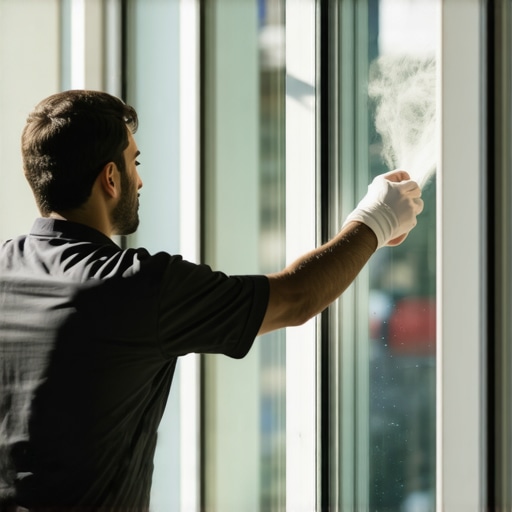
When you prepare to clean, do not just spray the center of the glass. Start by inspecting the muntin bars and the sash. If you have removable grilles, take them out. Dust the frame first to ensure you aren’t dragging dirt from the perimeter onto the glass. Mix one tablespoon of cornstarch with a quart of warm water and a splash of white vinegar. The vinegar acts as a mild acid to cut through mineral deposits, while the cornstarch provides the mechanical lifting power. Apply the solution with a microfiber cloth, ensuring you reach the very edges where the glass meets the glazing bead. Use a squeegee with a fresh rubber blade to pull the liquid down, and then use a dry cloth to buff away the cornstarch residue. This method avoids the ‘caulk-and-walk’ mentality of hurried maintenance and treats the window with the technical respect it deserves. By maintaining the glass and ensuring the weep holes are clear, you extend the life of your installation and delay the need for a costly full-frame replacement.