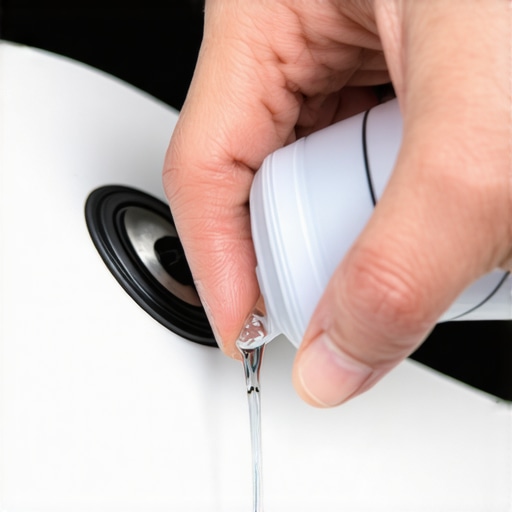
You feel it before you see it. You go to open your casement window on a fresh spring morning, and the handle resists. You apply a little more torque, and there is a sickening, grinding sensation. To the average homeowner, this feels like the death knell of the unit. They assume the gears are stripped, the internal mechanism is shattered, and it is time to search for how to replace windows. But as someone who has spent nearly three decades in the glazing trade, I can tell you that 90 percent of the time, your window is not broken; it is simply starving. It is a victim of friction, oxidation, and the wrong maintenance approach.
The Sales Pitch Takedown: A Reality Check
I recall a specific afternoon in a suburb of Chicago where a homeowner was clutching a five-figure estimate for a full-house window replacement. The salesman had told her that her hardware was obsolete and the seals were compromised because the windows were difficult to crank. I took one look at the operators. They were high-quality Truth Encore hardware, just caked in ten years of household dust and kitchen grease. I walked out to my truck, grabbed a can of dry PTFE spray and a stiff brush. Ten minutes later, the windows glided open with the flick of a finger. I told her to keep her twenty thousand dollars. That is the difference between a glazier and a salesman. A glazier understands the mechanics of the operable sash; a salesman only understands the commission on a new contract. If you are looking for a window repair, you must first look at the lubricant.
The Physics of the Stiff Crank
Why do these mechanisms seize? In cold climates like we see in the northern states, the issue is often a combination of the ‘Dew Point’ and mechanical stasis. When warm, humid air from your kitchen or bathroom hits the cold surface of the hardware, you get condensation. This moisture settles into the worm gear of the operator. Over time, it causes surface oxidation or ‘white rust’ on zinc-plated components. This increases the coefficient of friction. When you turn that handle, you are no longer just moving a sash; you are fighting the molecular bond of oxidized metal. Furthermore, the glazing bead and the weatherstripping can become ‘tacky’ over the winter, essentially gluing the sash to the frame. When you force the crank, you put immense pressure on the gears because the sash won’t release. You are not just fighting the gear; you are fighting the vacuum of the seal.
“Periodic cleaning and lubrication of sash tracks and hardware are essential to maintain the operational integrity of the fenestration assembly.” – AAMA 907-15 Voluntary Specification for Corrosion Resistant Coatings
The $3 Solution: What to Use and What to Avoid
The biggest mistake I see is the use of WD-40. Stop. WD-40 is a solvent and a degreaser; it is not a long-term lubricant. It will provide a temporary fix by breaking down the gunk, but it evaporates rapidly and leaves the metal bone-dry and more susceptible to rust than before. It also attracts dust like a magnet, creating a grinding paste that will eventually destroy the teeth of your gears. For a professional window repair, you need a lubricant that stays put and repels contaminants. A $3 or $4 tube of white lithium grease or, better yet, a dry PTFE (Teflon) spray is the industry standard. White lithium grease is excellent for the internal worm gears because of its high viscosity and water resistance. However, for the exposed tracks and the sliding shoes where the arms connect to the sash, a dry PTFE spray is superior because it does not leave a sticky residue that catches dead flies and outdoor debris.
The Step-by-Step Restoration Process
First, you must be a thorough window cleaner. Open the window as far as it will go. If it is stuck, do not force it. Use a vacuum with a crevice tool to pull out the dead bugs and dirt from the sill pan and the tracks. Use a small brush to scrub the operator arms. Look at the weep holes at the bottom of the frame; if these are clogged, water will back up and rot your rough opening or rust your hardware from the bottom up. Once clean, apply your white lithium grease directly into the gear housing. You will see a small hole or an opening where the handle meets the base. Spray or dab it in there. Next, apply the PTFE spray to the tracks and the pivot points of the arms. Crank the window in and out several times to distribute the lubricant. You will feel the tension dissipate as the grease works into the threads of the worm gear.
“The installer and the maintenance crew must ensure that hardware remains free of debris and is treated with non-detergent lubricants to prevent premature mechanical failure.” – ASTM E2112 Standard Practice
Thermal Dynamics and Hardware Stress
In the North, we deal with extreme thermal expansion and contraction. Your sash might be vinyl, wood, or fiberglass. Each of these materials moves at a different rate than the steel hardware. In January, the frame shrinks, tightening the tolerances. If your hardware is not lubricated, the force required to break the sash free from the frozen weatherstripping can exceed the shear strength of the zinc gears. This is why most ‘broken’ windows happen in the first few weeks of spring. By maintaining the hardware, you ensure that even when the U-Factor is being tested by -20 degree weather, the mechanical components can handle the load. Proper maintenance can defer the need to replace windows by decades, saving you thousands in capital expenses and keeping high-performance glass in your walls where it belongs.