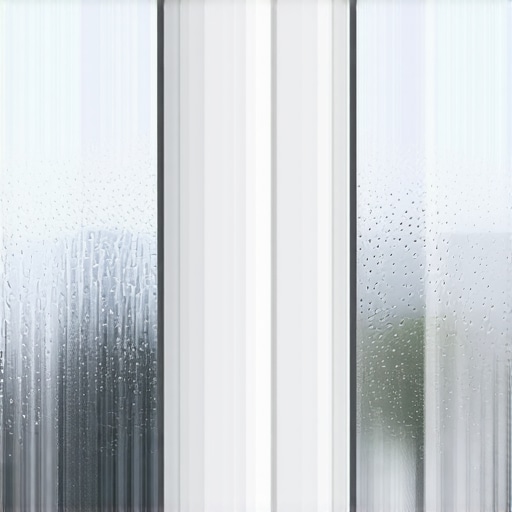
The Technical Reality of Insulated Glass Units
A window is not just a piece of glass: it is a complex thermal barrier. When we talk about double glazing, we are actually discussing an IGU or Insulated Glass Unit. This unit consists of two panes of glass separated by a spacer bar and hermetically sealed to create a dead air space or a gas-filled chamber. This chamber is your primary defense against the thermodynamics of the outside world. When that seal fails, your window ceases to be an insulator and becomes a liability. Most homeowners notice the fog first, but the failure started months or years before the first droplet of water appeared. As a master glazier with a quarter-century in the field, I have seen every type of failure from high-rise curtain walls to residential double-hung sashes. Identifying a blown seal fast is about understanding the physics of the unit rather than just looking for moisture.
The Condensation Crisis: A Diagnostic Narrative
I recall a call from a homeowner in a frosty suburban neighborhood who was convinced their three-year-old windows were defective. I walked into the living room with my hygrometer and a high-intensity thermal camera. They had a massive picture window that looked like it had been sprayed with a hose on the inside. I showed them the hygrometer: the interior humidity was hovering at 65 percent because they had recently installed a whole-house humidifier and kept it cranked. However, when I moved to the master bedroom, the situation was different. The glass there was clear except for a small, wispy patch of fog in the lower corner of the sash that wouldn’t wipe away. That was the smoking gun. It was not the lifestyle in that room: it was a catastrophic failure of the secondary seal. The desiccant inside the spacer bar had reached its saturation point, a state we call ‘desiccant breakout,’ and could no longer absorb the moisture migrating into the unit. That window was no longer performing to its NFRC rating.
“Installation is just as critical as the window performance itself. A high-performance window installed poorly will fail.” – AAMA Installation Masters Guide
The Physics of Thermal Pumping
Why do seals blow? It is rarely a single event. It is a process called thermal pumping. During the day, the sun hits the glass, heating the gas inside the IGU. The gas expands, putting outward pressure on the seals. At night, the gas cools and contracts, creating a vacuum effect. This constant expansion and contraction happens every single day of the year. Over time, the sealant (usually polyisobutylene for the primary seal and silicone or polysulfide for the secondary seal) loses its elasticity. In Northern climates, where the U-Factor is the most critical metric, this cycling is brutal. If the window was not shimmed correctly in the rough opening, or if the glazing bead is putting uneven pressure on the glass, the seal will fail prematurely. Once the seal is breached, the argon or krypton gas escapes and is replaced by moisture-laden air. This is why you need a professional window cleaner or a specialist to inspect the units during routine maintenance.
How to Spot a Blown Seal: The Professional Checklist
If you suspect your windows are failing, do not wait for a total blackout of the glass. Use these three professional methods to identify a blown seal fast. First, the Visual Distortion Test. Stand outside and look at the reflection of the clouds or trees in your windows. If the reflection looks warped or like a funhouse mirror, the panes might be collapsing. This happens when the gas fill has leaked out and the glass is bowing inward due to the pressure differential. Second, the Fogging Cycle. A blown seal will often show condensation that comes and goes with the temperature. If you see fog in the morning that disappears by noon, the seal is gone. The moisture is trapped between surface two and surface three of the glass. You cannot wipe it off. Third, the Snail Trail. Look for white, powdery deposits or streaks inside the glass. This is the residue left behind when the desiccant material in the spacer bar begins to degrade and circulate within the unit.
“Total window performance is measured by the U-factor, which indicates the rate of non-solar heat flow. A failed seal effectively nullifies the insulating properties of the gas fill.” – NFRC Guide to Energy Performance
The Glass Class: Understanding U-Factor and SHGC
When you are looking to replace windows or perform a window repair, you must understand the labels. The U-Factor measures how well a window keeps heat inside a building. In cold climates, you want a low U-Factor. A blown seal spikes your U-Factor because air is a poor substitute for argon gas. Then there is the Solar Heat Gain Coefficient (SHGC), which measures how much solar radiation enters the home. If your Low-E coating is on surface three (the inward-facing side of the inner pane), it is designed to reflect heat back into your room. When the seal blows, the moisture can actually corrode that microscopic silver coating, leading to a permanent haze that no window cleaner can remove. This is why a simple repair is often impossible once the seal has been compromised for a long period.
The Anatomy of the Spacer and Sealant
We need to talk about what is actually holding your glass together. Modern windows use warm-edge spacers made of foam or plastic composites rather than the old-fashioned highly conductive aluminum. These spacers are designed to reduce the temperature bridge at the edge of the glass, which reduces condensation. The sealant is the glue. If the installer did not use a proper sill pan or if the weep holes in the frame are clogged, water will sit against the bottom of the IGU. No seal is designed to be submerged. If your windows are sitting in a pool of water because the drainage system is blocked, those seals will fail within five years. This is a common issue I see during a window repair: the window itself was fine, but the water management system of the frame was neglected.
Repair or Replace: Making the Decision
Can you fix a blown seal? There are companies that offer defogging services where they drill small holes in the glass, wash out the insides, and install a vent. As a master glazier, I am skeptical. You are not replacing the argon gas, and you are not restoring the thermal integrity of the unit. You are essentially turning a double-pane window into a vented single-pane window. The only real fix is to replace the IGU. This involves removing the glazing bead, taking out the failed glass unit, and installing a new, factory-sealed unit into the existing sash. If the frames are still in good condition (especially fiberglass or high-quality vinyl), this is a cost-effective way to restore your home’s energy efficiency without a full-frame replacement. However, if you have wood rot in the frame or if the operable parts of the window are sticking, it is time to replace windows entirely. Properly shimming the new units and using high-quality flashing tape is the only way to ensure the new seals last another twenty years.