The Winter Friction Problem: Why Window Hinges Screech in the Cold
As a master glazier with over two decades in the field, I have seen it all. I have seen 40-story curtain walls flex in hurricane winds and historic wood sashes that have survived a century of salt air. But every November, my phone starts ringing for a different reason. Homeowners aren’t calling about structural failure; they are calling because their casement and awning windows are making a high-pitched metallic scream every time they try to get a bit of fresh air. They think the frame is warping or the rough opening is shifting. In reality, they are just dealing with basic metallurgy and the unforgiving physics of a Northern winter.
When the temperature drops, materials contract at different rates. Your vinyl or wood sash behaves differently than the stainless steel or zinc-plated hinges that support it. This contraction increases the tolerance pressure on the moving parts of the hardware. Combine that with the dry, abrasive air of winter, and you have a recipe for mechanical friction that can eventually lead to a stripped operator or a snapped hinge track. I always tell my clients that a window is a machine, and like any machine, it requires a specific lubrication strategy to survive the freeze-thaw cycle.
The Condensation Crisis: A Master Glazier’s Perspective
A homeowner in a suburb north of Chicago called me in a panic last January because their three-year-old casement windows were ‘sweating’ and the hinges were grinding so loudly they were afraid the glass would shatter. I walked in with my hygrometer and found the indoor humidity was hovering at 62 percent while it was five degrees outside. I had to explain that the windows weren’t failing; their lifestyle was creating a microclimate. The moisture was migrating to the coldest points in the rough opening, which happened to be the metal hinge tracks. That moisture was freezing into micro-ice crystals, acting like sandpaper every time the operable window was opened. It wasn’t a window repair issue; it was a ventilation issue. Once we got the humidity under control and applied a moisture-repelling lubricant, the ‘mechanical failure’ vanished.
“Installation is just as critical as the window performance itself. A high-performance window installed poorly will fail.” – AAMA Installation Masters Guide
The Science of the $3 Vaseline Trick
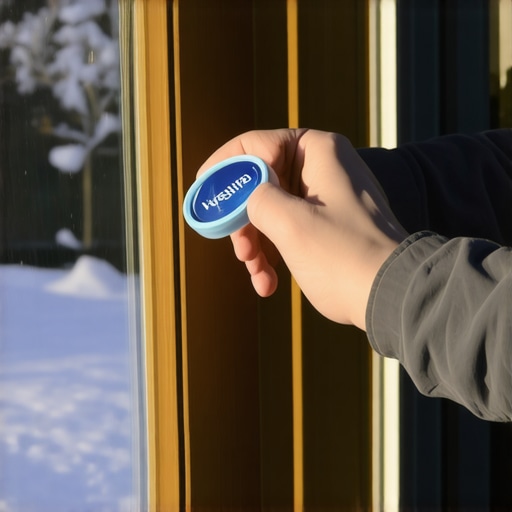
Most people reach for a spray-on lubricant when they hear a squeak. That is a mistake in a cold climate. Light oils and silicone sprays are often too thin; they ‘run’ when the heat from the house hits the glass and then evaporate or thicken into a gummy residue when the temperature drops below zero. Petroleum jelly, commonly known by the brand name Vaseline, is a high-viscosity hydrocarbon mixture that remains stable across a massive temperature range. For three dollars, you are getting a waterproof, non-conductive, and chemically inert barrier that stays exactly where you put it.
When you apply petroleum jelly to a window hinge, you aren’t just lubricating. You are creating a hydrophobic seal over the metal. In a cold climate where the U-Factor is the primary metric of concern, the hardware often acts as a thermal bridge. This causes condensation to form directly on the metal. The Vaseline prevents this moisture from reaching the steel, stopping oxidation and ice formation in its tracks. It is the most effective way to ensure the glazing bead and frame stay clear of the mechanical stress caused by sticking hardware.
How to Apply the Lubricant for Maximum Winter Protection
First, you must be a diligent window cleaner before you become a repairman. Any dirt, salt, or grit trapped in the hinge will act as an abrasive once mixed with a lubricant. Use a soft brush to clear the hinge track and the weep hole area. Once the track is clean, open the window to its maximum operable position. Apply a thin, even layer of petroleum jelly to the sliding track and the pivot points of the hinge arm. You do not need a thick glob; a thin film is sufficient to reduce the coefficient of friction.
Cycle the window three or four times to distribute the jelly into the internal bearings of the hinge. You will notice the sound dampening immediately. This process also allows you to inspect the shim placement and ensure the window is still square within the rough opening. If the window is difficult to close even after lubrication, the problem might be structural, such as a sagging header or a failed sill pan that has allowed water to rot the framing lumber.
Understanding the Thermal Logic of Your Windows
In Northern climates, the goal is always to minimize heat loss. We look for windows with a low U-Factor and a warm-edge spacer system. However, even the most expensive triple-pane unit will lose its effectiveness if the hardware doesn’t pull the sash tightly against the weatherstripping. If your hinges are sticking or squeaking, they are likely not achieving a full compression seal. This allows cold air to bypass the flashing tape and insulation, leading to drafts and higher energy bills.
“The performance of a fenestration product is dependent on the integrity of the entire system, including the interaction between hardware, weatherstripping, and the frame.” – NFRC Performance Standards
If you find that your windows are consistently drafty despite lubricated hinges, it may be time to replace windows entirely. Older units often lack the thermal break technology found in modern fiberglass or high-quality vinyl frames. When I inspect a home, I look for muntin bars that are pulling away from the glass or glazing beads that have become brittle. These are signs that the seal integrity has been compromised beyond what a simple $3 trick can fix.
Maintenance Beyond the Hinge
While the Vaseline trick is a lifesaver for hinges, you must also look at the secondary systems. Check your weep holes at the bottom of the frame. These are designed to allow incidental water to escape the track. If these are clogged with debris, water will back up, freeze, and expand, which can crack a vinyl frame or rot a wood sill. A quick vacuuming and a poke with a thin wire will keep them clear all winter. Also, inspect the flashing tape if you have access to the exterior. If the tape is peeling, water can migrate behind the rough opening, leading to the kind of hidden rot that eventually requires a full frame tear-out.
Professional window maintenance is about more than just aesthetics. It is about protecting the envelope of your home. By spending ten minutes and a few dollars on basic hardware care, you are extending the life of your investment and ensuring that your home remains a sanctuary against the brutal winter elements. Do not wait for the first blizzard to find out your windows are seized shut. Take care of the hardware now, and the hardware will take care of you when the wind starts to howl.