The Invisible Failure: Why Your Windows Are Lying to You
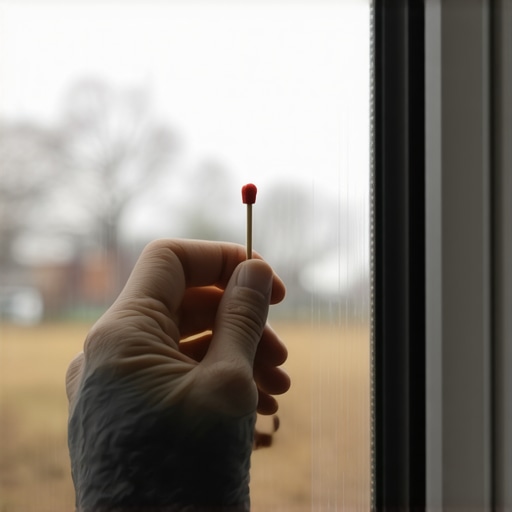
I have spent over two decades in the glazing trade, and if there is one thing I have learned, it is that a window can look perfectly fine while failing at its only two jobs: keeping the weather out and the comfort in. I remember walking into a home in the dead of winter where the owner was convinced they needed a whole-house furnace replacement. I walked over to the north-facing operable casement, pulled a simple matchstick from my pocket, and showed them the truth. Their windows were not just cold; they were thermally dead. The humidity in the room was 55 percent, but the glass temperature was so low that the dew point was being reached on the interior surface, causing a ‘sweating’ effect that the homeowner thought was a manufacturing defect. It was not a defect; it was a total loss of the argon gas buffer and a degraded Low-E coating.
“Installation is just as critical as the window performance itself. A high-performance window installed poorly will fail.” – AAMA Installation Masters Guide
In the world of window repair and replacement, we often talk about the rough opening or the sill pan, but the average homeowner overlooks the physics of the glass itself. Most modern windows are Insulated Glass Units (IGUs). They consist of two or more panes of glass separated by a spacer and sealed. When that seal fails, the argon or krypton gas escapes, replaced by moisture-laden air. This is where the matchstick test comes in. It is a tool for the window cleaner and the homeowner alike to diagnose the health of their glazing without calling in a forensic team.
The Physics of the Flame: Performing the Matchstick Test
To perform this test, hold a lit match or a small lighter in front of the glass at night or when the interior is dark. Look at the reflections in the glass. In a standard double-pane window, you should see four reflections of the flame. If the window is functioning correctly with a Low-E (Low-Emissivity) coating, one of those flames will be a different color, usually a faint purple or green. This color shift indicates that the metallic oxide layer is present and reflecting long-wave infrared radiation. If all four flames are the same yellowish-orange color, your ‘energy efficient’ windows are essentially just two sheets of basic glass. Furthermore, if you see the flame flicker while the window is closed and there is no interior draft, you are witnessing air infiltration through the glazing bead or the sash weatherstripping. This means the window repair needed is not just aesthetic; it is structural.
The North Climate Logic: U-Factor and Heat Retention
For those living in cold climates, the enemy is heat loss. In these regions, we prioritize the U-Factor. This is the rate at which a window, door, or skylight transmits non-solar heat flow. The lower the U-Factor, the better the window is at keeping heat inside. When we replace windows in these zones, we look for Low-E coatings on Surface #3 (the interior-facing surface of the inner pane). This placement is designed to reflect the heat from your furnace back into the room. When this coating fails, or when the argon gas leaks out, the U-Factor skyrockets. Your rough opening might be perfectly insulated with flashing tape and shims, but if the glass performance has bottomed out, you are essentially standing next to an ice block all winter.
“The performance of a fenestration product is dependent on the combination of the frame, the glass, and the spacer system.” – NFRC Performance Standards
Decoding the IGU: Spacers and Sealants
Glazing zooming requires looking at the ‘warm-edge’ spacer. In the old days, we used aluminum spacers that acted as a thermal bridge, conducting cold directly to the edges of the glass. This is why you often see mold on the muntins or the bottom of the sash. Modern high-performance windows use foam or composite spacers that break that thermal bridge. If your matchstick test shows condensation between the panes, the seal has been breached. This is often caused by ‘solar pumping,’ where the sun heats the air between the panes during the day, causing it to expand and put pressure on the seals. At night, it contracts. Over thousands of cycles, a cheap sealant will crack, allowing the gas to escape and moisture to enter.
When to Repair and When to Replace
Many homeowners ask if they can just fix the seal. The reality is that once an IGU is compromised, the desiccant inside the spacer is saturated. You can’t just ‘pump more gas’ into it. In some cases, a glazier can replace just the glass unit while keeping the existing sash and frame. This is a common window repair strategy when the frame material, like fiberglass or high-quality vinyl, is still in good shape. However, if the rough opening was never properly flashed or if the weep holes are clogged and causing rot in the sill pan, a full-frame replacement is the only scientific solution. Don’t let a window cleaner or a handyman tell you that a bead of caulk will fix a thermal failure. Caulk is for aesthetics and minor air stops; it is not a structural thermal barrier.
The Role of Visible Transmittance
Another factor revealed by the matchstick test is the Visible Transmittance (VT). If your glass looks hazy or ‘bluish’ even after a window cleaner has scrubbed both sides, you are likely looking at a degraded Low-E layer that has oxidized due to seal failure. This reduces the amount of natural light entering your home and can make even a bright day feel gloomy. High-quality glazing manages the spectrum, allowing the visible light in while blocking the UV rays that fade your furniture and the infrared rays that mess with your thermostat. Investing in the right glass chemistry is a decision that pays off in comfort long before it pays off in utility bills.