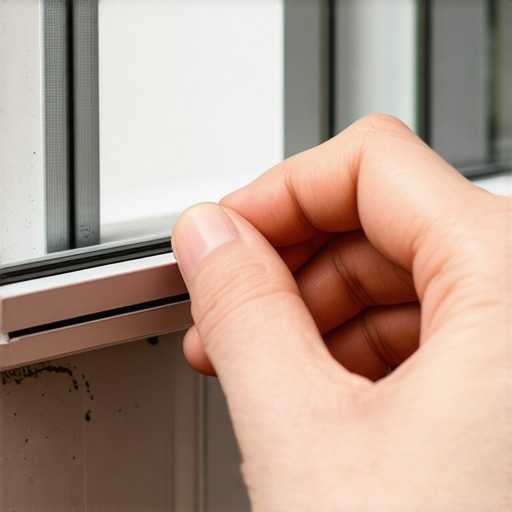
The High-Friction Nightmare of the Metal Sash
In the world of high-end glazing, nothing is more frustrating than a precision-engineered aluminum window that refuses to glide. We see it constantly in older architectural builds where the window repair needs are ignored until the sash is practically fused to the frame. When you have a metal-on-metal interface, you are dealing with a high coefficient of friction that is exacerbated by atmospheric particulates and thermal expansion. If you are in a climate like Texas or Florida, that aluminum frame is a massive thermal bridge, expanding and contracting with every degree of Solar Heat Gain. I once walked into a luxury condo where the homeowner was convinced their foundation was sinking because their sliding glass doors were seized shut. I brought out my hygrometer and found the humidity was spiking, causing the aluminum extrusions to swell just enough to bind the Sash against the Rough Opening. It wasn’t a structural failure; it was a lubrication failure.
“Installation is just as critical as the window performance itself. A high-performance window installed poorly will fail.” AAMA Installation Masters Guide
The Physics of the Sticky Track
Metal tracks, specifically those made of extruded aluminum or stainless steel, are susceptible to a process called oxidation. When the factory-applied finish wears down, the raw metal reacts with oxygen, creating a microscopic sandpaper-like surface. This is where most people make their first mistake. They reach for a heavy oil or a spray lubricant like WD-40. This is a cardinal sin in the glazing trade. Petroleum-based oils are magnets for dust. Within six months, that oil turns into a grinding paste that will eventually eat through your Glazing Bead and ruin the rollers. To perform a proper window repair, you must first utilize a specialized window cleaner that is non-reactive and leaves no residue. We are looking to achieve a hydrophobic surface that allows the Sash to float without attracting the grit that leads to mechanical failure.
The ‘Lip Balm’ Strategy: Paraffin and Polymer
The secret that old-school glaziers use is not actually putting a tube of Chapstick in the track, but rather the application of high-density paraffin wax or a specialized dry silicone stick. This is the ‘Lip Balm’ secret. Paraffin wax provides a sacrificial layer that fills the microscopic voids in the metal track. It is a solid-state lubricant that does not migrate or attract debris. When you apply this wax to the meeting rail and the bottom track, you are essentially creating a Teflon-like surface that reduces the force required to operate the window by up to 60 percent. This is especially critical in the South where the Heat Gain is intense. In these climates, the SHGC (Solar Heat Gain Coefficient) is your primary enemy. You want the Low-E coating on Surface #2 to reflect that radiant energy back outside, but if the window is stuck open because of a dry track, your HVAC system is fighting a losing battle. A properly lubricated window ensures a tight seal against the weatherstripping, maintaining the building envelope integrity.
“The method of flashing and sealing the window into the rough opening is the most common point of moisture-related failures in the building envelope.” ASTM E2112 Standard Practice
When Lubrication Isn’t Enough: Knowing When to Replace Windows
While the wax trick can revive a stubborn frame, it cannot fix a compromised Sill Pan or a rotted Rough Opening. If you see water pooling in the track or if the Weep Hole system is clogged with years of debris, you might be looking at a deeper issue. Aluminum windows without a thermal break are notorious for ‘sweating’ in colder months, leading to mold growth on the surrounding drywall. In these instances, you shouldn’t just look for a window repair professional; it may be time to replace windows with modern fiberglass or thermally broken aluminum units. Fiberglass is particularly impressive because it has the same thermal expansion rate as glass, meaning the Sash won’t bind in the frame regardless of the temperature. This stability ensures that the mechanical tolerances remain consistent, preventing the very stickiness we are trying to solve with wax.
The Master Glazier’s Maintenance Protocol
To keep your operable units functioning, follow this technical regimen: First, use a high-suction vacuum to remove any particulate matter from the Weep Hole channels. Second, apply a citrus-based window cleaner to the metal surfaces to strip away old grease. Finally, take a block of paraffin wax and firmly rub it along the path of the rollers and the contact points of the Sash. Do not use enough to cause buildup; you want a thin, transparent film. This simple maintenance can extend the life of your hardware by decades and prevent the costly necessity to replace windows prematurely. Remember, a window is a moving machine, and like any machine, its longevity is dictated by the quality of its lubrication and the cleanliness of its moving parts. Don’t be the homeowner who forces a stuck window and snaps the Muntin or cracks the Glazing Bead. Use the science of friction to your advantage.