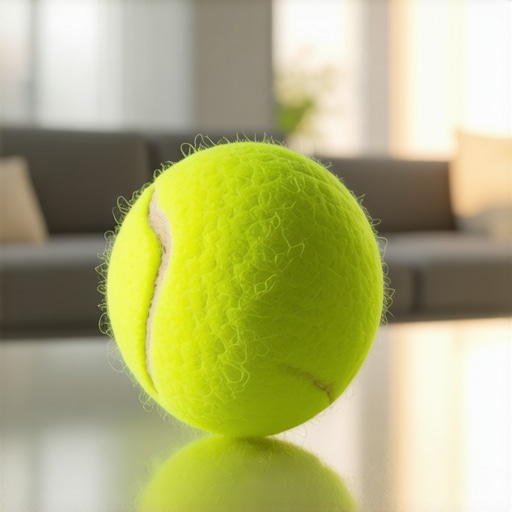
In twenty-five years of handling high-performance glazing, I have seen homeowners panic over everything from seal failures to shattered tempered units. But one of the most frequent calls I receive involves a surprisingly simple aesthetic crisis: dark, unsightly scuffs on the bottom of sliding glass doors or French door panels. These marks are usually the result of rubber-soled shoes, pet toys, or vacuum cleaner bumpers making contact with the glass. Most people reach for a harsh chemical window cleaner or, worse, an abrasive scouring pad that can permanently etch the surface of the glass. Before you decide to replace windows or call for an expensive window repair, there is a master glazier’s trick that costs less than a latte: the tennis ball hack.
The Condensation Crisis and Surface Integrity
To understand why surface maintenance matters, we have to look at the environment the glass inhabits. I remember a homeowner in Chicago who called me in a panic because their new sliding doors were ‘sweating’ and looked ‘ruined’ with streaks. I walked in with my hygrometer and showed them the interior humidity was hovering at 62 percent while it was ten degrees outside. It wasn’t a product failure: it was their lifestyle and the dew point. They were trying to scrub the glass with abrasive sponges to remove what they thought was permanent damage, but they were actually just seeing the result of high moisture interacting with surface contaminants. This is exactly how scuffs become baked onto the glass. When the relative humidity is high, the microscopic pores of the glass (yes, glass is porous at a molecular level) are more likely to trap the carbon and rubber polymers from a shoe scuff. If you do not address these scuffs correctly, you risk damaging the glazing bead or the delicate coatings on the glass surface.
“Installation is just as critical as the window performance itself. A high-performance window installed poorly will fail, and a high-performance surface maintained poorly will degrade.” – AAMA Installation Masters Guide
The Physics of the Tennis Ball Hack
Why a tennis ball? As a glazier, I look at friction and material hardness. Glass has a Mohs hardness of about 5.5 to 7, while the rubber and felt of a tennis ball are significantly lower. This means the tennis ball acts as a high-friction eraser that is physically incapable of scratching the glass. To perform the hack, you take a standard tennis ball and cut a small ‘X’ into it, then shove it onto the end of a broom handle. This allows you to apply significant pressure to the scuff mark without bending over or risking a slip that could impact the sash. The felt on the tennis ball generates localized heat through friction, which softens the rubber polymers of the scuff. Once softened, the fibers of the ball lift the material off the glass and trap it in the felt. This is far more effective than a liquid window cleaner, which often just smears the oils from the rubber across a wider surface area.
Understanding Your Glazing System
When you are cleaning scuffs, you must be aware of the components around the glass. If you are dealing with an operable door, the movement of the panel within the rough opening is dependent on a precise shim and level installation. If you are leaning heavily against the glass to remove a mark, you need to ensure you aren’t putting lateral pressure on the glazing bead. The glazing bead is the strip of vinyl, wood, or metal that holds the glass in the frame. If you pop this bead, you compromise the seal. Furthermore, if you are in a northern climate like Minneapolis or Toronto, your glass door likely has a Low-E coating. While most Low-E coatings are on Surface #2 or #3 (the internal surfaces of the insulated glass unit), some modern high-efficiency units have a hard-coat Low-E on Surface #4 (the side you touch). If you use an abrasive to remove a scuff on Surface #4, you are essentially sanding off your insulation. The tennis ball is the only safe way to maintain the U-factor integrity while restoring clarity.
The Anatomy of a Professional Window Repair
If the tennis ball does not remove the mark, you might not be looking at a scuff; you might be looking at a scratch or ‘glass cancer’ (alkaline corrosion). This is where the distinction between a simple fix and a professional window repair becomes vital. If you can feel the mark with your fingernail, it is a scratch. In those cases, you aren’t just cleaning: you are polishing. But if it is a surface transfer, the tennis ball is king. For those who want to go the extra mile, following the tennis ball treatment with a microfiber cloth and a professional-grade window cleaner (avoiding ammonia-based products if you have specialty coatings) will restore the visible transmittance of the glass to its original factory specifications.
“Standard practice for the installation of exterior windows, doors, and skylights requires that the flashing system and the water management strategy be preserved during all maintenance activities.” – ASTM E2112
Maintenance Beyond the Glass
A glazier’s job is never just about the glass. It is about the hole in the wall. When you are down there on the floor fixing scuffs, take a moment to inspect your sill pan and weep holes. In many ‘caulk and walk’ installations, the weep holes are clogged with debris. If water cannot escape through the weep holes, it will back up under the sill, rot your subfloor, and eventually cause the door to settle. A settling door creates friction in the sash, making it harder to open, which leads to people kicking the door to get it to move, which—you guessed it—causes more scuffs. Ensure your flashing tape is intact and that the rough opening hasn’t shifted. If the door is sticking, don’t just clean the glass; check the rollers and the track. If the frame is vinyl, look for signs of excessive expansion and contraction which can indicate a lack of proper shimming during the initial install. Taking care of the scuffs with a $4 tennis ball is a great start, but maintaining the structural integrity of the entire opening is how you avoid the need to replace windows prematurely.
Climate Logic: Why Surface Care Varies
In northern climates, we fight the U-factor battle. We want the heat to stay inside. This means the glass stays warmer, which can actually make rubber scuffs ‘stickier’ on the interior surface. In the south, where Solar Heat Gain Coefficient (SHGC) is the priority, the glass may have heavy tints or external coatings that react differently to friction. Regardless of your location, the tennis ball hack remains the safest universal method. It avoids the use of blades or scrapers which, in the hands of an amateur, often lead to ‘weld splatter’ type scratches or permanent scarring of the glass. By understanding the physics of your windows and the materials used in their construction, you can extend the life of your glazing by decades. Don’t let a simple scuff turn into a thousand-dollar replacement. Grab a broom handle, a tennis ball, and use a bit of glazier’s intuition to keep your view clear and your coatings intact. Glass is a high-performance building material; treat it with the technical respect it deserves.