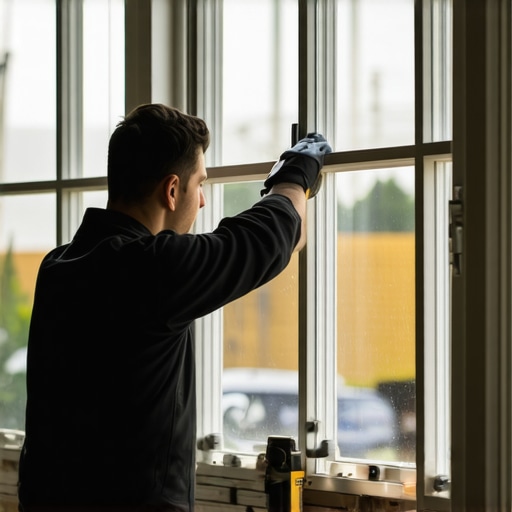
The Gravity of the Situation: Why Your Sash is Sagging
In twenty-five years of staring at rough openings and analyzing glazing beads, I have seen thousands of homeowners make the same fatal mistake when an operable sash begins to drag against the sill. They reach for a metal pry bar or a heavy hammer. This is the fastest way to turn a simple window repair into a full-scale replacement windows project. When a window sash sags, it is usually because the structural integrity of the frame or the sash joints has been compromised by seasonal shifts, moisture ingress, or the sheer dead weight of the glass pulling against the fasteners.
The Narrative Matrix: The Rot Behind the Sag
I remember a call I took in a damp region of the Pacific Northwest. The homeowner was complaining that her double-hung window would no longer lock because the upper sash had dropped nearly half an inch. I pulled the vinyl window out of the wall and discovered the header was completely black with rot. The previous installer had relied on the nailing fin instead of proper flashing tape, allowing water to bypass the drainage plane. The moisture had softened the rough opening to the point where the weight of the sash was literally crushing the wood underneath. If that installer had understood the shingle principle of water management, that window would still be square today.
“Installation is just as critical as the window performance itself. A high-performance window installed poorly will fail.” – AAMA Installation Masters Guide
The Physics of the Scrap Wood Block
Why do I insist on a scrap block of wood, usually a piece of soft pine or cedar, when I am trying to re-align a sash? It comes down to the distribution of force. Glass is an incredibly rigid material but it is brittle. The moment you apply a point-load with a metal tool against the sash rail, you risk localized compression that can crack the glazing bead or, worse, cause a stress fracture in the glass itself. A wood block acts as a sacrificial surface. It conforms slightly to the profile of the sash, spreading the force of your mallet across a wider surface area. This ensures that the energy moves the entire sash assembly rather than denting the material.
When you are performing a window repair on a drooping sash, you are essentially trying to overcome the friction of the weatherstripping and the tension of the balance system. In a cold climate, the U-Factor of your window is maintained by the tightness of the seal. If the sash is out of square, your argon gas fill is the only thing standing between you and a massive heating bill. By using a wood block to gently tap the sash back into its vertical alignment, you preserve the seal without compromising the frame material.
Technical Deep Dive: The Forces at Play
Every window sash has a center of gravity. In a standard double-pane unit, that weight is distributed through the stiles and rails. Over time, the screws holding the hinges or the balances can strip out of the wood or vinyl. This is where the “Glazing Zooming” perspective is vital. You aren’t just hitting a piece of wood; you are recalibrating a system designed to manage thermal transfer. When the sash sags, the contact points of the weatherstripping are uneven. This creates an air leak. In Minneapolis or Chicago, that air leak will lead to localized cooling of the interior glass surface, which drops below the dew point and causes condensation. This isn’t a glass problem; it is a geometry problem.
“Fenestration products must be installed in a manner that maintains the integrity of the water-resistive barrier.” – ASTM E2112
The Window Cleaner Perspective
Often, it is the professional window cleaner who first notices a drooping sash. When they are wiping down the exterior and notice that the gaps between the sash and the frame are uneven, that is a red flag. A window cleaner who knows their trade will see the wear patterns on the sill. If you see black marks or scraped paint on the bottom corner of the frame, the sash has been dragging for a long time. This dragging increases the torque on the hardware every time the window is opened or closed, leading to eventual mechanical failure.
If the sag is caught early, a simple re-shimming of the glass within the sash can fix it. This is known as “toe-and-heeling.” You remove the glazing beads, lift the glass unit, and place a small shim at the bottom corner on the hinge side and the top corner on the opposite side. This uses the rigidity of the glass itself to hold the sash square. The scrap wood block is your primary tool here to nudge the sash into the correct position before you set those shims.
When to Stop Repairing and Start Replacing
There is a limit to what a wood block and a mallet can do. If you find that you are re-aligning the same sash every six months, the problem is likely structural. This is when you need to replace windows. If the rough opening has settled or the sill pan was never installed, the window will never stay square. In southern climates, where the Solar Heat Gain Coefficient (SHGC) is the priority, a sagging sash can allow hot air to bypass the Low-E coatings on the glass, rendering your expensive energy-efficient windows useless. You are essentially paying to cool the neighborhood through the gaps in your window frame.
How to Safely Re-Align Your Sash
- Identify the point of contact where the sash is dragging.
- Open the window slightly to relieve the pressure on the sill.
- Place a 2×4 scrap block against the sash rail near the corner that is low.
- Use a rubber mallet to strike the wood block upward. The block protects the finish and the glass.
- Check the alignment by closing the window and observing the gap at the header.
- If the sash remains square, tighten all hardware screws to ensure it holds its position.
Comments are closed.