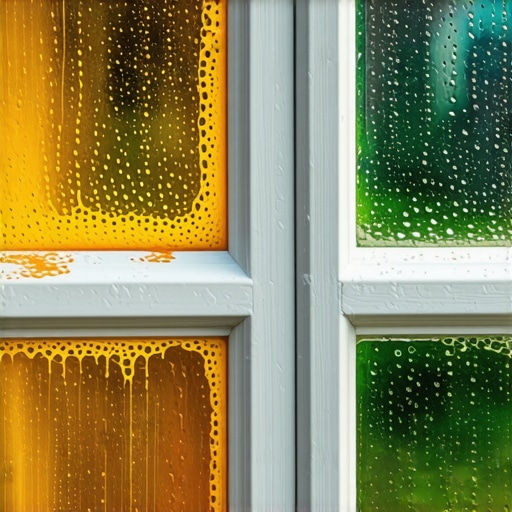
Why Your Wood Windows Turn Into Concrete When the Clouds Open
There is a specific, guttural frustration that comes with trying to heave open a wooden sash during a humid July afternoon in the Midwest or a rainy morning in the Pacific Northwest. You grab the lift, brace your feet, and pull until your face turns red, but the window refuses to budge. As a master glazier with a quarter-century in the field, I have seen homeowners resort to crowbars, ruining perfectly good muntins and cracking the glazing bead in the process. They assume the window is broken, or worse, that the house has shifted so violently the rough opening is now a trapezoid. Usually, the culprit is far simpler: hygroscopic expansion combined with high friction. Before you call a contractor to replace windows throughout your entire home, you need to understand the physics of why wood behaves this way and how a simple piece of $2 beeswax can outperform a $500 repair bill.
The Condensation Crisis: A Narrative of Moisture Mismanagement
A homeowner called me in a panic because their new windows were ‘sweating’ and wouldn’t slide open. I walked in with my hygrometer and showed them the humidity was 60 percent. It was a classic case of internal moisture loading. They were boiling pasta, running a humidifier, and had the crawlspace open to the damp earth. I had to explain that it wasn’t the windows failing; it was their lifestyle forcing the wood to absorb moisture. When wood absorbs water from the air, the cellulose fibers expand across the grain. In a double-hung window, even a few millimeters of expansion can turn an operable sash into a permanent wall. The friction between the sash stiles and the jamb liners becomes an immovable force. This is where most people reach for a chemical window cleaner or a silicone spray, but those are temporary fixes that can actually degrade the wood finish over time.
“Installation is just as critical as the window performance itself. A high-performance window installed poorly will fail.” AAMA Installation Masters Guide
The Science of the Beeswax Hack
The solution is not more force; it is better lubrication that resists moisture. Beeswax is a unique substance because it is hydrophobic and remains stable at a wide range of temperatures. Unlike paraffin or petroleum-based lubricants, beeswax has a high melting point and a molecular structure that allows it to fill the microscopic tracheids and vessels of the wood grain. When you apply beeswax to the tracks of a sticking window, you are doing two things. First, you are creating a low-friction barrier that allows the wood surfaces to slide past each other even when they are under pressure from swelling. Second, you are sealing the wood against further moisture absorption. By rubbing the wax into the vertical channels and the edges of the sash, you create a microscopic dam. This prevents the wood from ‘drinking’ the humidity in the air during a rainstorm, which keeps the dimensions of the wood more stable. It is a fundamental part of window repair that the big box stores won’t tell you about because they would rather sell you a whole new unit.
The Glazing Zoom: Why U-Factor and Humidity Matter
In colder climates like Chicago or Minneapolis, we focus heavily on the U-Factor, which measures the rate of heat transfer. A lower U-Factor means better insulation. However, many people forget that a high-performance window also maintains a warmer interior glass surface, which reduces the dew point on the frame. If you have older single-pane windows, the cold glass cools the surrounding wood. When the warm, moist indoor air hits that cold wood, it condenses, and the wood absorbs that liquid water. This is why windows often stick more in the winter or during heavy rain when the exterior temperature drops. To truly solve the sticking issue, you need to manage the thermal bridge. Using beeswax provides the lubrication, but you must also ensure your home is properly ventilated. If you are seeing black mold on the drywall or rot near the sill pan, the beeswax hack is just a band-aid. You are likely facing a failure of the flashing tape or a lack of a proper drip cap above the window.
“Water penetration is the most common cause of premature building envelope failure.” ASTM E2112
When to Repair and When to Replace Windows
I am a firm believer in the ‘Repair First’ philosophy. A properly maintained wood window can last a century, whereas a cheap vinyl replacement might fail in fifteen years when the seals blow or the frame warps in the sun. If your window is sticking, check the shim placement. If the original installer didn’t use a shim at the midpoint of the jamb, the weight of the house can cause the frame to bow inward, pinching the sash. In this case, you might need to pull the interior trim and adjust the shims in the rough opening. However, if the wood is soft to the touch or if you see daylight through the corners of the sash, it is time to replace windows. When looking for replacements, don’t just look at the price tag. Look for a low SHGC (Solar Heat Gain Coefficient) if you are in a sunny area, and ensure the new units have a weep hole system that actually functions. A window is a complex system involving the sash, the glass, the weatherstripping, and the surrounding wall. Treat it with the technical respect it deserves, and that $2 piece of beeswax might just be the best investment you make this year.
How to Apply the Beeswax Hack Correctly
First, ensure the window tracks are clean. Use a vacuum to remove grit and old paint chips. Do not use a harsh window cleaner that contains ammonia, as it can strip the natural oils from the wood and make it even more prone to swelling. Once clean, take a block of pure beeswax and rub it vigorously along the entire length of the tracks where the sash slides. You want to see a thin, dull sheen of wax. Move the sash up and down several times to distribute the wax. If the window still sticks, you may need to check the glazing bead or the weight pocket. In older homes, the sash cord might be fraying, adding tension to the system. By addressing the friction at a molecular level with beeswax, you are working with the physics of the wood rather than fighting against it. This is the difference between a master glazier and a handyman who just wants to caulk-and-walk.
Comments are closed.