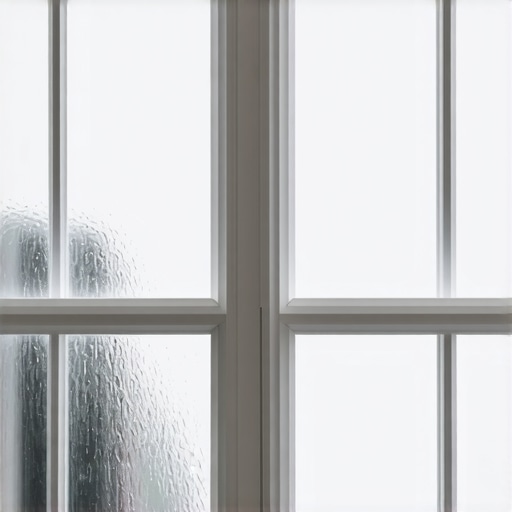
When you look through your window and see a milky haze or actual water droplets trapped between the panes, you are not looking at a dirty window that needs a window cleaner. You are looking at a fundamental failure of a pressurized system. In my 25 years as a glazier, I have seen thousands of homeowners try to scrub away the ‘fog’ only to realize the moisture is inside the Insulated Glass Unit (IGU). This is a breakdown of the dual-seal system that maintains the thermal integrity of your home. A foggy window is a window that has effectively reverted to being a single-pane unit, losing its insulating value and becoming a liability for your building envelope. We are going to look at the physics of why this happens and whether a repair or a full replace windows strategy is your best path forward.
The Condensation Crisis: A Real World Autopsy
A homeowner called me in a panic because their new windows were ‘sweating’ and the interior glass was obscured by a thick frost. I walked in with my hygrometer and showed them the humidity in the room was 60 percent. It was not a window defect in that specific case, but it was the precursor to a seal failure. However, another client in a cold climate had three windows that were permanently obscured. When I pulled the glazing bead and removed the IGU, the secondary seal had turned into a gummy mess. The previous installer had used a cheap acidic silicone that actually ate through the primary polyisobutylene seal. The ‘fog’ was the result of saturated desiccant. Once that material can no longer hold moisture, the humidity precipitates onto the glass surfaces during temperature shifts. This is what we call ‘thermal pumping.’ Every time the sun hits the window, the air inside expands and puts pressure on the seals. At night, it contracts and sucks in tiny amounts of moisture-laden air. Over years, this cycle destroys the unit.
“Installation is just as critical as the window performance itself. A high-performance window installed poorly will fail.” AAMA Installation Masters Guide
The Science of the Seal
To understand the fix, you have to understand the anatomy. A modern IGU consists of two or more panes of glass separated by a spacer bar. This spacer bar is filled with desiccant (silica gel beads) to absorb any residual moisture. The primary seal is usually polyisobutylene (PIB), a high-tack rubber that is extremely resistant to water vapor. The secondary seal, usually silicone or polysulfide, provides the structural strength to hold the unit together. When you see fog, the primary seal has been breached. In Northern climates, this is often due to the U-Factor being neglected. We want the glass to stay warm to prevent the dew point from being reached on the interior surface. When a seal fails, the Argon or Krypton gas escapes and is replaced by humid air. The insulating value drops instantly. This is why we focus on ‘Warm-Edge’ spacers made of foam or stainless steel rather than old-fashioned aluminum, which conducts cold and encourages condensation at the edges of the glass.
Repairing vs. Replacing the IGU
Many companies claim they can ‘restore’ foggy windows by drilling holes and spraying chemicals inside. As a professional, I must tell you this is often a temporary cosmetic fix. While it might remove the visible moisture, it does not restore the hermetic seal or the gas fill. It leaves the window as a ‘breathing’ unit that will eventually accumulate dust and debris inside. The only true way to restore the window for good is to replace the IGU itself while keeping the existing sash. This is a common window repair technique. We remove the glazing bead, cut the old sealant, and measure the thickness of the unit to the nearest sixteenth of an inch. If your frames are still in good condition, replacing just the glass is a cost-effective alternative to a full-frame replacement. However, if the sash is rotted or the frame is warped, you are better off looking to replace windows entirely.
[IMAGE_PLACEHOLDER]
Technical Execution: The Glazier’s Method
If we are performing a glass replacement, we first verify the rough opening is square. If the frame is sagging, the new IGU will be under stress and the seal will fail again within years. We use setting blocks to center the glass within the sash, ensuring it does not touch the frame directly. This allows for the expansion and contraction that occurs during the thermal cycle. For those in cold climates, we ensure the Low-E coating is on Surface number 3 to reflect heat back into the room. We also look at the weep hole system. Many seal failures are caused by clogged weep holes in the frame. If water cannot drain out of the track, the bottom of the IGU sits in standing water, which eventually emulsifies the secondary seal. This is why proper water management is more important than the glass itself.
“The window assembly must be designed to manage water at its perimeter and prevent accumulation within the glazing pocket.” ASTM E2112 Standard Practice
The Reality of ROI and Efficiency
Do not be fooled by high-pressure sales tactics. While triple-pane glass with a low U-Factor is excellent for comfort, the actual energy savings may take years to pay back the initial investment. Focus on comfort first. If you have a drafty window where the sash does not meet the weatherstripping, no amount of ‘super glass’ will fix the problem. When we install, we use high-quality flashing tape and a sill pan to ensure that if a leak ever does occur, the water is directed back to the exterior. We shim the window carefully to ensure it is level and plumb, allowing the operable parts to move without binding. A window that binds is a window that will eventually have a failed seal because of the torque applied to the sash every time you try to force it open.
Final Professional Recommendation
If your windows are foggy, start by checking the age of the units. Many manufacturers offer a 10 to 20 year warranty on seal failure. If you are out of warranty, find a local glass shop to measure for a replacement IGU. This avoids the cost of a full tear-out and maintains the original look of your home. Ensure they use a spacer system like Endur or Super Spacer for better thermal performance. And remember, keep your interior humidity in check during the winter. No window can stop condensation if you are running a humidifier at 50 percent when it is zero degrees outside. Windows are the thinnest part of your wall, they will always be the first place where the laws of physics manifest as moisture.