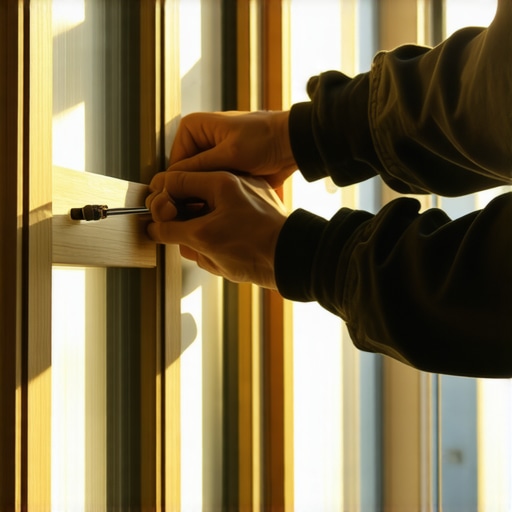
Fixing a Window That Falls Down When Opened: The Definitive Guide to Sash Balance Repair
A window that refuses to stay open is more than a simple household annoyance; it is a mechanical failure that compromises the safety and functionality of your home. In my twenty-five years as a master glazier, I have seen thousands of ‘guillotine’ sashes where the homeowner has resorted to propping the glass up with a piece of scrap wood. This is an unacceptable solution. A window is an engineered system designed to manage gravity, air pressure, and thermal transfer. When an operable sash falls, the internal tensioning system has reached its limit or has been compromised by poor maintenance or environmental stress.
A few years ago, a homeowner in a high-humidity coastal environment called me in a panic because their new windows were ‘sweating’ and the upper sashes were beginning to slip. I walked in with my hygrometer and showed them that the indoor humidity was nearly 65 percent. It wasn’t a manufacturing defect; it was their lifestyle and a lack of ventilation. That persistent moisture had migrated into the jamb pockets, causing the steel springs in the constant force balances to lose their temper and corrode. It was a clear demonstration that window health is intrinsically linked to the climate of the home.
“The installer shall ensure that the window unit is level, plumb, and square within the rough opening to allow for proper operation of all moving components, including sashes and balances.” – ASTM E2112 Standard Practice
The Physics of the Sash: Why Gravity Wins
To understand window repair for a falling sash, you must first understand the sash balance. Whether you have a double-hung or a single-hung unit, the weight of the glass and the wood or vinyl frame is offset by a balance system. In older homes, this was a heavy cast-iron weight hidden behind the casing, connected by a cotton cord. In modern units, we use block and tackle systems, spiral balances, or constant force stainless steel coils. When the window falls, the connection between the sash and the balance—often a small plastic component called a ‘shoe’—has likely broken, or the spring itself has snapped. If the window is difficult to lift before it falls, the friction within the track has increased, often due to a buildup of debris that a professional window cleaner would have otherwise mitigated.
In northern climates where the U-Factor is the primary metric for efficiency, the weight of the sash is often increased by the use of triple-pane glass or thick laminates designed for sound dampening. If the balance was not rated for the specific weight of the glass, it will fail prematurely. A U-Factor measures the rate of heat loss; the lower the number, the better the window insulates. However, better insulation often means heavier glazing units, which puts immense strain on the mechanical hardware. If you are looking to replace windows, you must ensure the hardware is spec’d for the glazing package you choose.
Anatomy of the Balance System
The most common system I encounter today is the constant force balance. This consists of a stainless steel spring coiled like a tape measure. It sits in a pocket in the jamb and attaches to the sash shoe. If your window falls, I usually find that the spring has uncoiled or the screw holding it to the frame has backed out because the Rough Opening was not properly shimmed, causing the frame to bow outward. This bowing increases the gap between the sash and the jamb, allowing the shoe to disengage. A proper installation requires that the frame is perfectly square so that the Sash can glide without excessive lateral play.
“Installation is just as critical as the window performance itself. A high-performance window installed poorly will fail to meet its rated specifications.” – AAMA Installation Masters Guide
Spiral balances are another common technical hurdle. These are metal rods with a spiral internal screw that requires a specific tensioning tool to adjust. If a window with a spiral balance is falling, it may simply need more ‘turns’ to increase the upward force. However, if the internal lubricant has dried out or been washed away by an aggressive window cleaner using ammonia-based solvents, the spiral will seize. This is why I always check the Glazing Bead and the weatherstripping for signs of chemical degradation during a repair. You want a lubricant that is silicone-based and does not attract dust, which would otherwise turn into a grinding paste inside your Operable tracks.
The Thermal Logic of Window Failure
In cold climates, we deal with the ‘Dew Point’ every single day. If your window has a high U-Factor, the interior surface of the glass becomes cold enough for moisture in the air to condense. This water then runs down into the Sill Pan and, if the Weep Holes are clogged, it backs up into the jamb. This is where the mechanical failure begins. The moisture attacks the balance system, leading to the very ‘falling’ issue we are discussing. We use Low-E coatings on Surface #3 in the North to reflect long-wave infrared radiation back into the room, keeping the glass warmer and reducing the chance of condensation that ruins the hardware.
If the damage is too extensive—if the vinyl has warped or the wood has rotted because the Flashing Tape was not applied in a shingle-fashion during the original install—then it is time to replace windows entirely. When doing so, do not settle for a ‘pocket’ replacement if the original frame is compromised. A full-frame replacement allows us to inspect the Rough Opening and ensure the new unit is integrated into the home’s water management system correctly. A window is not just a piece of glass; it is a structural component that must handle wind loads and thermal expansion without binding the sash.