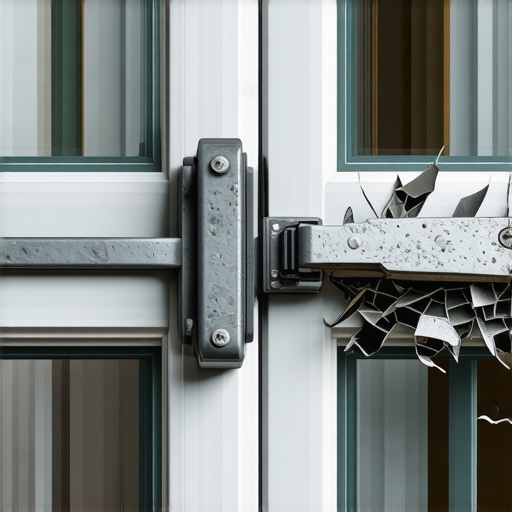
Why Your Window Latches Keep Snapping Off: A Glazier’s Technical Autopsy
There is a specific sound that every homeowner dreads: a sharp, metallic crack followed by the sudden lack of resistance when you try to lock your window. You are left holding a piece of pot metal while the window remains unlocked, inviting drafts and security risks. As a Master Glazier with a quarter-century in the field, I can tell you that a snapped latch is rarely just about a cheap part. It is the final protest of a system under extreme mechanical stress. When you are looking for a window repair or considering when to replace windows, you have to look beyond the broken hardware and investigate the physics of the opening itself. Most people call a window cleaner to make the glass sparkle, but they ignore the grit in the track that is slowly murdering their locking mechanism.
I recall a specific case involving a homeowner in a high-humidity suburb. They called me in a panic because their new wood-clad windows were sweating and the latches were snapping off one by one. I walked in with my hygrometer and found the interior humidity was hovering at 65 percent. It was not a window defect; it was a lifestyle issue involving unvented bathrooms and a massive indoor garden. The humidity had caused the wood sashes to swell within the frame, creating a friction fit so tight that the homeowner had to use excessive force to pull the sash down to the meeting rail. When they forced the cam-lock to engage, the latch was fighting against the expansion of the wood fibers. The metal gave way before the wood did. This is a classic example of why understanding the dew point and moisture management is critical for the longevity of your glazing units.
To understand why latches fail, we must look at the anatomy of the lock. Most modern windows use a cam-action lock. The ‘cam’ is the rotating hook on the sash, and the ‘keeper’ is the strike plate on the opposing rail. These components are designed to pull the two sashes together to create a weather-tight seal. However, they are not designed to be structural winches. According to industry standards, the alignment must be near perfect for these parts to function without fatigue.
“Installation is just as critical as the window performance itself. A high-performance window installed poorly will fail.” : AAMA Installation Masters Guide
If your window was installed without a proper sill pan or if the rough opening was not perfectly level, the frame will eventually settle into a trapezoid. Once the frame is out of square, the sashes no longer meet at a parallel line. This forces the latch to pull the sash not just together, but also upward or sideways. This lateral tension is what causes the zinc or aluminum alloy in the latch to crystallize and snap.
In northern climates where the U-factor is the primary concern, we often see latch failure during the transition from autumn to winter. As the temperature drops, the exterior face of a vinyl window contracts while the interior face remains warm. This creates a ‘bowing’ effect in the vinyl profile. If the installer did not use enough shims or failed to secure the side jambs to the rough opening, the frame bows away from the sash. Suddenly, the latch has to bridge a wider gap. If you find yourself having to lean your full body weight against the sash just to get the latch to catch, you are already in the danger zone. You are putting hundreds of pounds of pressure on a small screw-mounted piece of hardware. This is when you need more than a simple window repair; you need a professional to check the frame plumbness.
The science of the U-factor and Low-E coatings also plays a subtle role here. In cold climates, we prioritize keeping heat inside. We use triple-pane glass with Argon or Krypton gas fills and Low-E coatings on Surface #3 to reflect long-wave infrared radiation back into the room. This keeps the interior sash warmer and more dimensionally stable. However, if the warm-edge spacer fails, the edge of the glass gets cold, leading to condensation. That moisture sits on the meeting rail and can corrode the internal springs of the latch or cause wood rot in the very spot where the latch is screwed in. Once the wood softens, the screws pull out, or the hardware binds and breaks.
“The durability of the fenestration system is dependent on the integration of the flashing, the frame, and the hardware working in concert to manage environmental loads.” : ASTM E2112 Standard Practice
Furthermore, we must discuss the ‘Tin Man’ approach to window sales. High-pressure salesmen often push triple-pane windows as a cure-all. While triple-pane glass is excellent for insulation, it adds significant weight to the sash. This weight puts more pressure on the balance system—the springs or weights that help you lift the window. When a balance system starts to fail due to age or dirt, the sash becomes ‘heavy.’ Homeowners then tend to ‘slam’ the window shut to get it to stay down, which jars the latch and keeper, leading to hairline fractures in the metal that eventually result in a clean snap. Regular maintenance from a window cleaner who actually wipes out the tracks and a light application of dry silicone spray can prevent this mechanical fatigue.
If you are in a situation where your latches are consistently failing, it is time for an installation autopsy. Check the weep hole to ensure water is not backing up into the frame and causing the sill to swell. Check the glazing bead to ensure the glass is still seated correctly. If the glass has shifted, a condition known as ‘glass slip,’ it can cause the sash to go out of square. This is common in cheaper vinyl windows where the glass is not properly blocked at the corners. When you decide to replace windows, look for fiberglass frames. Fiberglass has a much lower coefficient of thermal expansion than vinyl, meaning it stays stable in extreme cold, keeping your latches aligned and your seals intact for decades rather than years. In the end, a window is a machine, and like any machine, it requires precision alignment to function without breaking.