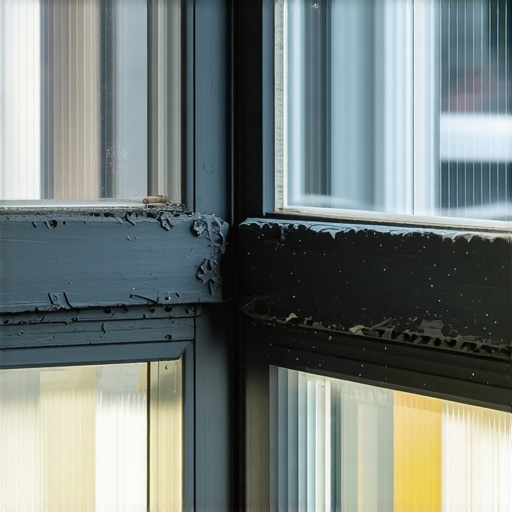
The Whistle in the Corner: Why Commercial Glazing Fails
If you have ever sat in a corner office on the 14th floor and heard a faint whistling sound as the wind whips against the glass, or noticed a small pool of water on the sill after a driving rain, you are likely looking at a gasket failure. After 25 years in this trade, I have seen it a thousand times. Property managers call me to replace windows when, in reality, the aluminum frames are perfectly fine; it is the rubber interface that has surrendered to the laws of physics. Window gaskets, those black rubber strips that create the seal between the glass and the frame, are the unsung heroes of the building envelope. But they are also the most common point of failure in commercial fenestration.
I remember a specific case that perfectly illustrates this. I pulled a commercial storefront unit out of a medical building in Chicago, and the header was completely black with rot behind the drywall. Why? The previous installer had relied on the nailing fin and a heavy bead of cheap caulk instead of proper flashing tape and a mechanical gasket seal. The gaskets had shrunk by nearly three inches over five years, creating a direct path for moisture to migrate into the rough opening. This is the ‘caulk-and-walk’ mentality that plagues our industry, and it is exactly why your office windows are failing today.
The Chemistry of Shrinkage: EPDM vs. The Atmosphere
To understand why a gasket shrinks, we have to look at the material science. Most commercial windows use EPDM (Ethylene Propylene Diene Monomer) or Santoprene. These materials are chosen for their resistance to UV radiation and ozone, but they are not immortal. Over time, the plasticizers—the chemicals that keep the rubber flexible—begin to leach out due to intense solar radiation. This is what we call ‘outgassing.’ As these molecules leave the matrix, the material literally becomes smaller. This is not a manufacturing defect; it is an inevitable chemical process accelerated by poor installation techniques.
“Installation is just as critical as the window performance itself. A high-performance window installed poorly will fail, often at the interface between the frame and the glazing bead.” – AAMA Installation Masters Guide
When a glazier installs a gasket, they must ‘crowd’ the material. This means cutting the gasket about 1/8 of an inch longer per foot than the actual length of the channel and compressing it in. If an installer stretches the gasket to make it fit easier, they are building internal tension into the system. As the building undergoes thermal cycling—heating up in the sun and cooling at night—that tension pulls the gasket toward the center of the run, leaving the corners wide open. Those gaps are where the air infiltration and water leaks begin.
The Role of the Window Cleaner in Detection
You might wonder why a window cleaner is relevant to structural integrity. In the commercial world, the cleaning crew is your first line of defense. A professional window cleaner who knows their craft will notice when a glazing bead is loose or when the rubber has pulled back from the corner. If you are seeing black streaks on the glass that won’t come off, that is often ‘carbon black’ leaching from a degrading gasket. This is the signal that you need a window repair specialist before the moisture hits your building’s structural steel or wood framing.
Thermal Dynamics and Gasket Stress
In colder climates, the internal heat of the building creates a massive temperature differential across the glass. The exterior of the gasket might be -10 degrees Fahrenheit, while the interior is 70 degrees. This creates a dew point transition inside the frame. If the gasket has shrunk, warm, moist indoor air hits the cold aluminum of the rough opening, leading to interstitial condensation. This isn’t just a window repair issue; it’s a mold issue.
“The purpose of this practice is to provide procedures for the installation of windows… to provide a barrier against air and water infiltration that can lead to structural degradation.” – ASTM E2112 Standard Practice
We also have to discuss the Sill Pan. In a proper commercial installation, the gasket is the first defense, but the sill pan is the ultimate insurance policy. If the gaskets fail and water enters the system, the sill pan and weep holes are supposed to direct that water back to the exterior. However, when gaskets shrink, they often block these weep holes or allow more water in than the system can drain. This is when you stop looking for a window cleaner and start looking to replace windows entirely because the internal components have reached their end-of-life.
The Math of Replacement vs. Repair
Is a window repair feasible, or should you replace windows? If the frames are thermally broken aluminum in good condition, we can often perform a ‘re-gasket.’ This involves pulling the sash or the stops, removing the old, brittle EPDM, and installing new, high-performance silicone gaskets. Silicone has much lower shrinkage rates than EPDM and better UV resistance, though it is more expensive. However, if the rough opening shows signs of rot or if the shim stacks have shifted due to building settlement, a full-frame replacement is the only way to ensure the building envelope is secure. Don’t let a salesman talk you into a ‘pocket’ replacement if your gaskets are failing; that just hides the problem behind a new piece of vinyl.
Final Professional Assessment
Managing a building’s windows is about managing risk. A shrinking gasket is a small symptom of a potentially catastrophic failure. When you see those gaps in the corners, you are looking at the entry point for wind, water, and noise. Address it with technical precision—ensure your next installer understands ‘crowding,’ uses flashing tape correctly, and respects the Sill Pan. Anything less is just a temporary fix for a permanent problem. If you ignore the science of the seal, the building will eventually remind you of your mistake through its walls.