The Mechanics of the Misaligned Slide
In my twenty-five years as a master glazier, I have seen every conceivable failure of the sliding glass door. To the untrained eye, a door that has jumped its track is a minor inconvenience that can be solved with a bit of brute force and a screwdriver. To a professional, it is a symptom of a systemic failure in the rough opening, the roller assembly, or the structural integrity of the sash. When a sliding door jumps, it is rarely a random event; it is usually the result of mechanical fatigue or an installation that ignored the fundamental physics of fenestration. I once worked on a job where a heavy impact-rated slider had jumped its track in a high-wind coastal zone. I pulled the sash out and found that the previous installer had failed to use a proper sill pan, and the resulting moisture had caused the subfloor to swell. This swelling pushed the track upward by an eighth of an inch, which was just enough to diminish the clearance for the rollers. When the homeowner tried to force the door, the rollers were pinched and eventually climbed the track wall. This is a classic example of why proper flashing tape and sill management are more than just suggestions; they are the difference between an operable door and a multi-thousand-dollar repair bill.
“Installation is just as critical as the window performance itself. A high-performance window installed poorly will fail.” – AAMA Installation Masters Guide
The Anatomy of the Jump: Why Tracks Fail
To understand the fix, you must understand the components. The modern sliding door consists of an Insulated Glass Unit (IGU) encased in a sash, which is often made of vinyl, fiberglass, or thermally broken aluminum. This sash sits on a set of rollers, which in turn ride on a track. In a coastal environment, the enemy is corrosion. If you are dealing with a door near the ocean, the rollers should ideally be stainless steel or high-grade nylon. When these rollers seize due to salt spray, the friction increases, and the user naturally applies more force. This force creates a shear stress that the track extrusion was never designed to handle. A window cleaner might suggest that the track is simply dirty, and while cleanliness is important, a window repair of this magnitude requires looking at the roller housing itself. If the rollers are flat-spotted or the bearings have failed, the door will jump the track regardless of how clean it is. [image_placeholder_1]
Step-by-Step Restoration of the Sliding Mechanism
First, you must assess the rough opening. Is the frame still square? Use a laser level to check the sill. If the sill is bowed, no amount of roller adjustment will fix the issue. If the frame is sound, the next step is the removal of the sash. This is a two-person job; a sliding door sash can weigh upwards of 200 pounds depending on the glazing bead and the thickness of the glass. You must lift the sash vertically to clear the bottom track and then tilt the bottom toward you. Once the sash is out, inspect the rollers. If they are damaged, they must be replaced with the exact OEM specifications. This is where many DIY attempts fail; using a generic roller that is even a millimeter off can cause the sash to sit too high, preventing it from engaging with the head-track, or too low, causing it to drag on the sill. While the sash is out, this is the time to inspect the weep hole system. If water is backing up into the track, it will eventually find its way into the subfloor, leading to the kind of rot I mentioned earlier. Clean the track with a non-corrosive solvent and check for any burrs or dents in the metal. If the track is dented, you can sometimes use a specialized track-straightening tool or install a stainless steel track cap to provide a new, smooth surface for the rollers.
Thermal Logic and Climate Considerations
In coastal and storm-prone areas, the door is a critical part of the building’s pressure envelope. We focus on impact-rated glass (Missile Level D) and stainless steel hardware because of the constant threat of positive and negative wind pressure. If you are in a hot southern climate, your sliding door’s performance is governed by its Solar Heat Gain Coefficient (SHGC). In these regions, we want the Low-E coating on Surface #2 to reflect the sun’s radiant heat before it can pass through the glass. If your door has jumped because of thermal expansion in a vinyl frame, it may be because the door was not properly shimmed to allow for the material’s coefficient of expansion. Vinyl expands significantly more than fiberglass or wood, and if it is pinned too tightly into the rough opening without room to move, the sill can bow upward, throwing the door off its track. In contrast, for those in northern climates, we prioritize the U-Factor and might look at triple-pane glass with an argon fill. If you find yourself frequently needing a window repair because of drafts or sticking, it may be more cost-effective to replace windows with more stable fiberglass units that resist thermal bowing.
“Standard Practice for Installation of Exterior Windows, Doors and Skylights requires that the installation method must manage water shedding and air infiltration through a continuous building envelope.” – ASTM E2112
The Importance of Precision Alignment
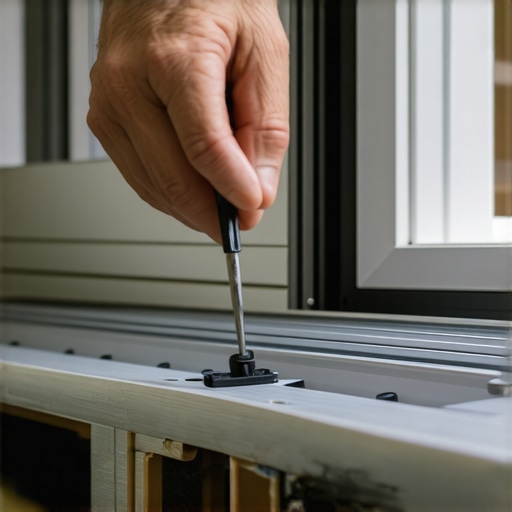
Once the new rollers are installed and the sash is back in the frame, you must perform the final alignment. Every operable sliding door has adjustment screws, usually located near the bottom corners of the sash. These screws raise or lower the rollers independently. The goal is to have the sash sit perfectly parallel to the side jamb. Close the door until it is just an inch away from the jamb and look at the gap. If the gap is wider at the top, the roller on that side needs to be raised. This precision ensures that the weatherstripping engages correctly and that the locking mechanism aligns with the strike plate. Without this alignment, the door will be prone to jumping again because the weight is not distributed evenly across the rollers. Finally, remember that maintenance is a recurring necessity. A master glazier knows that a thin coat of silicone-based lubricant on the track is all you need. Never use grease or oil-based lubricants, as they attract the dirt and grit that a window cleaner would struggle to remove, eventually leading back to the same friction-related failures. By understanding the physics of the sash and the requirements of your specific climate, you can ensure that your sliding door remains a functional part of your home’s architecture rather than a frustrating hole in the wall.