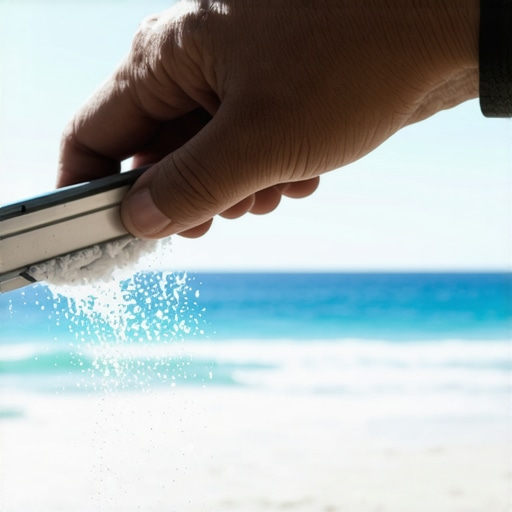
The Brutal Reality of Coastal Glazing
Living within a mile of the ocean offers breathtaking views, but for a fenestration professional, it represents one of the most hostile environments on the planet. I have spent over two decades inspecting properties where the homeowners thought they were buying a view, but they were actually buying a never-ending battle against sodium chloride. Salt spray is not merely a cosmetic nuisance; it is a chemically aggressive compound that can compromise the structural integrity of your sash and the transparency of your glass through a process known as etching.
I remember a particular job in a coastal town where I was called to perform a window repair on a set of high-end casements. I pulled a vinyl window out of a house that was barely five years old, and the header was completely black with rot. Why? The previous installer relied on the nailing fin instead of proper flashing tape, and the salt-laden moisture had found its way into the rough opening. The salt acted as a desiccant, holding moisture against the wood framing long after the storm had passed. It is this misunderstanding of coastal physics that leads to thousands of dollars in avoidable damage.
“Installation is just as critical as the window performance itself. A high-performance window installed poorly will fail.” – AAMA Installation Masters Guide
The Chemistry of the Salt Assault
To understand the easiest way to remove salt spray, you must first understand what it is doing to your glass. When seawater evaporates, it leaves behind crystalline sodium chloride. These crystals are hygroscopic, meaning they actively pull moisture from the air. This creates a concentrated brine solution that sits against your glazing bead and glass surface. Over time, this alkaline solution can leach the silicates from the glass, leading to permanent clouding or pitting that no window cleaner can fix. If you wait until you see the white crust to act, you are already behind the curve. In coastal zones, the Solar Heat Gain Coefficient (SHGC) is a critical metric for comfort, but the longevity of that glass depends entirely on the maintenance of the exterior surface coatings.
The Technical Protocol for Salt Removal
The biggest mistake homeowners make is grabbing a squeegee and a bottle of blue glass cleaner and heading straight to the window. This is a recipe for disaster. The salt crystals are abrasive. If you rub them against the glass, you are essentially using liquid sandpaper on your Low-E coatings. The protocol must be precise to protect the material. First, you must perform a high-volume, low-pressure rinse. Use a garden hose to flood the window, starting from the top and working down. This dissolves the salt crystals and flushes them out of the weep holes. Never use a pressure washer; the force can bypass the gaskets and saturate the interior shim space, leading to mold within the wall cavity.
Once the heavy salt is flushed, use a solution of deionized or distilled water mixed with a small amount of pH-neutral baby shampoo or a specialized surfactant. Avoid ammonia-based products, as they can react with the hardware finishes and accelerate the corrosion of the metallic components in the balance systems. Use a soft microfiber applicator to gently agitate the surface. Pay special attention to the muntin bars and the area where the glass meets the frame, as salt loves to hide in these crevices. Rinse again with fresh water to ensure no residue remains. If you live in a high-wind area, you may need to repeat this process every two weeks to prevent the salt from bonding to the glass.
Protecting the Mechanical Anatomy
A window is an operable machine, and in coastal environments, the hardware is the first thing to fail. If your windows are difficult to open, do not force them. You likely have salt buildup in the stainless steel tracks or the operator arms. After cleaning the glass, you must inspect the sill pan. If the weep holes are clogged with salt and sand, the water will back up and rot the subfloor. Use a small pipe cleaner or compressed air to ensure these drainage paths are clear. For the hardware, a dry silicone spray is the only lubricant I recommend. Wet oils will attract salt and sand, creating a grinding paste that will destroy the sash locks and hinges in a single season.
“The selection of appropriate materials and regular maintenance are essential for the performance of windows in corrosive environments.” – ASTM E2112 Standard Practice
When Cleaning Isn’t Enough: The Case for Replacement
There comes a point where salt spray has done too much damage to justify a window repair. If you see fogging between the panes, your IGU (Insulated Glass Unit) seal has failed, likely due to the corrosive effects of salt on the spacer bar. When you decide to replace windows in a coastal zone, you need to look beyond the price tag. You want impact-rated glass with a Low-E coating on Surface #2 to manage the intense solar radiation. The frames should be made of high-quality vinyl or fiberglass, as aluminum will eventually pit and corrode unless it has a high-performance fluoropolymer finish. Ensure your installer uses a high-performance flashing tape that is compatible with the coastal climate to prevent the rot issues I mentioned earlier.
Maintenance as a Science
In conclusion, the easiest way to manage salt spray is through a disciplined, technical approach to cleaning that prioritizes the chemistry of the glass over the convenience of the task. By flushing the salt before mechanical cleaning and ensuring the weep system is clear, you extend the life of your investment. Remember, a window in a coastal environment is under constant attack. Treat it like the precision instrument it is, and it will continue to provide that beautiful view for decades without the need for a premature teardown.