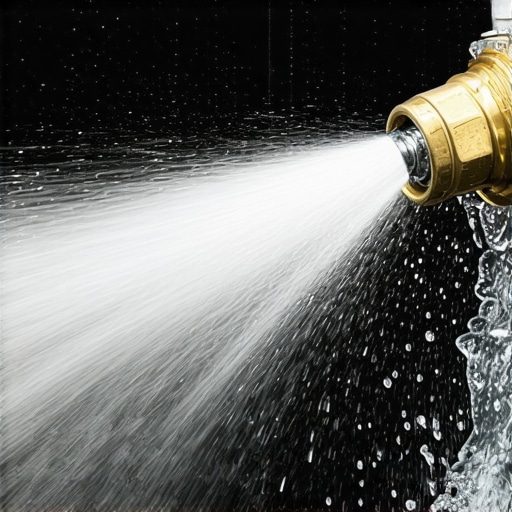
The High Pressure Mistake: Why Your Window Specialist Cringes at Power Washers
You see them every spring: homeowners or cut-rate maintenance crews aiming a 3000 PSI nozzle directly at their siding and windows. From a distance, it looks efficient. In reality, it is a forensic disaster waiting to happen. As a glazier with over two decades in the field, I have seen the aftermath of the pressure wash approach more times than I can count. People think they are being a thorough window cleaner, but they are actually engaging in a process that necessitates a premature window repair or, in many cases, a full requirement to replace windows long before their warranty should have expired.
The Condensation Crisis: A Master Glazier’s Narrative
A homeowner called me in a panic because their new windows were ‘sweating.’ I walked in with my hygrometer and showed them the humidity was 60%. It wasn’t the windows; it was their lifestyle. But as I inspected the specific units, I noticed something far more sinister. The internal spacer bars on three of their south-facing lites were already showing signs of white oxidation. I asked one question: ‘Did you have the house power washed recently?’ The silence told me everything. They hadn’t just ‘cleaned’ the glass; they had blasted the very life out of the Insulated Glass Unit (IGU). By forcing water past the glazing bead under extreme pressure, they had saturated the desiccant beads inside the spacer bar within minutes. No amount of interior dehumidification could fix a seal that had been hydraulically breached from the outside.
“Installation is just as critical as the window performance itself. A high-performance window installed poorly will fail.” – AAMA Installation Masters Guide
The Anatomy of a Seal Failure
To understand why high pressure is the enemy, you have to understand what a window seal actually is. Modern windows are not just glass held in a frame. They are complex assemblies involving a primary seal of Polyisobutylene (PIB) and a secondary seal of silicone or polysulfide. This dual-seal system is designed to keep Argon or Krypton gas in and moisture out. When you use a pressure washer, you are subjecting the glazing bead and the weep hole system to forces they were never designed to withstand. A window might be rated for a Design Pressure (DP) of 50, which equates to roughly 140 mph winds. However, a pressure washer nozzle at close range can exert thousands of pounds of pressure per square inch. This creates a Venturi effect, sucking water into the rough opening and behind the flashing tape.
The Shingle Principle and Water Management
Every window installation must follow the ‘Shingle Principle,’ where every layer of the exterior envelope overlaps the one below it to ensure water flows down and away. When you point a power washer upward at a window, you are reversing gravity. You are driving water up under the drip cap and into the header. If the sill pan is not perfectly sloped or if the weep holes are clogged with the very debris you are trying to wash away, that water has nowhere to go but into your wall cavity. This leads to the rot I mentioned earlier, where the rough opening studs become soft and black, eventually failing to support the shims that keep the window level and operable.
“Adhesion and sealant compatibility are the primary factors in the longevity of an insulating glass unit. Once the secondary seal is breached, the primary seal is susceptible to rapid oxidation and failure.” – ASTM E2112-19c
The Physics of Thermal Stress
In colder climates like Chicago or Minneapolis, the U-Factor is king. We want to keep the heat inside. This is achieved by Low-E coatings on Surface #3 of the glass. When a seal is compromised by high-pressure water, the insulating gas escapes. Once the gas is gone, the U-Factor skyrockets. Your expensive triple-pane investment suddenly has the thermal performance of a single-pane sheet of glass. Furthermore, the moisture forced into the unit will eventually freeze and expand, further cracking the primary seal and leading to that permanent ‘fogged’ look that no window cleaner can ever wipe away. At that point, the only solution is window repair via an IGU swap or to replace windows entirely if the frames have warped from the moisture.
Why Surface #2 and Surface #3 Matter
In the South, where the sun is the primary enemy, we focus on the Solar Heat Gain Coefficient (SHGC). We place the Low-E coating on Surface #2 to reflect the sun’s energy back outside before it can even enter the building. If you pressure wash these units and breach the seal, the moisture that enters will react with the microscopic silver layers in the Low-E coating. This causes ‘silver rot,’ a beautiful but devastating bloom of corrosion that ruins the clarity of the glass. It is a technical failure that is 100% preventable if you stick to a garden hose and a soft brush.
The Professional Approach to Window Care
If you want your windows to last 30 years instead of 5, stop the high-pressure madness. A true window cleaner uses a squeegee, a strip washer, and a mild detergent. They respect the muntins and the glazing bead. They ensure that weep holes are clear so that the window can ‘breathe’ and drain as intended. If you see water standing in your tracks, do not ignore it. That is a sign that the drainage system is failing. Proper maintenance involves checking the flashing tape and ensuring the sill pan remains unobstructed. Remember, a window is a hole in your house that we have engineered to be smart. Don’t let a power washer make it a liability.