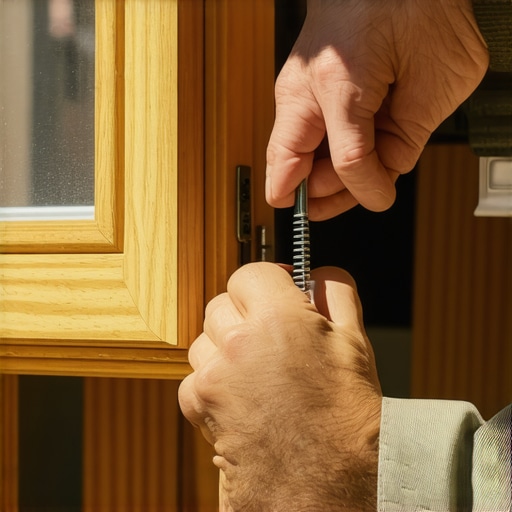
A window that refuses to remain in its vertical position is more than a nuisance; it is a mechanical failure of the balance system, the hidden engine that counteracts the force of gravity on the sash. As a glazier with over two decades in the field, I have seen too many homeowners convinced by slick salesmen that a failed balance necessitates the decision to replace windows entirely. This is often a fallacy. I sat across from a high-pressure salesman who was trying to sell a retiree a full house of triple-pane units in a mild climate just because three of their sashes wouldn’t stay up. I had to explain to the homeowner why the ROI was 150 years and that the real issue was a simple ten dollar part. The industry is full of people who would rather sell you a new opening than fix the perfectly good one you have. Understanding the physics of your window is the first step in reclaiming your home’s functionality.
The Anatomy of the Balance System
In the world of fenestration, the sash is the operable part of the window that holds the glass and the glazing bead. To make this heavy component move freely, manufacturers use a balance system. Whether you have a double-hung or a single-hung unit, the balance is what prevents the window from crashing down. There are three primary types of balances you will encounter: spiral, block and tackle, and constant force. Each uses a different mechanical principle to achieve the same goal. When a window won’t stay open, the balance has either lost its tension, become detached from the sash, or suffered a terminal structural failure. This is often exacerbated by poor installation where the rough opening was not properly squared, putting undue stress on the internal tracks.
“Installation is just as critical as the window performance itself. A high-performance window installed poorly will fail.” – AAMA Installation Masters Guide
The Physics of Mechanical Failure
Why do these systems fail? In colder climates like Chicago or Minneapolis, thermal dynamics play a significant role. Materials have a coefficient of linear thermal expansion. When the temperature drops, the vinyl jamb tracks contract. If the installer did not leave enough clearance or failed to use a proper shim to keep the jambs parallel, this contraction can pinch the balance shoe. The balance shoe is the plastic block that connects the sash to the balance spring. Once this shoe is cracked or jammed, the sash loses its connection to the tensioning mechanism. You might also find that the pivot bar, the metal piece extending from the bottom of the sash into the shoe, has snapped. This is common in high-traffic windows where the sash is frequently tilted in for a window cleaner to access the exterior glass.
Diagnosing Your Window Issue
Before you look for a window repair professional, perform a visual autopsy. Open the window and look into the side tracks or jamb pockets. Do you see a loose string or a piece of metal ribbon? That is a clear sign of a broken block and tackle or constant force balance. If you have older windows with a spiral balance, you may see a thin metal rod with a screw-like thread. If this rod is spinning freely, the internal torsion spring has likely failed. The physics here is simple: Hooke’s Law states that the force needed to extend or compress a spring by some distance is proportional to that distance. When the spring loses its temper or the pulley system loses its mechanical advantage, gravity wins every time.
“The fenestration product must be supported and secured to the building in a manner that allows for the intended operation.” – ASTM E2112
Step-by-Step Technical Restoration
If you are technically inclined, you can often perform a window repair yourself. First, you must remove the sash. Most modern windows have tilt-latches at the top. Slide these in and tilt the sash toward you to a ninety-degree angle. Lift one side to disengage the pivot bar from the shoe. Once the sash is removed, you can access the balance. For a constant force balance, you will see a stainless steel coil. If the coil is snapped, you must unscrew the housing from the jamb and replace the entire assembly. Ensure the replacement matches the weight rating of your sash; using a balance designed for a lighter sash will result in the window drifting down, while one that is too heavy will make the window difficult to close. This is where the U-Factor and glass thickness matter. Heavier glass requires higher tension balances. [IMAGE_PLACEHOLDER]
The Importance of Water Management
While you have the sash out, it is the perfect time to inspect the sill pan and the weep hole system. A window that does not operate correctly often has underlying issues with moisture. If water is not directed away from the frame, it can corrode the metal components of the balance system. Check for any signs of rot on the wood or oxidation on the aluminum. Ensure that any flashing tape used during the initial installation is still intact and that the drip cap above the window is properly shedding water. A window is not just a piece of glass; it is a complex assembly that must manage air, water, and thermal transfer simultaneously.
When to Repair and When to Replace
Not every window can be saved. If the frame itself is warped or if the muntin bars are rotting, it may be time to replace windows. However, if the frame is square and the only issue is the mechanical operation, a repair is always the more sustainable and cost-effective route. Do not let a salesperson convince you that a broken spring means the entire unit is trash. Focus on the numbers: check the NFRC label if it is still there. If your U-Factor and Solar Heat Gain Coefficient (SHGC) are still within acceptable ranges for your climate, keep the frame and fix the guts. In the North, you want a low U-Factor to retain heat; in the South, a low SHGC is king to block radiant heat. If your current windows meet these needs, a mechanical repair is the logical choice.
The Professional Standard
If you decide to hire a professional, demand someone who understands the nuances of window geometry. A master glazier will not just swap a part; they will check the plumb, level, and square of the entire opening. They will ensure the shim placement is not interfering with the operable components. They will clean the tracks and apply a dry silicone lubricant to ensure the sash moves with minimal friction. This level of detail is the difference between a window that lasts another twenty years and one that fails before the next season change. Quality window maintenance is about more than just a clean pane; it is about the integrity of the thermal envelope. Any glazier who tells you that caulk is a substitute for proper flashing or mechanical alignment should be shown the door immediately. Your home deserves a technician who respects the science of the opening.