The Invisible Etching: Why Your Windows Look Dirty Even After Cleaning
You spend a Saturday with a bucket of soapy water and a squeegee, yet the moment the sun hits the glass at a low angle, those stubborn, milky white circles reappear. Most homeowners call this ‘dirt,’ but as a master glazier with a quarter-century in the field, I call it a mineral invasion. These aren’t just surface contaminants; they are alkaline deposits that have chemically bonded to the silica in your glass. If you do not address them correctly, you aren’t just looking at a cosmetic issue; you are watching the slow degradation of your glazing system. Understanding the science of hard water is the first step in avoiding an expensive window repair or a full-scale project to replace windows prematurely.
The Condensation Crisis: A Master Glazier’s Perspective
A homeowner called me in a panic because their new windows were ‘sweating’ and developed thick, white crusting along the bottom edge within months of installation. I walked in with my hygrometer and showed them the humidity was 60 percent. It wasn’t the windows; it was their lifestyle. They were running a humidifier in a sealed, high-efficiency home without ever cycling the air. That moisture was hitting the cool glass, evaporating, and leaving behind every mineral present in their local water supply. This ‘sweat’ was actually a delivery system for calcium and magnesium carbonates. By the time I arrived, the minerals had begun to leach into the glazing bead, threatening the seal of the insulated glass unit. It was a classic case of environmental factors masquerading as product failure.
“Installation is just as critical as the window performance itself. A high-performance window installed poorly will fail.” – AAMA Installation Masters Guide
The Physics of Hard Water in Hot Climates
If you live in a Southern climate like Phoenix or Miami, the sun is your primary adversary. We focus heavily on the Solar Heat Gain Coefficient (SHGC). When water hits a window in these regions, the glass temperature can easily exceed 120 degrees Fahrenheit. This causes near-instantaneous evaporation. When the H2O departs, it leaves behind its mineral load in a concentrated form. In the South, we typically place Low-E coatings on Surface #2 (the inner face of the outer pane). This reflects heat back outside, but it also means the outer pane of glass gets incredibly hot. This heat acts as a catalyst, baking the mineral scale into the glass pores. Glass might look smooth, but under a microscope, it is a jagged landscape of peaks and valleys. Those minerals ‘hook’ into those valleys. A standard window cleaner simply glides over the top of these deposits without neutralizing them.
The Chemistry of Eco-Friendly Removal
To remove these spots for good without using harsh phosphoric or hydrochloric acids, we must look at the pH scale. Calcium carbonate is alkaline. To break its bond, you need a mild acid. Distilled white vinegar (acetic acid) is the glazier’s secret weapon, but it must be used with precision. Mixing a 50/50 solution of vinegar and distilled water (to ensure you aren’t adding more minerals) is the baseline. For extreme buildup, a paste made of baking soda and a tiny amount of water can act as a mechanical abrasive that is softer than the glass itself, preventing scratches. You apply the solution and let it dwell. This is where most people fail. You must allow the acetic acid to work on the mineral bonds for at least five minutes without letting it dry. If it dries, the minerals simply re-deposit. Once the bond is broken, a technical squeegee technique is required to lift the suspension away from the sash and glazing bead.
When Repair Transitions to Replacement
There is a point of no return known as ‘Stage II Corrosion.’ This occurs when the minerals have actually eaten into the glass surface, creating permanent pits. At this stage, no amount of scrubbing will restore clarity. When I inspect a sash and see that the etching has compromised the glass structural integrity or the mineral crust has worked its way under the glazing bead and into the weep hole system, I have to recommend the homeowner replace windows. If the weep holes are clogged by mineral scale, water will back up into the rough opening, leading to wood rot in the structural framing. This is why cleaning is not just about aesthetics; it is about moisture management.
“The Solar Heat Gain Coefficient (SHGC) measures how well a product blocks heat caused by sunlight.” – NFRC Performance Standards
Maintaining the System: From Muntins to Sill Pans
A window is a complex assembly of parts working in unison. When you are cleaning, you must inspect the operable parts. Check the weatherstripping for brittleness. Ensure the muntins (the grids) are not trapping water against the glass. If you have a sliding window, the track must be clear of mineral debris to prevent the rollers from grinding. If you notice water pooling on the interior sill, your sill pan or flashing tape may have failed, or more likely, your weep holes are blocked by the very minerals you are trying to clean off the glass. Use a small pipe cleaner to ensure those weep holes are clear. This allows the glazing pocket to breathe and drain, which is the only way to prevent long-term rot in your rough opening.
Final Thoughts for the Homeowner
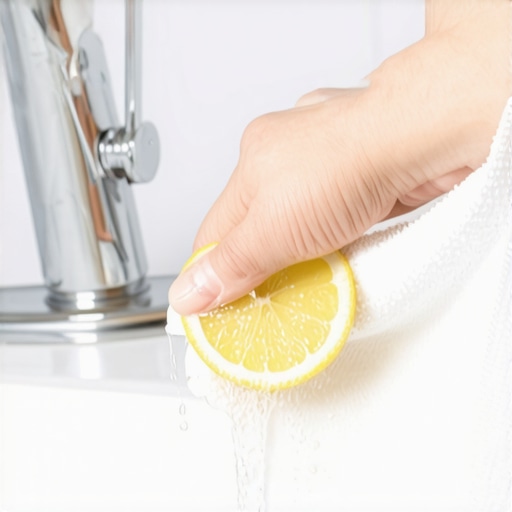
The goal is to maintain a high level of Visible Transmittance (VT) while protecting the investment of your home. Using eco-friendly methods like acetic acid and lemon juice (citric acid) is safer for your landscaping and your family, but it requires more ‘elbow grease’ and technical understanding than a chemical spray. Remember, a window is a hole in your thermal envelope. Keep it clean, keep the minerals at bay, and you won’t find yourself needing a window repair specialist like me until the glass actually reaches its 30-year lifecycle limit. Don’t let a few water spots turn into a structural failure. Manage the minerals, and you manage the health of your home.”