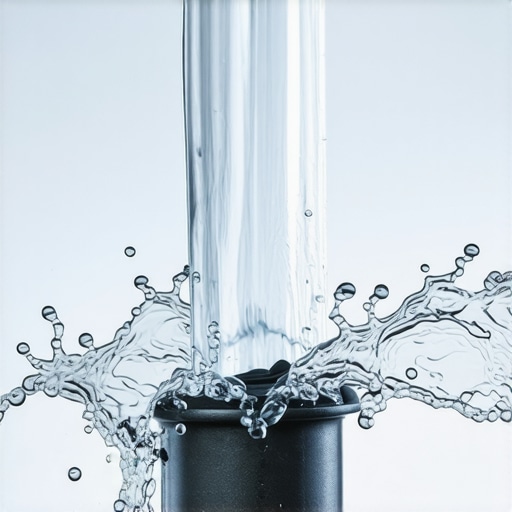
The Deceptive Allure of High-Pressure Cleaning
Every spring, I see the same scene unfolding in suburbs across the country. A homeowner rents a 3000 PSI pressure washer, intending to blast away a winter’s worth of grime from their siding and windows in one afternoon. To the untrained eye, it looks efficient. To a master glazier, it looks like a slow-motion demolition of the most expensive components of the home envelope. Windows are not submarines. They are sophisticated water-shedding assemblies designed to handle gravity-driven rain, not concentrated hydraulic force. When you point a high-pressure nozzle at a window, you are not just cleaning it; you are actively attacking the structural integrity of the insulated glass unit (IGU) and the delicate flashing systems that keep your walls dry.
The Rot Repair: A Lesson in Forensic Glazing
I remember a specific job in a damp, northern climate where the homeowner thought they were being diligent with maintenance. I pulled a vinyl window out of a house in the suburbs of a rain-slicked city and the header was completely black with rot. The structural framing was soft enough to poke a screwdriver through. The homeowner was baffled because the windows were only six years old. As I inspected the adjacent units, I noticed the telltale signs of pressure washing: shredded wood fibers on the deck and window stops that were slightly displaced. Why did this happen? The previous installer had relied solely on the nailing fin instead of proper flashing tape, but the real catalyst was the pressure washer. The high-velocity water had been forced behind the vinyl J-channel, over the top of the window frame, and directly into the rough opening. Because the water was injected with such force, it bypassed the shingle principle of the exterior cladding and sat trapped against the OSB sheathing. Without an exit path, the moisture turned the structural lumber into a petri dish for wood-decay fungi. This is the reality of ‘power cleaning’ windows; you are often trading a clean glass surface for a five-figure structural repair bill.
The Anatomy of a Seal: Why Physics is Against You
To understand why pressure is the enemy, we have to look at how a modern window is constructed. Most residential windows use an IGU, which consists of two or more panes of glass separated by a spacer bar and sealed together. This unit is held in the sash by a glazing bead, which is a thin strip of vinyl, aluminum, or wood. Behind that bead lies the primary and secondary seals of the glass unit. The primary seal is typically made of polyisobutylene (PIB), a synthetic rubber that has an incredibly low gas permeability. This seal’s job is to keep the Argon or Krypton gas inside the unit and keep water vapor out.
“The primary cause of premature IGU failure is the prolonged exposure of the seal to liquid water, which is often exacerbated by improper cleaning techniques or blocked drainage paths.” – NFRC Field Testing Manual
When you hit that glazing bead with a pressure washer, the force of the water overcomes the surface tension and the mechanical fit of the bead. Water is forced into the glazing pocket. Now, windows are designed with a weep hole system to allow incidental water to drain out. However, a pressure washer can deliver more water in ten seconds than a heavy rainstorm delivers in ten minutes. The weep holes become overwhelmed, and the bottom of the glass unit sits submerged in a pool of water. PIB seals are moisture-resistant, but they are not designed for immersion. Over time, this exposure causes the chemical bond between the glass and the spacer to fail. Once that seal is breached, the Argon gas escapes and is replaced by moisture-laden air. This is how you get ‘foggy windows’ that no window cleaner can ever fix.
Thermal Consequences in the North
In colder climates, the integrity of this seal is paramount. We talk a lot about the U-Factor, which measures the rate of heat loss. A high-performance window relies on that gas fill and Low-E coatings to maintain a comfortable interior temperature. When you ruin a seal with a pressure washer, you are effectively turning a high-tech thermal barrier into a simple, inefficient hole in the wall. In January, you will feel the result of that failed seal as a draft. It is not necessarily air moving through the window, but rather a convective current created by the cold interior glass surface. The moisture that entered the unit will also condense on the interior of the glass, and in extreme cases, it can freeze, causing ice to build up on the muntin or the sash. This leads to a cycle of freezing and thawing that can crack the glazing bead and further damage the operable parts of the window. When the seal is gone, the window repair options are limited. You usually have to replace the entire IGU or, if the frame has been damaged by the water pressure, replace windows entirely.
The Installation Autopsy: Where the Water Goes
Let us look at the rough opening. A proper installation involves a sill pan, which is a flashing element that sloped toward the exterior to catch any water that bypasses the window frame. Unfortunately, many ‘caulk-and-walk’ installers skip this step, relying instead on a bead of sealant around the exterior. When you use a pressure washer, you are testing that sealant to a degree it was never meant to withstand. The pressure can tear the caulk away from the substrate, creating a direct injection point for water. Once water is behind the flashing tape and into the wall cavity, it rarely dries out. The modern home is wrapped so tightly for energy efficiency that once moisture is in the wall, it stays there. I have performed autopsies on window installations where the shim was still wet three weeks after the last rain because the pressure washer had pushed water into a dead-air space.
“The fenestration system must be viewed as a water-shedding assembly. Any force that overcomes the natural gravity-led drainage, such as high-pressure spray, invites catastrophic moisture intrusion.” – AAMA 101/I.S.2/A440
Water management is a science of paths and pressures. By introducing artificial high pressure, you are reversing the natural flow of the system. This is why a professional window cleaner uses a t-bar and a squeegee. It is not just about the streak-free finish; it is about controlled water application that respects the engineering of the window.