The Fatal Flaw of the Final Cleanup
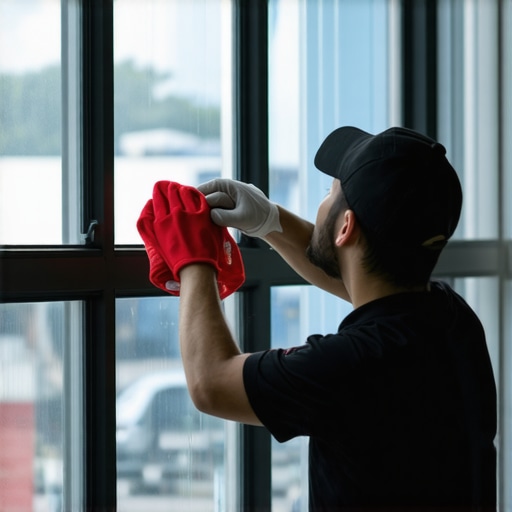
I pulled a vinyl window out of a house in Chicago and the header was completely black with rot. Why? The previous installer relied on the nailing fin instead of proper flashing tape, allowing moisture to migrate into the rough opening for a decade. Now, the homeowner has invested twenty thousand dollars in high-performance triple-pane units with a U-Factor of 0.18. The project is nearly finished, but there is a new threat: the cleanup. Most people think a window cleaner just needs a bucket and a rag. In the world of high-end glazing, that mindset is how you ruin a fifty-square-foot piece of tempered glass in under five minutes. Construction debris isn’t just dust; it is a cocktail of abrasive silica, mortar splatter, and caustic stucco that requires a surgical approach to remove.
“Installation is just as critical as the window performance itself. A high-performance window installed poorly will fail.” — AAMA Installation Masters Guide
The Physics of Glass Surface Vulnerability
To understand why you cannot just scrub away construction grime, you have to understand the molecular reality of the glass surface. Glass sits at about a 6 or 7 on the Mohs scale of mineral hardness. Unfortunately, the sand used in mortar and the portland cement in stucco also sit at a 7. When a laborer takes a dry cloth and wipes a glob of dried mortar off a new sash, they are effectively using a diamond to scratch a diamond. They are creating microscopic valleys in the glass that will catch light and permanently haze the unit. This is especially critical in our Northern climate where we utilize Low-E coatings on Surface #3 to reflect long-wave infrared radiation back into the home. If the exterior Surface #1 is compromised, the structural integrity of the pane is weakened, and the aesthetic clarity is gone forever.
Identifying the Enemy: Mortar, Silicone, and Stickers
Post-construction window repair is often necessitated by the improper removal of three things: cementitious materials, glazing silicone, and manufacturer labels. When the rough opening is shinned and the window is set, the surrounding masonry work often leaves ‘fines’ on the glass. These fines are alkaline. If they get wet and sit on the glass, they can chemically etch the surface. Then there is the silicone. During the installation of the glazing bead, excess silicone can smear. If you try to wipe it while wet, you spread a thin, hydrophobic film that will attract every piece of pollen and dust in the county. Finally, the stickers. The adhesive used on NFRC labels can bake onto the glass in the sun, creating a bond that resists standard soaps.
The Master Glazier’s Cleaning Protocol
First, you must flood the area. We do not use a spray bottle; we use a low-pressure hose to saturate the debris. This is about lubrication. You want to reduce the surface tension so that the heavy particles can float away from the glass without mechanical pressure. We use a professional-grade surfactant—never a generic ammonia-based cleaner which can degrade the gaskets and the spacers in an insulated glass unit (IGU). Once the heavy grit is gone, we use a new, stainless steel 4-inch scraper, but only on tempered glass and only when the glass is soaking wet. You never, ever pull the blade backward. It is a single, forward motion. If you pull it back, you trap the debris you just lifted and grind it back into the surface.
“Careless cleaning of glass can result in permanent damage that cannot be reversed. Proper techniques must be employed from the first wash.” — ASTM E2112
The Thermal Impact of Cleanliness
In cold climates, the cleanliness of your glass impacts the Solar Heat Gain Coefficient (SHGC) and the overall thermal performance. A layer of construction film can actually absorb heat unevenly. If a window is partially covered in dark mud or stucco, the temperature differential across the pane can lead to thermal stress cracks, especially in high-performance triple-pane glass where the center lite is already under significant pressure. Maintaining a pristine surface ensures that the Low-E coatings can function as engineered, reflecting heat while allowing visible light transmittance (VT) to remain at peak levels. When we replace windows, we explain to the homeowner that the ‘clean’ isn’t just for looks—it is the final step in the thermal envelope’s commissioning.
Managing the Details: From Muntins to Sill Pans
A window is an assembly, not a single component. When cleaning, you must pay attention to the weep holes in the frame. If construction dust washes down the glass and clogs the weep holes in the sill, the next rainstorm will back up and dump water into your wall cavity, leading back to the rot I saw in that Chicago house. The muntins and glazing beads should be cleaned with a soft microfiber to avoid scratching the powder-coated finish of the aluminum or the virgin vinyl. If you see ‘sweating’ after the project is done, don’t blame the window cleaner or the installer immediately. Check your hygrometer. After a construction project, the ‘mud’ used on the drywall and the fresh paint release gallons of water vapor. Your high-performance windows are simply showing you the reality of your interior environment.
The Verdict on Professional Window Cleaning
Don’t let a ‘caulk-and-walk’ contractor handle the final wipe-down. If you are at the stage where you need window repair because of scratches, you are looking at a costly resurfacing job or a full IGU replacement. The math is simple: spend the time on proper lubrication and high-quality tools now, or pay for the glass replacement later. A master glazier knows that the job isn’t done when the last shim is driven and the trim is nailed; it is done when the glass is surgically clean and the thermal barrier is fully operational.