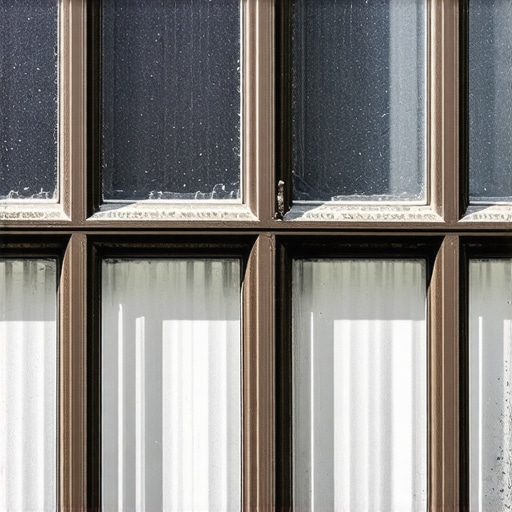
The Science of the Summer Stick: Why Your Windows Fight Back in July
I remember a specific call to a coastal home in Charleston where the homeowner was convinced their foundation was settling because they couldn’t budge their double-hung sashes. I walked up to a south-facing vinyl window and the frame was literally ‘smiling’ (bowing upward) at the head. I pulled the window out and found that the previous installer had shoved the window into a rough opening that was way too tight, then secured it with oversized wood blocks instead of proper shims. Why? They didn’t account for the basic physics of thermal expansion. When the July sun hit that dark-colored vinyl, the frame had nowhere to grow but inward, pinching the sash like a vice. This wasn’t a foundation issue; it was a failure to respect the laws of thermodynamics during installation.
The Physics of Thermal Bowing and Material Expansion
To understand why you need window repair or a complete unit change, you have to understand the Coefficient of Linear Thermal Expansion (CLTE). Every material on your home’s facade expands when heated, but they do so at vastly different rates. Rigid PVC (vinyl) has a CLTE that is significantly higher than wood or fiberglass. When the exterior surface of a vinyl extrusion reaches 140 degrees Fahrenheit in direct sunlight, it can expand by more than an eighth of an inch over a six-foot span. If the rough opening was framed too tight, or if the installer ‘caulked and walked’ without leaving room for a proper shim gap, the frame will bow. This bowing reduces the clearance between the jamb and the sash, creating the friction that makes the window nearly impossible to open.
“Installation is just as critical as the window performance itself. A high-performance window installed poorly will fail to operate under normal environmental stresses.” – AAMA Installation Masters Guide
Frame Science: Vinyl vs. Fiberglass vs. Wood
In hot climates, the choice of frame material dictates your long-term frustration levels. Vinyl is an excellent insulator and budget-friendly, but it is essentially a high-grade plastic that moves. Fiberglass, on the other hand, is composed of glass fibers and resin, meaning it expands and contracts at nearly the same rate as the glass panes it holds. This thermal harmony means less stress on the glazing bead and the seal failure rate is drastically lower. Wood is the traditionalist’s choice, but it suffers from hygroscopic expansion. It doesn’t just react to heat; it reacts to the humidity. In a humid summer, the wood fibers absorb moisture and swell, increasing the thickness of the stiles and rails until they jam against the stops.
The Role of the Window Cleaner and Maintenance
Often, the friction isn’t just about expansion; it is about the accumulation of environmental debris. This is where a professional window cleaner becomes a maintenance asset. Over months, fine grit, pollen, and salt spray settle into the tracks and on the weatherstripping. When the frame expands slightly due to the heat, it compresses this grit against the moving parts of the sash. This acts like sandpaper, grinding down the finish and making the operation feel heavy. Regularly cleaning the tracks and applying a dry silicone lubricant (never an oil-based one that attracts more dirt) can often negate the need for a full window repair.
Thermal Logic: SHGC and Surface Coatings
For those in the southern heat, the enemy isn’t just the air temperature; it is the Solar Heat Gain Coefficient (SHGC). In these environments, we want the Low-E coating on Surface #2 (the inner face of the outer pane). This reflects long-wave infrared radiation back toward the sun before it can even enter the glazing cavity. If you have an older window with no coating, the glass itself becomes a radiator, heating the internal air in the frame’s chambers and accelerating the thermal bowing of the vinyl or the swelling of the wood.
“The Solar Heat Gain Coefficient (SHGC) measures how well a product blocks heat caused by sunlight. In warmer climates, a lower SHGC is critical to reducing cooling loads and preventing frame overheating.” – NFRC Performance Guide
The Installation Autopsy: Why They Stick
If you are looking to replace windows because they are sticking, the autopsy of the old installation usually reveals three culprits. First is the missing sill pan. Without a sill pan, moisture seeps into the framing, causing the wood studs to swell and push against the window frame. Second is the ‘over-foaming’ issue. Installers often use high-expansion spray foam in the gap between the window and the studs. If they don’t use a dedicated ‘window and door’ low-pressure foam, the expanding foam can actually crush the jambs inward. Third is the failure to use jamb jacks or proper shimming at the mid-point of the frame. Without support at the mid-point, the weight of the sash and the pressure of the heat causes the frame to lose its ‘square,’ leading to an operable failure. Water management is a science, and if the flashing tape and drip cap aren’t layered in a shingle-fashion, you are inviting structural rot that eventually pinches the window opening.
Deciding Between Repair and Replacement
Before you decide to replace windows, check the balances. In many modern windows, the constant-force or block-and-tackle balances can become detached or fouled with debris. A glazier can often perform a window repair by swapping out these balances or re-tensioning them. However, if the frame itself has undergone permanent ‘thermal set’ (a permanent deformation from heat), replacement with a more stable material like fiberglass or a thermally broken aluminum frame may be the only permanent solution. Don’t buy the sales pitch of ‘triple-pane gas-filled’ if you live in Phoenix; you need a low SHGC and a frame with a low CLTE. Focus on the numbers, not the marketing fluff. A well-installed, mid-range window will outperform a top-tier window installed by a ‘caulk-and-walk’ crew every single time.