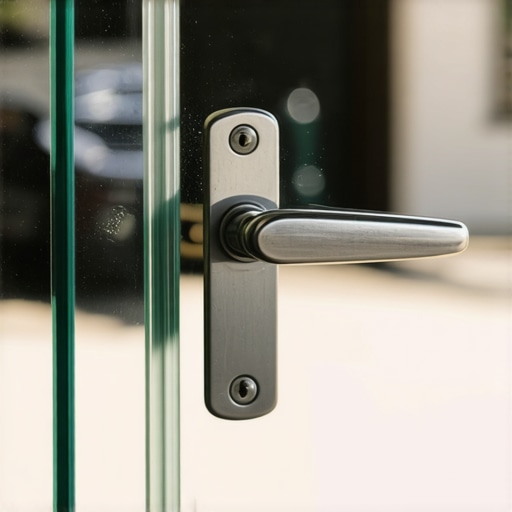
The Science of the Sliding Door: Why Your Patio Door Handle Keeps Coming Loose
In my twenty five years as a master glazier, I have seen every possible failure in the building envelope. Most homeowners think a loose patio door handle is a minor nuisance, a simple matter of a screw that needs a turn or two. They assume they just need a basic window repair or perhaps a better window cleaner to keep the tracks smooth. But a handle that repeatedly fails is almost never just a handle issue. It is a symptom of a larger mechanical or thermal failure within the Operable sash or the Rough Opening itself. If you find yourself tightening those screws every three months, you are not dealing with a hardware problem; you are dealing with physics.
A homeowner called me in a panic because their new windows were sweating and the patio door handle felt like it was about to fall off. I walked in with my hygrometer and showed them the humidity was 60 percent. It was not the windows; it was their lifestyle. They were running a large humidifier and keeping the house at 75 degrees while it was 10 degrees outside. That excessive moisture was not just sitting on the glass; it was migrating into the hardware cavity of the door. When moisture enters the internal lock mechanism, it causes microscopic corrosion and expansion in the zinc diecast components. This cycles the tension on the fasteners, backing them out of the threads until the handle starts to wobble. This is the reality of the Dew Point in a poorly managed interior environment.
“Installation is just as critical as the window performance itself. A high-performance window installed poorly will fail.” AAMA Installation Masters Guide
Thermal Expansion and the Frame Racking Reality
In cold climates like Chicago or Minneapolis, the temperature differential between the interior and exterior of a sliding door can be sixty degrees or more. When you have a vinyl frame, the material expands and contracts at a rate significantly higher than the wood or masonry surrounding it. If the installer did not leave the proper tolerances in the Rough Opening, or if they failed to use the correct Shim placement, the frame can become slightly racked. A racked frame means the door is no longer perfectly square. Even a deviation of an eighth of an inch can cause the multi point locking system to misalign with the keepers on the jamb. When you pull that handle to engage the lock, you are applying dozens of pounds of lateral force that the handle was never designed to withstand. This repeated torque eventually strips the internal mounting bosses.
The Sash of a patio door is a heavy component, often weighing over one hundred pounds due to the thick tempered glass required for safety. This weight is supported by rollers that sit on the track. If those rollers are not adjusted correctly, the door sits too low. This causes the locking Muntin or the bolt to drag against the strike plate. Every time you force the handle up to lock it, you are vibrating the fasteners loose. You do not need a new handle; you need a technician who understands how to adjust the vertical height of the Operable panel to ensure a frictionless engagement.
The Anatomy of Water Management and Hardware Failure
Proper water management is another hidden factor in hardware longevity. Every professional installation should include a Sill Pan and high quality Flashing Tape. If the Weep Hole system in the bottom of the track is clogged with debris or was never properly machined, water backs up into the frame. This water can reach the lower attachment points of the handle and lock set. I have seen Glazing Bead installations where the water was being diverted into the reinforcement channel of the vinyl profile instead of out the exterior. This constant presence of moisture degrades the lubricity of the lock actuator, increasing the force required to operate the door and putting further strain on the handle screws.
When we look at the U-Factor and Solar Heat Gain Coefficient (SHGC), we are usually thinking about energy bills. However, in northern climates, a low U-Factor is essential to keep the interior surface of the glass and the hardware warm. If the glass surface is cold, the air around the handle cools down, reaches its dew point, and deposits water inside the handle housing. This is why I often recommend that people replace windows and doors with triple pane units that feature warm edge spacers. These spacers reduce the thermal transfer at the edge of the glass, keeping the entire Sash assembly closer to the room temperature and preventing the moisture related hardware cycles I described earlier.
“The interface between the window frame and the rough opening is the most common point of failure in the building envelope.” ASTM E2112 Standard Practice
[IMAGE_PLACEHOLDER]
Why Your Replacement Strategy Matters
If you are tired of the constant maintenance, it might be time to look beyond a simple window repair. Many homeowners opt for a pocket replacement or an insert door because it is cheaper, but these often fail to address the underlying issues in the Rough Opening. A full frame replacement allows us to inspect the header and the jack studs for rot, ensure the Flashing Tape is integrated with the weather resistive barrier, and properly Shim the new unit for a lifetime of square operation. When a door is perfectly plumb, level, and square, the handle should operate with the tip of a finger. If you have to muscle the handle into place, the clock is ticking on its lifespan.
For those in cold regions, focus on a door with a high performance Low-E coating on Surface 3 to reflect heat back into your home. This keeps the internal hardware dry and stable. Avoid the temptation to just go with the cheapest vinyl option. Fiberglass frames offer much lower thermal expansion rates, meaning the Operable panel stays aligned through the hottest summers and coldest winters, which in turn keeps your hardware tight and your home secure. Don’t buy the sales pitch of a high pressure salesman; buy the engineering that matches your specific climate needs. Managing a hole in your wall is a science, not a hobby.