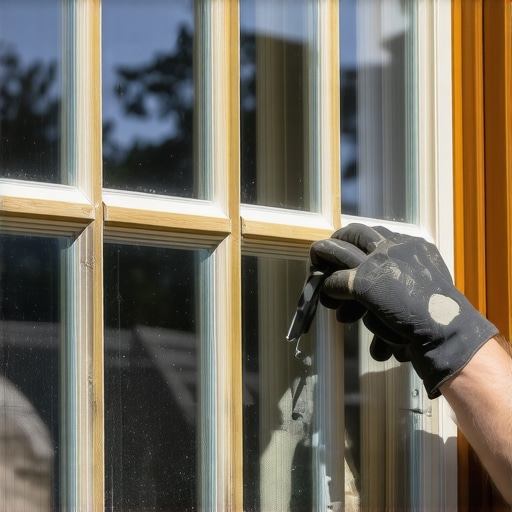
The Autopsy of a Failed Quick Fix
I recently pulled a wood sash out of a 1912 Victorian home where the homeowner had attempted a modern window repair using high-grade silicone caulk. When I got it back to the shop and stripped it down, the tenons were soft enough to crush with my thumb. The previous person had tried to skip the traditional glazing process, thinking modern chemistry outperformed century-old methods. They were wrong. That silicone created a vapor-tight seal that trapped moisture between the glass and the wood. Without the ability to breathe, the water sat there, feeding fungi that turned a perfectly salvageable piece of old-growth heartwood into compost. In my twenty-five years as a glazier, I have seen it a thousand times: the caulk-and-walk mentality destroys more historic windows than the weather ever could.
The Science of Traditional Linseed Oil Putty
When we discuss historic window repair, we are really discussing a sophisticated system of moisture management and thermal movement. Traditional glazing putty is typically a mixture of boiled linseed oil and calcium carbonate, or whiting. This is not just a filler; it is a sacrificial and adaptive barrier. Unlike modern sealants that rely on synthetic polymers to create a rigid bond, linseed oil putty remains plastic for decades. As the sash wood expands and contracts with the fluctuating humidity of the seasons, the putty moves with it. This is critical because wood is a hygroscopic material. When it takes on moisture from the air, it swells. A rigid modern caulk will pull away from the wood or the glass, creating a micro-gap. Once that gap exists, capillary action sucks water into the glazing pocket, and that is where the rot begins.
“Installation and material compatibility are just as critical as the window performance itself. A high-performance window installed poorly or with incompatible materials will fail prematurely.” – AAMA Installation Masters Guide
Glazing Zooming: The Molecular Bond
To understand why putty remains the king of the historic sash, we have to look at the chemistry of the bond. When you apply a high-quality linseed oil putty to a primed wood muntin, the oil actually penetrates the fibers of the wood. This creates an integrated transition zone rather than a surface-level adhesion. In the north where winters are brutal, the dew point often lands right on the interior surface of the glass. This leads to condensation running down into the glazing bead. A traditional putty slope, or the bevel, is designed to shed this water away from the glass. Because the putty is breathable on a molecular level, it allows any trapped moisture to migrate out through the oxidation process. This is the exact opposite of what happens when people decide to replace windows with vinyl units that have sealed insulating glass units. In those modern units, once the seal fails, the window is garbage. A putty-glazed window, however, can be maintained for three hundred years with nothing more than a fresh coat of paint and a watchful window cleaner.
Thermal Logic in Cold Climates
In cold climates like Chicago or Minneapolis, the primary enemy is heat loss and the secondary enemy is condensation. Many sales reps will tell you to replace windows because of a poor U-Factor. What they do not tell you is that a restored historic sash with a high-quality storm window actually rivals the thermal performance of a modern double-pane unit. The U-Factor, which measures the rate of heat loss (where a lower number is better), is significantly improved when you create a deep air space between the prime sash and the storm window. Traditional putty allows this system to function because it keeps the glass tight in the sash, preventing the air infiltration that usually accounts for 90 percent of the energy loss in old homes. When you use a shim to level a new window in a rough opening, you often create a void that is difficult to insulate perfectly. With a historic sash, the frame is already part of the building’s thermal envelope.
The Mechanics of the Glazing Pocket
Every glazier knows the importance of the bedding. This is the thin layer of putty that sits between the glass and the wood muntin. Without proper bedding, you have glass-to-wood contact, which is a recipe for failure. The bedding acts as a gasket. When I set a pane of glass into a sash, I am looking for a specific amount of squeeze-out. This ensures that the glass is fully supported and that there are no air pockets where water can collect. We then secure the glass with steel glazier points, driven into the muntin. These points provide the mechanical hold, while the putty provides the weather seal. This redundancy is something you do not get with modern snap-in glazing beads, which are prone to cracking after a decade of UV exposure. A professional window cleaner can tell you that a well-maintained putty line is easier to maintain and provides a more durable edge than any plastic strip ever will.
“Properly maintained historic windows can last indefinitely, whereas modern replacement units have an average lifespan of 15 to 25 years.” – National Federation of Rating Council (NFRC) Field Observations
The Myth of Low-Maintenance Vinyl
The push to replace windows is often driven by the myth of zero maintenance. Vinyl frames have a high Coefficient of Thermal Expansion. This means they grow and shrink significantly with temperature changes. In a single day, a vinyl frame can move enough to break the perimeter seal, leading to air leaks. Wood, especially the old-growth pine and cypress found in historic homes, is remarkably stable along its length. By using traditional putty, we are utilizing a material that shares a similar rate of movement. When you are performing a window repair, you are not just fixing a hole; you are restoring a piece of engineering. You must ensure the weep hole in the sill is clear and the sash cord is functioning, but the glazing is the primary defense. If you replace that with a modern unit, you are essentially putting a temporary product into a permanent building.
Water Management and the Shingle Principle
The secret to why these old windows survived for a century is the shingle principle. Everything overlaps so that water always flows down and out. The putty bevel is the first line of defense. If that bevel is made of a material that peels, like latex, water gets behind it and sits in the glazing pocket. Because wood is an organic material, it will eventually rot if the moisture content stays above 20 percent. Traditional putty, when painted correctly with the paint overlapping the glass by a sixteenth of an inch, creates a waterproof cap that still allows the assembly to breathe. This is why we don’t use sill pans in historic masonry openings; the thick timber sills were designed to manage that water themselves through sheer mass and slope.
Conclusion: Why the Master Glazier Chooses Putty
In the end, the choice of putty over modern sealants is a choice of longevity over convenience. It requires skill to pull a clean line with a glazing knife. It requires patience to wait for the putty to skin over before painting. But for those of us who care about the structural integrity of a home, there is no substitute. Whether you are a window cleaner trying to maintain a clear view or a homeowner facing a major window repair, the materials you choose will determine if that window lasts another century or ends up in a landfill in ten years. Don’t be fooled by the marketing of replacement windows; the best technology for a historic home was perfected a long time ago.