The Deceptive Simplicity of a Window Track
In twenty-five years of hanging glass, from massive storefronts to residential casements, I have seen millions of dollars in fenestration destroyed by something as small as a dead fly and some dust. Most homeowners treat their windows like a static piece of furniture, but as a glazier, I see a window as a dynamic machine. It is a series of moving parts, thermal breaks, and, most importantly, a drainage system. When you look at your window track and see a bit of gunk, you might think it is just an eyesore. I see a failure in the making. The common window cleaner often focuses on the transparency of the glass, but the real health of the unit lives in the tracks.
The Condensation Crisis: A Narrative of Neglect
A homeowner called me in a panic last February because their expensive double-pane windows were ‘sweating’ and water was pooling on the interior stool. They were convinced the seals had failed. I walked in with my hygrometer and showed them the humidity in the room was nearly 60 percent. But the real smoking gun was the track. It was packed with a mixture of pet dander, drywall dust from a recent renovation, and old grease. I had to explain that it wasn’t the windows; it was their lifestyle and a complete lack of maintenance. The debris had completely plugged the weep holes. Because the water couldn’t escape to the exterior, it backed up, increased the local humidity at the glass interface, and started rotting the internal wood liner. This is where the ‘Toothbrush and Baking Soda’ method moves from a ‘life hack’ to a critical component of window repair and longevity.
“Installation is just as critical as the window performance itself. A high-performance window installed poorly will fail, but a well-installed window that is never maintained will fail even faster.” AAMA Installation Masters Guide
The Anatomy of the Sill and the Shingle Principle
To understand why we clean with such precision, you have to understand the ‘Shingle Principle.’ In the world of glazing, we assume water will get past the first layer of defense. The window track is designed as a collection basin, or a sill pan, that directs that water back outside through weep holes. If you are in a cold climate like Chicago or Minneapolis, this is even more vital. When water gets trapped in a dirty track during a freeze-thaw cycle, it expands. That expansion can crack the vinyl extrusion or break the bond of the glazing bead, leading to air infiltration that skyrockets your heating bill. A clean track ensures the U-Factor of your window remains at its rated performance by preventing ice dams from forming within the frame.
The Glazier’s Method: Toothbrush and Baking Soda Chemistry
Why baking soda? As a professional, I avoid harsh petroleum-based cleaners that can degrade the weatherstripping or the EPDM gaskets. Baking soda, or sodium bicarbonate, is a mild alkali. It provides a gentle abrasive action that is softer than the PVC of the window frame but harder than the accumulated environmental pollutants. When you sprinkle it into the track, it neutralizes acidic rain residue that can pit the finish of the aluminum or vinyl.
Step 1: The Dry Vac. Before you apply any moisture, use a vacuum with a crevice tool to remove the loose ‘Rough Opening’ debris. If you add liquid to a track full of dust, you just create a mud that is harder to extract.
Step 2: The Application. Sprinkle a generous layer of baking soda into the track, focusing on the corners where the sash meets the frame. This is where the shim pressure often causes the frame to slightly bow, creating a pocket for dirt.
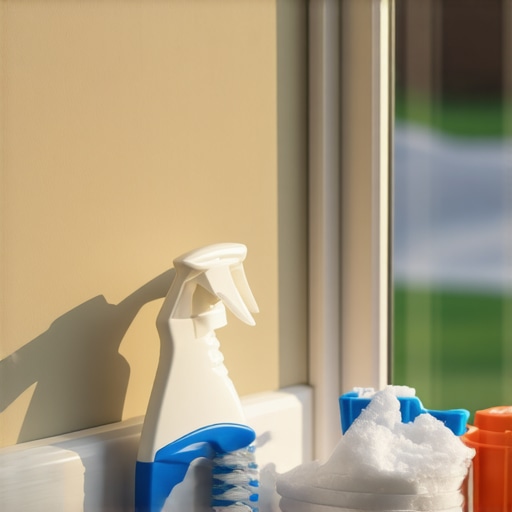
Step 3: The Agitation. This is where the toothbrush comes in. A standard window cleaner squeegee cannot reach into the tight tolerances of a modern window track. The toothbrush bristles can reach under the operable sash and into the tracks of the screen. You are looking to break the surface tension of the grime.
Step 4: The Rinse. Use a 50/50 mix of water and white vinegar. The chemical reaction creates a fizzing action that lifts the particles to the surface. This isn’t just for show; the effervescence helps move debris out of the hidden weep holes that you cannot reach with the brush.
The Installation Autopsy: What the Dirt Reveals
While you are cleaning, you should be performing what I call an ‘Installation Autopsy.’ Look at the tracks. If you see metal shavings, your installer didn’t clean the rough opening before they set the unit. If you see daylight through the corners of the track, your miter joints are failing. Cleaning the track is the only time most homeowners actually look at the mechanical health of their windows. If the track is perpetually wet even in dry weather, your flashing tape might be compromised, allowing water to track back from the building facade into the sill. This is when you stop cleaning and start looking at window repair or even a full frame tear-out.
“The sill represents the most vulnerable area for water infiltration; maintenance of this zone is paramount for assembly longevity and the prevention of structural rot.” ASTM E2112 Standard Practice
Climate Context: The Northern Struggle
In northern latitudes, the enemy is heat loss and condensation. A dirty track is a thermal bridge. When dust and hair accumulate, they hold onto moisture. That moisture conducts heat much faster than still air. If your tracks are filthy, you are effectively creating a cold-sink at the bottom of your window, which lowers the overall glass temperature and triggers more condensation. This leads to a vicious cycle of mold growth on the sash. By keeping the tracks pristine, you ensure the ‘Warm-edge’ spacers can do their job, maintaining the thermal integrity of the Insulated Glass Unit (IGU). If you find that cleaning the tracks doesn’t stop the drafts, it may be time to replace windows with units that feature a higher-performing U-Factor and better weatherstripping integration.
The Professional Verdict
Don’t be fooled by high-pressure sales tactics that claim a window is ‘maintenance-free.’ Nothing that stands between you and the elements is maintenance-free. The ‘Toothbrush and Baking Soda’ method is about more than just a clean house; it is about protecting the structural integrity of your home’s envelope. A clean track allows the window to operate as the engineer intended: managing water, blocking air, and preserving your ROI for decades. If you treat your windows like the precision instruments they are, you won’t need to see someone like me for a replacement for a long, long time.