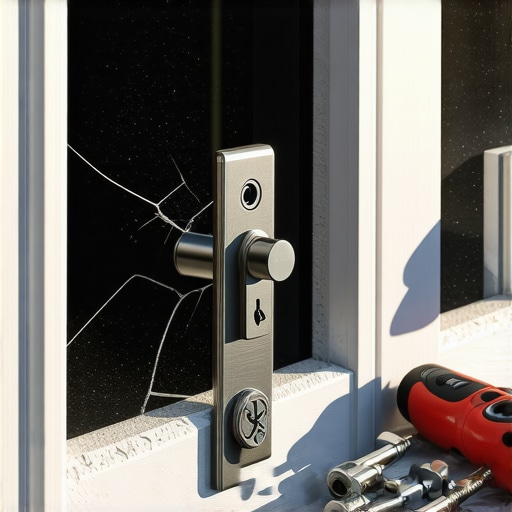
The Mechanics of Window Failure: Why Your Lock Stopped Clicking
A homeowner called me in a panic because their new windows were ‘sweating’ and the locks refused to engage. I walked in with my hygrometer and showed them the humidity was 60%. It wasn’t the windows; it was their lifestyle. That excess moisture was not only clouding the glass but causing the wooden stops to swell, pushing the sash just three-sixteenths of an inch out of alignment. In the world of high-performance fenestration, three-sixteenths of an inch is a canyon. When an operable sash doesn’t seat perfectly, the lock becomes the victim of physics, not a manufacturing defect. Before you rush to replace windows, you must understand that a window lock is a simple cam-and-keeper system that relies entirely on the geometry of the Rough Opening.
“Installation is just as critical as the window performance itself. A high-performance window installed poorly will fail.” – AAMA Installation Masters Guide
In cold northern climates like Chicago or Minneapolis, the U-Factor is the metric we live by. We want a low number to keep the heat inside. But thermal contraction in January can cause a vinyl frame to shrink, while the house’s framing remains static. This discrepancy often leads to a lock that won’t catch. You don’t need a new handle; you need to address the Shim placement or the alignment of the keeper. If your Sash has sagged because the installer skipped the setting blocks, the cam will hit the keeper head-on instead of sliding into the groove. This is why a window repair specialist looks at the reveals (the gaps between the sash and frame) before they ever touch a screwdriver.
The Installation Autopsy: Finding the Misalignment
When a lock fails, it is usually because the window is no longer ‘square, level, and plumb.’ I have seen Sill Pan installations where the back dam was too high, forcing the bottom sash upward and preventing the lock from reaching its mate. To fix this without replacing the hardware, you must first clear the Weep Hole. If water backs up in the track because of debris, the sash can ‘float’ on a layer of surface tension, keeping it just high enough to foul the lock mechanism. Use a dedicated window cleaner to ensure the tracks are free of grit. A single pebble in the track of a sliding window can prevent the interlock from meeting, which is the secret secondary locking point on most modern units.
“Thermal performance and structural integrity are inextricably linked; a mechanical failure in the locking system often indicates a compromise in the thermal envelope.” – NFRC Performance Standards
Check the Glazing Bead. If it has popped out of its channel, it can create friction against the frame that prevents the sash from closing fully. To repair the lock, unscrew the keeper (the part on the top of the lower sash or the side of the frame) and look for wear marks. If the metal is shiny where it shouldn’t be, the cam is hitting it. You can often elongate the screw holes in the keeper with a small round file, allowing you to shift it a few millimeters to compensate for house settling. This is a precision window repair technique that avoids the cost of new hardware. If you are dealing with a double-hung window, ensure the upper sash hasn’t dropped. Many ‘broken’ locks are simply the result of the top sash sliding down an inch because the balances are weak.
Advanced Diagnostics: Shims and Squareness
If the sash is square but the lock still won’t engage, the Rough Opening might be ‘bowed.’ If an installer over-foamed the gap between the window and the studs without using a low-expansion formula, the frame can curve inward. This pinches the Sash. You can diagnose this by running a string line from corner to corner. If the center of the frame is tight, you might need to back off the installation screws hidden behind the Glazing Bead and re-set the Shim. This is far more effective than forcing a handle until the internal gears strip. Remember, a window is a system. The Muntin bars and aesthetic features don’t matter if the Flashing Tape wasn’t applied correctly, leading to wood rot that allows the frame to shift. Fixing the lock is often about fixing the hole in the wall it sits in.