The Technical Reality of the Sliding Screen Assembly
A sliding screen door is frequently the most neglected component of a residential fenestration assembly. Most homeowners view it as a simple mesh barrier, but as a master glazier with over 25 years in the field, I see it as a precision-weighted operable component that must coexist within a Rough Opening that is often shifting. When a screen door sticks, jumps its track, or refuses to latch, it is rarely a failure of the mesh itself; it is a failure of the tensioning system and the roller carriage geometry. Proper window repair starts with understanding that the screen must float within the frame, supported by spring-loaded rollers that compensate for the inevitable variances in the sill’s levelness.
“Installation is just as critical as the window performance itself. A high-performance window installed poorly will fail.” – AAMA Installation Masters Guide
A homeowner called me in a panic because their new windows and patio doors were ‘sweating’ and the screens were impossible to move. I walked in with my hygrometer and showed them the humidity was 60%. It wasn’t the windows; it was their lifestyle and their complete lack of maintenance on the operable parts. They had been slamming the screen door so hard to overcome a lack of tension that they had actually bowed the aluminum extrusion. This is a classic case where a simple adjustment could have prevented a costly replacement. Before you call a professional for window repair, you must understand the mechanics of the tension screw.
The Anatomy of Tension: Rollers and Springs
The heart of the sliding screen door is the roller assembly, usually located at the top and bottom corners of the door frame. These assemblies consist of a wheel—typically nylon or stainless steel—housed in a carriage and attached to a leaf spring or a coil spring. The tensioning screw, accessible through a small hole in the side of the door frame, compresses or releases this spring. In a South/Hot climate like Texas or Florida, the heat can cause the aluminum frame to expand significantly. If your tension is set too tight during the cool morning hours, the midday sun can increase the Solar Heat Gain on the frame, causing it to bind. This is where window cleaner becomes a technical tool rather than just a cosmetic one; a clean track reduces the friction coefficient, allowing the tensioner to do its job without fighting debris. When we replace windows or patio doors, we ensure the sill is perfectly level to within 1/16th of an inch, but even then, the house will settle, and the screen tension will need recalibration.
The Step-by-Step Calibration Process
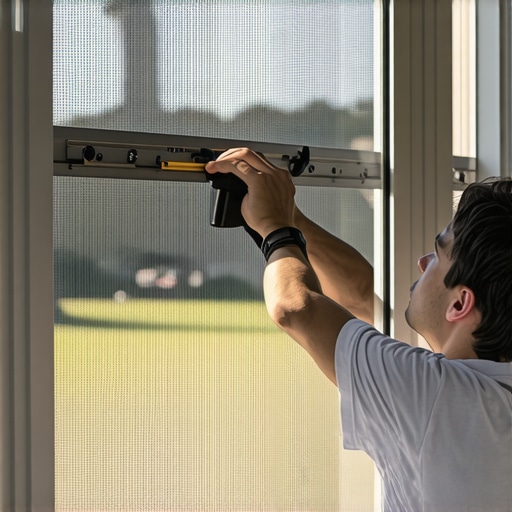
To begin the adjustment, you must first identify the tension screws. These are often hidden behind a plastic plug. Using a #2 Phillips head screwdriver, you will turn the screw clockwise to raise the door and counter-clockwise to lower it. The goal is to have the screen door sit high enough that the Glazing Bead and the frame do not rub against the track, but low enough that the top rollers remain securely engaged. Shim usage is not appropriate for screen doors; the adjustment must be internal to the hardware. If the door is crooked, you must adjust one side more than the other until the vertical Sash of the screen is perfectly parallel with the main frame of the door. This is a matter of millimeters. If the door feels ‘spongy,’ the springs are likely fatigued and require replacement rather than adjustment.
“The maintenance of hardware components is essential to ensure the design life of the fenestration product is achieved.” – ASTM E2112 Standard Practice
Climate Logic: Managing Heat and Friction
In high-heat environments, the SHGC (Solar Heat Gain Coefficient) is our primary enemy. While the screen itself provides a minor shading effect, its primary role is to allow for natural ventilation. However, in regions with high humidity and salt air, such as coastal Florida, the stainless steel rollers can still undergo galvanic corrosion if not maintained. A technician or a diligent window cleaner should regularly inspect the Weep Hole in the bottom track. If these holes are blocked, water will pool in the track, leading to the premature failure of the screen rollers and eventually rotting the Sill Pan of the main door assembly. I have seen countless cases where a ‘simple’ screen door fix turned into a full-scale window repair because water was being trapped by a misaligned screen frame.
When Maintenance Fails: The Replace Windows Verdict
There comes a point where adjustment is no longer an option. If the screw turns freely without changing the height of the door, the internal plastic housing of the roller assembly has likely cracked. This is common in older vinyl units where UV degradation has made the components brittle. In these instances, you are looking at a hardware swap or a full screen replacement. If you are already planning to replace windows in the home, ensure that your new units feature extruded aluminum screen frames rather than roll-form aluminum. Extruded frames are much stiffer and hold their tension settings far better over time, resisting the ‘bowing’ effect that leads to air gaps and insect infiltration. Remember, a screen door is part of the building’s thermal envelope management; if it doesn’t close tightly, your energy efficiency is compromised. “,”image”:{“imagePrompt”:”A close-up, technical photograph of a professional glazier’s hand using a screwdriver to adjust a small tension screw on the side of a bronze-colored aluminum sliding screen door frame. The focus is sharp on the screw and the texture of the metal, with a blurred background showing a clean patio track.”,”imageTitle”:”Adjusting the Tension Screw on a Sliding Screen Door”,”imageAlt”:”A technical view of the adjustment process for sliding screen door rollers showing the screwdriver and tension port.”},”categoryId”:0,”postTime”:””} Ready.