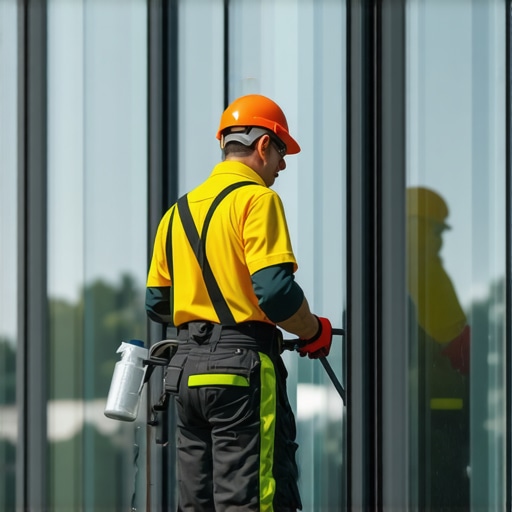
The Secret Instrument of the Glass Professional
In the world of high-rise glazing and commercial maintenance, there is a singular item that costs less than a sandwich but determines the fate of a multi-million dollar facade. I am talking about the professional-grade stainless steel scraper. While a homeowner might see a razor blade as a tool for scraping paint, a seasoned window cleaner or master glazier sees it as a diagnostic probe. This $10 tool is the first line of defense in identifying whether you are facing a simple cleaning job, a necessary window repair, or a total requirement to replace windows across an entire elevation.
I recall a specific instance that highlights the disconnect between window performance and owner perception. A property manager called me in a panic because their brand-new, high-efficiency windows were ‘sweating’ and showing signs of what they thought was seal failure. I walked into the building with my hygrometer and my scraper. Within minutes, I showed them that the interior relative humidity was hovering at 60 percent while the outside temperature was plummeting. The windows weren’t failing; they were performing exactly as designed by being the coldest surface in a poorly ventilated room. It wasn’t a glazing crisis; it was a lifestyle and HVAC calibration issue. That realization saved them tens of thousands in unnecessary glass replacement.
The Anatomy of the Scraper and Surface Science
The professional scraper is usually a six-inch wide tool with a replaceable stainless steel blade. Why stainless? Because carbon steel blades can rust and leave microscopic metallic deposits on the glass surface, which eventually oxidize and create permanent staining. When a window cleaner uses this tool, they are feeling for the ‘chatter’ of the blade. A smooth glide indicates a healthy glass surface, but a raspy, clicking sound suggests the presence of fabrication debris or mineral etching. Fabrication debris occurs when microscopic glass fines from the cutting and tempering process are fused back onto the glass surface. If you run a scraper over that, you risk dragging those fines and creating ‘half-moon’ scratches that permanently ruin the lite.
Understanding Low-E Coatings and Thermal Logic
As a glazier with 25 years in the field, I have seen too many installers and cleaners ruin high-performance glass because they didn’t understand the ‘surface numbering’ system. In a standard double-pane insulated glass unit (IGU), there are four surfaces. Surface #1 faces the outdoors. Surface #2 is the inside of the outer pane. Surface #3 is the outside of the inner pane, and Surface #4 faces the room interior.
In northern climates like Minneapolis or Chicago, where heat loss is the primary enemy, we prioritize the U-Factor. U-Factor is the measure of non-solar heat flow. The lower the number, the better the window is at keeping heat inside. To achieve a superior U-Factor, we typically place the Low-Emissivity (Low-E) coating on Surface #3. Low-E coatings are microscopically thin layers of metal or metallic oxides. They function by reflecting long-wave infrared radiation. By putting the coating on Surface #3, the heat generated by your indoor furnace is reflected back into the room rather than being absorbed by the glass and conducted to the cold exterior air. If a window cleaner uses a scraper on a surface that has a ‘hard coat’ Low-E applied to the interior (Surface #4), they will strip the coating and destroy the window’s thermal properties. This is why professional identification of the glazing type is the most critical step before any window repair or maintenance begins.
“Installation is just as critical as the window performance itself. A high-performance window installed poorly will fail.” – AAMA Installation Masters Guide
When to Repair vs. When to Replace Windows
The $10 scraper often reveals the truth about the seal integrity of an IGU. If you see ‘milky’ white deposits or rainbow-like oily films inside the glass that cannot be reached by a blade on the outside, the seal has failed. This is known as desiccant failure. Inside the spacer bar of a window, there are small beads of desiccant designed to absorb any residual moisture from the manufacturing process. Once the primary sealant—usually polyisobutylene—and the secondary sealant—silicone or polyurethane—break down, the desiccant becomes saturated. At that point, the window is no longer an insulator; it is a thermal bridge. You cannot ‘clean’ this. While some companies offer ‘defogging’ services, as a master glazier, I find these to be temporary bandages. To restore the thermal envelope, you must replace windows or at least the IGU itself.
The Physics of the Rough Opening and Water Management
A window is essentially a controlled hole in a building’s weather-resistive barrier. The most expensive window in the world will leak if the Rough Opening is not prepared with scientific precision. Every window must be installed into a Sill Pan. A sill pan is a three-sided flashing element that sits at the bottom of the opening. If water gets past the window’s primary seals—which it eventually will—the sill pan catches that water and directs it back out through the Weep Holes in the window frame. I have seen countless ‘caulk-and-walk’ installers simply squirt a bead of silicone around a window and call it a day. That is not a window repair; that is a ticking time bomb. When that caulk fails, water is trapped against the wood framing, leading to rot and mold that can cost five times the price of the original window to fix.
“The installation of flashing and its integration into the water-resistive barrier are critical to the long-term performance of the fenestration system.” – ASTM E2112
Trade Cant: The Language of the Glazing Specialist
To truly understand your windows, you must know the terminology of the craft. The Sash is the part of the window that holds the glass and, in Operable units, is the part that moves. The Muntin refers to the bars that divide the glass into smaller sections (often confused with mullions, which join two separate window units together). The Glazing Bead is the strip of vinyl or aluminum that snaps into the frame to hold the glass in place. When I am performing a window repair, I often look at the Shim placement. Shims are small wedges used to level and square the window within the rough opening. If a window is ‘binding’ or the lock doesn’t line up, it is usually because the installer didn’t use enough shims or placed them in the wrong locations, causing the frame to bow. A professional window cleaner will often notice these alignment issues first, as the squeegee will skip or the scraper will catch on an uneven Glazing Bead.
Thermal Stress and the Scraper’s Warning
Sometimes, the scraper reveals ‘pitting’ that is actually the beginning of a thermal stress crack. This happens when there is a significant temperature differential between the center of the glass and the edges covered by the frame. In commercial settings, heavy drapes or furniture placed too close to high-performance glass can trap heat. This heat builds up, causing the center of the glass lite to expand while the edges remain cool. If the stress exceeds the edge strength of the glass, a crack will propagate. These cracks usually start perpendicular to the glass edge and then wander. If you see this, no window cleaner can help you; you are looking at a structural failure of the glass that requires an immediate plan to replace windows before the lite falls out of the frame.
The Value of Professional Maintenance
The takeaway for any building owner is that windows are not ‘set and forget’ components. The $10 scraper used by a professional window cleaner is a diagnostic tool that can identify seal failure, fabrication defects, and installation errors before they lead to catastrophic water damage. If you are noticing drafts, noise, or visible moisture, don’t just reach for a tube of caulk. Consult a specialist who understands the ASTM E2112 standards and the physics of the thermal envelope. Whether you need a minor window repair or a full-scale project to replace windows, the quality of the installation and the understanding of the local climate logic will determine if your investment lasts five years or fifty.