In twenty five years of hanging sash and leveling frames, I have seen every imaginable form of window neglect. I have stood on scaffolding forty feet up, inspecting a curtain wall where the glass was so pitted by industrial runoff that it looked like frosted privacy panels. Most homeowners reach for a blue bottle of chemical window cleaner the moment they see a streak, but they are often fighting a losing battle against atmospheric chemistry. When you are dealing with exterior glass that has been baked by the sun and pelted by mineral heavy rain, you need more than a surfactant; you need a solution that understands the molecular bond of grime. That is where the old world method of using black tea comes into play, a technique often overlooked by modern ‘caulk-and-walk’ installers who would rather sell you a total replacement than teach you how to maintain a perfectly good lite of glass.
The Condensation Crisis and the Cleaning Myth
A homeowner once called me in a panic because their new windows were ‘sweating’ and looked permanently foggy. I walked in with my hygrometer and showed them the humidity in their living room was 60 percent while the outside temperature was plummeting. It was not a window failure; it was a lifestyle and ventilation issue. They had been trying to scrub the ‘fog’ off the exterior with abrasive sponges, nearly ruining the glazing bead and scratching the glass surface. This is a common mistake. Before you even think about whether you need to replace windows or seek out a professional window repair, you must understand what is actually on your glass. Grime on exterior windows is rarely just dust. It is a complex matrix of bird droppings, pollen, automotive exhaust particulates, and mineral deposits from hard water. These substances create a pH imbalance on the glass surface that standard ammonia cleaners often fail to neutralize effectively.
“Installation is just as critical as the window performance itself. A high-performance window installed poorly will fail.” – AAMA Installation Masters Guide
The Chemistry of Tannic Acid and Glass Surface Tension
Why black tea? It sounds like a folklore remedy, but the physics are sound. Black tea contains high concentrations of tannic acid. Glass, while it appears smooth to the naked eye, is actually a porous and irregular surface at the microscopic level. When atmospheric pollutants settle into these microscopic valleys, they form a stubborn bond. The tannic acid in black tea acts as a mild degreaser and a pH neutralizer. It breaks the surface tension of organic oils, such as those found in tree sap and insect remains, allowing them to be wiped away without the need for aggressive scrubbing that could dislodge the glazing bead or damage the delicate finish of a vinyl or fiberglass frame. This is particularly important for windows with a Low-E coating. While most modern windows have the Low-E coating on Surface #2 or Surface #3 (the internal surfaces of the IGU), older or specialized glass might have exposed coatings that react poorly to harsh chemicals. Using a natural acidic base like tea ensures you are not etching the glass while you clean it.
Climate Logic: From Pollen to Industrial Soot
The effectiveness of your cleaning regimen depends heavily on your local climate logic. If you are in the North, your primary enemy is often the salt from winter road treatments and the heavy soot from heating systems. These alkaline deposits require the acidic balance that black tea provides. Conversely, in a humid Southern climate, you are battling biological growth and thick pollen. Pollen is notoriously sticky because it contains lipids. A standard window cleaner often just smears these lipids around. The tannins in the tea encapsulate these oils, making them easier to lift from the glass surface. Regardless of your location, maintaining the cleanliness of the exterior glass is a prerequisite for inspecting the health of the window itself. You cannot see a hairline crack in the sash or a failing weep hole if it is buried under a layer of gray silt.
“Regular maintenance and cleaning are essential to ensure the longevity and thermal performance of fenestration products.” – NFRC Maintenance Guidelines
The Master Glazier’s Process for Grimy Glass
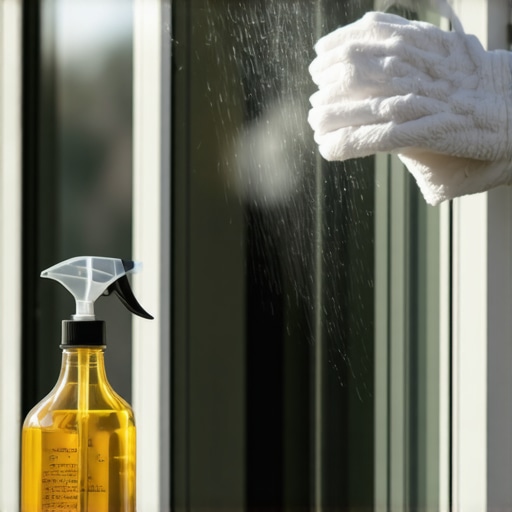
To execute this properly, you need to brew a highly concentrated batch of black tea using three to four bags per liter of boiling water. Let it steep until it is completely cool. Never apply hot liquid to a cold window; the thermal shock could cause the glass to shatter, leading to an immediate need for window repair. Once cool, transfer the tea to a spray bottle. Before applying the tea, use a soft brush to remove loose debris from the rough opening and the sill. This prevents you from creating a muddy slurry that could clog the weep holes. Spray the glass generously and let it sit for sixty seconds. This ‘dwell time’ is crucial for the tannic acid to penetrate the grime. Use a lint free microfiber cloth or a professional grade squeegee to remove the liquid. If you are using a squeegee, ensure the rubber blade is sharp and supple; a nicked blade will leave streaks that no amount of tea can fix. Pay close attention to the edges where the glass meets the frame. This is where moisture often traps dirt, which can eventually lead to rot in wood windows or seal failure in insulated units.
When Cleaning is Not Enough: Identifying Structural Failure
While black tea can restore the clarity of the glass, it cannot fix a structural defect. As you clean, you should be performing a mini inspection of the entire assembly. Check the shim space if visible, and ensure the flashing tape is not peeling away from the building wrap. If you notice that the grime is actually on the inside of the double pane glass, cleaning is futile. That is a sign of a blown seal, where the desiccant in the spacer bar has become saturated and can no longer absorb moisture. In such cases, you must decide whether to perform a sash replacement or to replace windows entirely. Furthermore, if you find that the water you are using to clean the window is pooling in the sill pan and not draining through the weep holes, you have a drainage problem that could lead to significant water damage inside your walls. A window is a complex water management system, and cleaning it is the best way to monitor its performance. Do not be the homeowner who ignores a small leak until the header is black with rot. Use the cleaning process as a diagnostic tool to keep your home dry and your energy bills low.