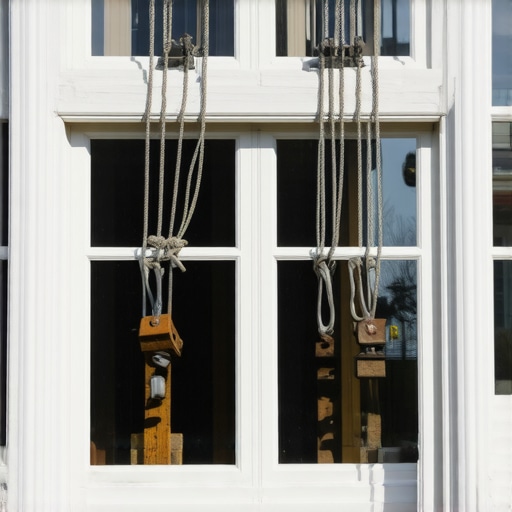
If you are lying awake at night listening to a rhythmic thudding coming from inside your walls whenever the wind picks up, you are not being haunted by a ghost. You are experiencing a mechanical failure of your fenestration system. As a master glazier with a quarter-century in the field, I have seen every iteration of the double-hung window, from the heavy-duty commercial units in downtown skyscrapers to the delicate wood sashes of the early 20th century. When your sash window weights are banging against the frame, it is a symptom of a deeper issue within the rough opening that requires more than a simple bead of caulk to fix. This is a technical failure of the balance system, and understanding why it happens requires a look into the hidden anatomy of your home’s envelope.
The Rot Behind the Weight Pocket: A Cautionary Tale
I pulled a wood sash out of a 1920s craftsman home in a historic district last November, and the weight pocket was essentially a vertical swamp. Why? Because the previous owner thought they could just caulk the exterior trim and call it a day. They did not realize that water was wicking through the end grain of the sill and dropping straight into the pocket where the cast-iron weights live. By the time I got there, the header was sagging and the weights were banging against rotted studs every time the HVAC system cycled. This is the reality of neglecting the rough opening. When the internal structure of the window frame begins to deteriorate, the dividers that keep the weights separated from the framing members fail. I had to show the homeowner that their banging weights were actually the sound of their house quite literally rotting from the inside out because of poor water management. This is why proper flashing and sill pan installation are the only defenses against systemic rot.
The Mechanics of the Weight and Pulley System
To understand the noise, you must understand the assembly. A traditional double-hung window operates on a system of counterweights. Inside the side jambs are hollow cavities known as weight pockets. Inside these pockets, cast-iron or lead weights are suspended by a braided cotton or nylon sash cord that runs over a bronze or steel pulley. The weight of the iron is meant to exactly offset the weight of the glazed sash, allowing for effortless operation. However, several things can go wrong that lead to the ‘clanging’ sound. First, the sash cord can stretch or fray. When the cord loses its tension or begins to catch on the pulley, the weight does not travel in a perfectly vertical line. It begins to oscillate. Second, many older windows feature a ‘parting bead’ or an internal wooden divider inside the pocket. This divider is there to prevent the weights for the upper and lower sashes from hitting each other. If this divider has rotted away or shifted, the weights will collide like pendulums. Furthermore, if the window is not plumb, level, and square within the rough opening, the weight will naturally gravitate toward the lowest point, which usually means it is dragging against the interior casing or the exterior sheathing.
“Water penetration is the single most common cause of window-related structural damage, often originating from failures in the interface between the window and the wall.” – ASTM E2112 Standard Practice
The Thermal Physics of an Empty Hole in Your Wall
From a thermal performance standpoint, a traditional weight pocket is a disaster. You essentially have a two-inch wide by four-inch deep uninsulated cavity that runs the entire height of your window. In cold climates, this pocket acts as a thermal bridge, pulling heat out of your room and allowing cold air to infiltrate through the pulley holes. If you are wondering why your room is drafty even after you have done a window repair on the weatherstripping, it is because of the air bypassing the sash through the weight pocket. This is where the physics of the U-Factor comes into play. The U-Factor measures the rate of heat transfer; the lower the number, the better the insulation. A single-pane wood window with an open weight pocket might have a U-Factor north of 1.0, which is essentially like having a hole in the wall. When the wind blows, it creates a pressure differential between the interior and exterior of your home. This pressure can cause the weights to move within their pockets, creating that banging sound. It is a physical manifestation of energy loss.
Window Repair vs. Replace Windows: The Glazier’s Verdict
When clients ask me whether they should pursue a window repair or replace windows entirely, I tell them to look at the bones. If the wood is clear and the joinery is tight, we can often stabilize the weights. We can install high-performance sash balances, replace the cords with stainless steel chains, and insulate the pockets with slow-rise non-expanding foam while still allowing for the weight’s travel. However, if the banging is caused by structural shifting or significant rot, you are throwing good money after bad. Modern replacement windows, specifically those with fiberglass or thermally broken aluminum frames, eliminate the need for weights entirely. They use constant-force balances or block-and-tackle systems that are housed within the window frame itself, allowing the rough opening to be fully insulated. If you choose to replace windows, you must ensure the installer uses a proper sill pan and flashing tape. I have seen too many ‘caulk-and-walk’ installers skip the flashing, leading to the same rot issues I described earlier. A high-performance window is only as good as its installation.
“Installation is just as critical as the window performance itself. A high-performance window installed poorly will fail to meet energy expectations.” – AAMA Installation Masters Guide
The Role of the Window Cleaner and Maintenance
Even a professional window cleaner can tell you that a banging weight is a sign of trouble. When a window cleaner applies pressure to the glass to remove stubborn oxidation or debris, a stable sash should not wobble or rattle in its tracks. If the sash feels loose, it means the tension in the weight system is gone. Regular maintenance is key. You should periodically check the pulleys for lubrication and ensure the sash cord is not showing signs of abrasion. If you see ‘sawdust’ at the bottom of your window tracks, that is likely the cord grinding against the pulley or the weight grinding against the frame. This friction is what eventually leads to the weight breaking free and crashing to the bottom of the pocket, which is a loud and potentially dangerous event.
Final Technical Considerations
If you are determined to keep your historic windows, you must address the weight pockets. One common fix is to remove the interior casing and install ‘pocket covers’ or to fill the cavity with mineral wool, though this requires switching to a different balance system. If you are in a cold climate, pay attention to the Dew Point. When warm, moist indoor air hits the cold surface of a weight pocket, condensation forms. This condensation leads to mold and eventually rot, which compromises the shim space and the rough opening. In summary, the banging is not just a noise; it is a warning. Whether you opt for a meticulous window repair or decide it is time to replace windows with modern NFRC-rated units, the goal is the same: a sealed, stable, and silent thermal envelope. Do not accept a shoddy installation. Demand a shimmed, flashed, and insulated rough opening that respects the physics of the building.