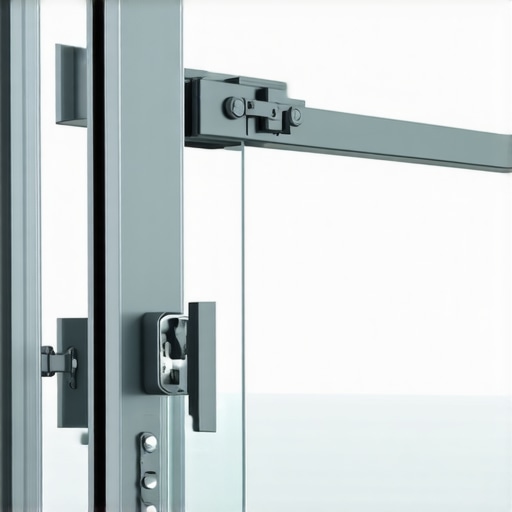
You stand there at the end of a long day, tugging on the handle of your sliding glass door, only to find the latch hitting the strike plate with a hollow thud instead of a satisfying click. You lift the door, you pull it toward you, and you finally manage to force the lock into place. As a master glazier with over two decades in the field, I can tell you that this is not just a nuisance; it is a symptom of a systemic failure in the portal geometry. A sliding door is a heavy, dynamic system that relies on a perfectly level track and a square rough opening to function. When the lock stops lining up, the house is telling you a story about structural movement, thermal dynamics, or component fatigue.
The Condensation Crisis and the Swelling Subfloor
A homeowner called me in a panic because their new windows were ‘sweating.’ I walked in with my hygrometer and showed them the humidity was 60%. It wasn’t the windows; it was their lifestyle, but that humidity was doing more than just clouding the glass. In this particular case, the sliding glass door lock had stopped lining up because the high interior moisture had actually migrated into the subfloor through an improperly sealed sill. The wood had swollen, pushing the entire track upward by an eighth of an inch. That eighth of an inch was enough to move the latch out of the strike’s reach. This is why a proper sill pan is non negotiable. Without a sill pan to manage moisture, your subfloor is at the mercy of every drop of condensation or wind driven rain that hits the threshold.
“Installation is just as critical as the window performance itself. A high-performance window installed poorly will fail.” AAMA Installation Masters Guide
The Physics of the Heavy Glass Sash
The average sliding glass door sash weighs between 80 and 150 pounds depending on the glass thickness and frame material. This weight is supported by two tandem rollers located at the bottom of the operable panel. These rollers are the unsung heroes of your home’s egress. Over time, the bearings within these rollers can fail due to grit and debris. When the bearings flatten or the housing collapses, the door drops. You might notice the bottom of the door scraping the track, which is a clear indicator that a window repair is imminent. If the door drops even 3 millimeters, the hook of the mortise lock will no longer clear the keeper on the jamb. This is why I always check the roller adjustment screws before I even look at the lock itself. By turning the adjustment screw, you move the internal carriage, raising or lowering the sash to restore the original factory alignment.
Thermal Contraction in the Cold North
In northern climates like Chicago or Minneapolis, we deal with extreme temperature swings that wreak havoc on building materials. If you have a vinyl sliding door, you are dealing with a material that has a high coefficient of linear thermal expansion. In the dead of winter, that vinyl frame will contract. If the installer did not use a proper shim at the strike side of the jamb, the frame can actually bow outward as it shrinks, pulling the strike plate away from the latch hook. This is why we focus on the U-Factor in cold zones. A lower U-Factor means less heat is escaping, but it also means the frame is maintaining a more consistent temperature. We use Low-E coatings on Surface 3 to reflect heat back into the room, which helps mitigate the thermal movement of the frame itself. If your lock only fails when it is twenty below zero, you are looking at a thermal bridging issue combined with a lack of structural support in the rough opening.
The Role of the Header and Structural Settling
Sometimes the issue is not the door at all but the house around it. The header is the structural beam that spans the opening of the door. It carries the load of the roof or the floor above. If that header was undersized or if the house is settling, the header will deflect. This downward pressure squeezes the frame. You will notice that the door becomes difficult to slide before the lock stops lining up. If the head of the frame is bowing down, it forces the operable sash to tilt. You can diagnose this by looking at the reveal, the gap between the door and the jamb when it is nearly closed. If the gap is wider at the top than the bottom, your opening is out of square. At this point, simply adjusting the rollers is a temporary fix. You may need to replace windows and doors entirely if the structural deflection has permanently warped the frames.
“The flashings shall be installed in a manner that will prevent the entry of water into the wall cavity or onto the interior finish.” ASTM E2112 Standard Practice
Maintenance and the Window Cleaner Myth
I often see homeowners reach for a standard window cleaner to fix a sticky door. While a window cleaner is great for the glazing, it is often the worst thing for the track. Many off the shelf cleaners contain chemicals that can strip the factory lubricants from the stainless steel or nylon rollers. If you want to keep your door aligned, use a vacuum to remove the grit and cat hair from the track first. This debris acts like sandpaper on your rollers, grinding down the diameter of the wheel and causing the door to sink. Once cleaned, a dry silicone spray is the only lubricant that should touch the track. Unlike grease or oil, silicone does not attract dust, ensuring that your rollers maintain their height and your lock stays aligned with the strike plate.
When Window Repair Isn’t Enough
There comes a point where no amount of shimming or roller adjustment can save a door. If the glazing bead is cracked, the weatherstripping is flattened, or the weep holes are clogged and causing the frame to hold water, it is time to look at replacement. Modern fiberglass frames offer the best stability because they expand and contract at nearly the same rate as the glass itself. This prevents the sash from twisting and ensures the lock remains perfectly centered for decades. When we install a new unit, we ensure the rough opening is flashed with high quality flashing tape and that the sill is sloped to the exterior. We don’t just put a hole in the wall; we create a managed environment. If your sliding door is a constant source of frustration, remember that the lock is just the messenger. The real issue is usually the geometry, the moisture, or the physics of a house in motion.