The Physics of Friction and the Failing Patio Door
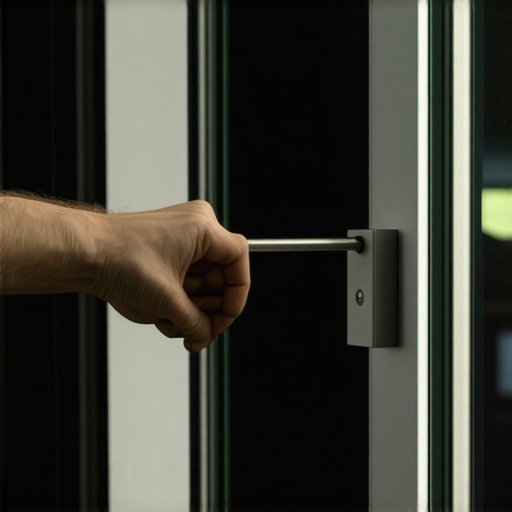
You stand before your sliding glass door, coffee in hand, ready to let the morning breeze into your kitchen. You grab the handle, brace your feet, and pull. Instead of a smooth, silent glide, you get a grinding resistance that requires your entire body weight to overcome. It is a common frustration, yet many homeowners assume it is just the inevitable aging of the house. As a master glazier who has spent over two decades diagnosing the failures of fenestration units, I can tell you that a heavy door is almost never about the glass itself, but a systemic failure of the installation and mechanical components.
I pulled a vinyl sliding door out of a house in a damp coastal suburb recently, and the header was completely black with rot. Why? The previous installer relied on the nailing fin instead of proper flashing tape and a rigid sill pan. The water had been wicking behind the frame for years, causing the wood beneath the track to swell. This swelling pushed the track upward, pinching the door between the head and the sill. The homeowner thought they just needed a better window cleaner to scrub the tracks, but no amount of soap can fix a structural squeeze caused by poor water management.
“Installation is just as critical as the window performance itself. A high-performance window installed poorly will fail.” – AAMA Installation Masters Guide
The Anatomy of the Glide: Rollers and Tandem Bearings
To understand why your door feels like it weighs five hundred pounds, we must look at the tandem rollers. Most sliding doors weigh between 120 and 300 pounds depending on the glass thickness and frame material. This weight is concentrated on two small wheel assemblies. Over time, the steel ball bearings inside these rollers can oxidize or flat-spot. If you live in a cold climate like Chicago or Minneapolis, the cycle of condensation and freezing can accelerate this degradation. When the dew point is reached on the interior surface of the glass, moisture runs down into the track, eventually finding its way into the roller housing. Once those bearings seize, you are no longer rolling; you are dragging metal across metal.
When we talk about a window repair for a sliding door, we are usually looking at the delta between the rough opening and the actual frame. If the house has settled, the header may be sagging onto the top of the door. An operable panel requires a specific tolerance to move. If that gap is compromised by even an eighth of an inch, the friction increases exponentially. This is where the shim comes into play. If the installer did not properly shim the sill to be perfectly level, the entire weight of the door shifts to one roller, causing it to fail prematurely.
The Role of Thermal Expansion in Frame Binding
In regions with extreme temperature swings, the material of your door matters immensely. Vinyl has a high coefficient of thermal expansion. On a hot summer day, a dark-colored vinyl frame can expand significantly. If the rough opening was too tight, that expansion has nowhere to go but inward, bowing the frame and binding the sash. This is why I often steer clients toward fiberglass or thermally broken aluminum. Fiberglass is essentially glass fibers and resin; it expands and contracts at nearly the same rate as the glass it holds, maintaining the integrity of the seals and the ease of movement regardless of the thermometer.
U-Factor and the Importance of the Thermal Envelope
While the mechanical struggle is a physical nuisance, the weight you feel is often compounded by the thermal weight of a poorly insulated unit. In northern climates, heat loss is the primary enemy. If your sliding door is a single-pane relic or an early-generation double-pane unit with a failed seal, the air near the glass is significantly colder than the rest of the room. This creates a convection current that feels like a draft. When people decide to replace windows, they are often chasing the elusive U-factor. The U-factor measures the rate of heat transfer; the lower the number, the better the door is at keeping heat inside. A high-performance door in a cold climate should utilize a Low-E coating on surface number three to reflect long-wave infrared radiation back into the living space.
“The NFRC label provides the only reliable way to determine the energy performance of a window or door before it is installed.” – NFRC Performance Standards
Why a Window Cleaner Isn’t Enough
I see many homeowners attempting to solve a heavy door with cans of silicone spray or by hiring a professional window cleaner to blast the tracks. While keeping the weep holes clear and removing grit from the track is essential maintenance, it cannot compensate for a collapsed roller or a pitted stainless steel track. If the track itself is gouged, the new rollers will be destroyed within months. In these cases, a stainless steel track cover can sometimes provide a temporary reprieve, but if the substrate is rotted or the frame is warped, you are simply putting a bandage on a broken limb.
When we evaluate whether to perform a window repair or to replace windows entirely, we look at the glazing bead and the integrity of the seals. If you see fogging between the panes, the desiccant in the spacer bar is saturated. The insulating gas, likely Argon, has escaped, and you are left with a unit that has the thermal efficiency of a screen door. At that point, the mechanical weight of the door is the least of your problems; you are effectively heating the neighborhood.
Water Management and the Sill Pan
One of the most critical, yet overlooked, components of a sliding door installation is the sill pan. This is a flashing component that sits beneath the door and directs any water that bypasses the primary seals back to the exterior. Without a sill pan, any water that enters the weep holes or leaks past the gaskets sits on the wooden subfloor. Over years, this leads to the rot I mentioned earlier. This rot causes the floor to drop or the track to heave, both of which will make the door feel incredibly heavy. Proper flashing tape must be integrated with the weather-resistive barrier of the house to ensure a continuous drainage plane.
Conclusion: Don’t Fight the Glass
A sliding glass door should be operable with a single finger. If you are using your shoulder to force it open, you are putting undue stress on the handle, the frame, and your own back. Whether the issue is seized rollers, a sagging header, or thermal expansion in a cheap vinyl frame, the solution starts with a technical diagnosis. Stop looking for a magic spray and start looking at the mechanics of the opening. Understand the U-factor, check your weep holes, and ensure that your next installation includes a rigid sill pan and proper shimming. The comfort of your home and the longevity of your investment depend on the precision of the installation, not just the brand of the glass.