Understanding the Thermal Core of Your Home
In my twenty-five years as a master glazier, I have seen every possible failure in fenestration. I have seen units where the glass actually bowed inward because of improper pressure equalization, and I have seen homes where the homeowners were convinced they were living in a wind tunnel despite having brand-new vinyl frames. One of the most common questions I get from savvy homeowners is: “How do I actually know if there is argon in here, or if I just paid for expensive air?” Identifying the presence of an inert gas fill like Argon or Krypton versus standard dry air is not just a matter of curiosity; it is a fundamental check on the thermal integrity of your building envelope.
“Installation is just as critical as the window performance itself. A high-performance window installed poorly will fail.” AAMA Installation Masters Guide
A homeowner called me in a panic because their new windows were ‘sweating.’ I walked in with my hygrometer and showed them the humidity was 60 percent. It was not the windows; it was their lifestyle, combined with the fact that their new, high-performance windows were so airtight that the moisture had nowhere to go. But while investigating, we discovered that two of the units in the master bedroom had actually lost their gas charge due to a manufacturing defect in the primary seal. This discovery changed the conversation from humidity management to warranty replacement.
The Physics of the Insulated Glass Unit (IGU)
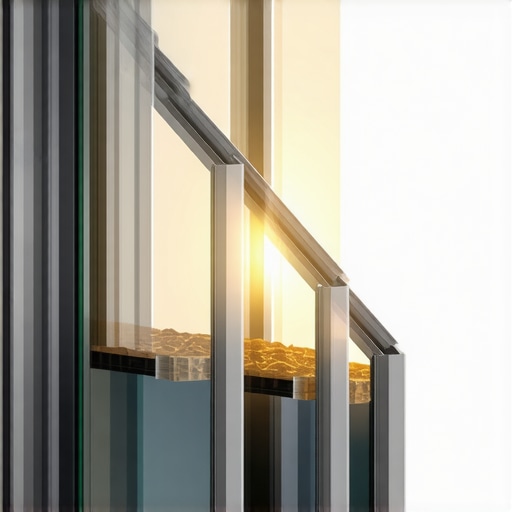
To understand how to identify a gas-filled window, you must first understand what an Insulated Glass Unit actually is. It is a sandwich of two or more panes of glass separated by a spacer. In a standard window, that gap is filled with dry air. However, air is relatively conductive when it comes to heat. Within that small gap, air molecules circulate in what we call convection currents. They pick up heat from the interior pane and carry it across to the exterior pane, dumping your expensive furnace heat into the winter night. This is where U-Factor comes into play. In cold climates like Chicago or Minneapolis, the U-Factor is the king of metrics. A lower U-Factor means better insulation.
When we replace that air with Argon gas, we are essentially thickening the soup. Argon is denser than air and has much lower thermal conductivity. It slows down those convection currents significantly. If you want to get even more technical, we sometimes use Krypton, which is even denser, allowing for thinner gaps with higher performance, though the cost-to-benefit ratio often makes it overkill for standard residential applications unless you are building a passive house. The key to identifying these gases often lies in the hardware that holds the glass together.
The Visual Inspection: Hunting for the Gas Port
The first and most reliable way for a homeowner to identify a gas-filled unit without specialized equipment is to perform a close-up inspection of the spacer bar. The spacer is the metal or foam piece that runs between the panes of glass at the perimeter. Look closely at the corners or along the edge of the spacer. In many manufacturing processes, two small holes are drilled into the spacer. One hole is used to pump the Argon in, and the other allows the air to escape. Once the process is complete, these holes are plugged with small, often translucent or metallic rivets.
If you see these two small plugs, you almost certainly have a gas-filled unit. However, modern manufacturing has evolved. Some high-end lines use a vacuum-fill process where the gas is introduced in a chamber, meaning no visible plugs are required. If you do not see plugs, do not panic yet. You might need to look for the NFRC (National Fenestration Rating Council) label. This label is usually found on the corner of the glass or on the frame of a new window. It will explicitly list the thermal performance and whether a gas fill was used. If you are looking at an older window where the sticker is long gone, we have to look for more subtle clues.
The Flame Test and Low-E Interaction
While the “flame test” is primarily used to identify Low-E coatings, it is a crucial step in the identification process because gas fills and Low-E coatings almost always go hand-in-hand. In a cold climate, a manufacturer will rarely go through the expense of filling a unit with Argon if they are not also applying a Low-E coating to Surface #3 (the interior-facing side of the outer pane). This coating reflects long-wave infrared radiation back into the room.
Hold a match or a lighter up to the window at night. You will see four reflections of the flame in a double-pane window. If one of those flames is a different color—usually a purple, blue, or deep green tint—you have a Low-E coating. If you have Low-E glass, there is a 90 percent chance the unit was also gas-filled at the factory, as the two technologies are designed to work in tandem to meet modern Energy Star requirements. If all four flames are the same yellowish color, you likely have clear, air-filled glass, and your window repair options might be limited to a full replacement if you are seeking better energy efficiency.
The Role of the Window Cleaner and Maintenance
A professional window cleaner is often the first person to notice when a gas-filled window has failed. When the primary seal (usually polyisobutylene) or the secondary seal (silicone or polysulfide) fails, the Argon gas escapes and is replaced by moisture-laden ambient air. This leads to the dreaded “blown seal” look. At first, it might just be a slight haze that you cannot wipe off. Eventually, it becomes full-blown condensation or calcium deposits inside the unit. If you see this, the gas is gone. Period. No amount of window repair can “pump” new gas into a failed unit in the field effectively. The entire IGU must be replaced within the existing sash.
“The presence of an inert gas fill is only as permanent as the seal integrity of the spacer system. Once the seal is breached, the thermal performance reverts to that of a standard air-filled unit, or worse, a moisture-trap.” NFRC Technical Bulletin
Analyzing the Gap: Spacers and Shims
When I am looking at a rough opening during a replace windows project, I am also looking at how the glass is shimmed within the sash. A gas-filled unit is under a specific internal pressure. If the window is not square or if the glazing bead is applying uneven pressure, it can stress the seals. When identifying windows, look at the spacer material. Is it a “warm-edge” spacer made of foam or plastic, or is it an old-fashioned aluminum box spacer? Aluminum is a thermal bridge and is rarely used with high-performance gas fills today because the metal spacer would negate the benefits of the Argon. If you see a non-metallic, thick spacer, it is a strong indicator of a modern, gas-filled high-performance unit.
The Professional Verdict
If you truly need to know the concentration of gas, there are ultrasonic devices and spark-emission spectrometers that can measure the Argon content through the glass. However, for most homeowners, the presence of spacer plugs, the NFRC label, or the combination of Low-E glass with a warm-edge spacer is enough evidence. Remember, the goal of these windows is to manage the dew point. By keeping the interior pane of glass warmer, the Argon gas prevents the air near the window from reaching its saturation point and dumping water on your sills. This protects your wood trim from rot and prevents the growth of mold. If your windows feel ice-cold to the touch when it is twenty degrees outside, you are likely looking at standard air-filled glass, regardless of what the salesman told you.