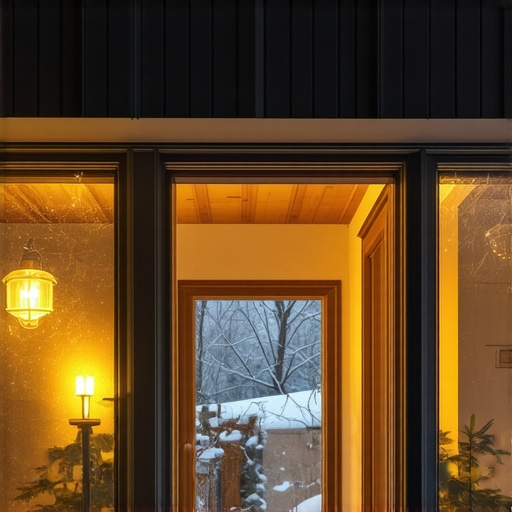
The Thermal Physics of Modern Glazing: Beyond the Sales Pitch
When the thermometer drops to sub-zero temperatures and the wind begins to howl against your home’s exterior, the physical boundary between your sanctuary and the elements is often no more than a few millimeters of glass. As a master glazier with over two decades in the field, I have seen the evolution of the window from a simple aesthetic opening into a complex thermal engine. Most homeowners looking to replace windows are bombarded with marketing jargon, but the reality of heat retention in triple-pane systems is rooted in strict physics, not sales brochures. To understand if these units are worth the investment, we must look at the glass as a managed barrier for infrared radiation and conductive heat transfer.
I recall sitting in a drafty kitchen in northern Wisconsin, listening to a local contractor try to convince a homeowner that their new windows would pay for themselves in three years. I had to step in and explain the actual math. The ‘Energy Savings’ myth is rampant in this industry. While triple-pane glass is objectively superior at preventing heat loss, the return on investment (ROI) is often measured in decades, not years. I showed them that the real reason to upgrade was not the utility bill, but the elimination of the ‘cold zone’ near the sash and the prevention of the dreaded dew point reaching the interior glass surface. In high-latitude climates, comfort is a luxury that technical specifications can provide, but only if you understand the numbers on the NFRC label.
“The thermal performance of a window is a system property, dependent on the combination of glazing, frame, and spacer.” – NFRC Technical Bulletin
The Anatomy of a Triple-Pane Insulated Glass Unit (IGU)
A triple-pane window consists of three distinct layers of glass separated by two insulating cavities. In a cold-climate application, we focus on the U-Factor, which measures the rate of heat transfer. The lower the U-factor, the better the window insulates. While a standard double-pane unit might have a U-factor around 0.30, a high-performance triple-pane unit can drop that number to 0.15 or lower. This is achieved through Glazing Zooming: analyzing the specific behavior of molecules within those cavities.
The air spaces are typically filled with Argon gas, which is denser than atmospheric air. This density slows the convection loops that occur between the panes. When the outer pane becomes cold, the gas nearest to it sinks, while the warmer gas near the inner pane rises. By adding a third pane, we create two separate convection cells, effectively halving the internal air movement and drastically reducing conductive heat loss. Furthermore, the use of a warm-edge spacer is non-negotiable. Traditional aluminum spacers act as a thermal bridge, conducting cold directly to the interior glazing bead, which leads to condensation and potential mold growth on the rough opening framing.
Low-E Coatings and Surface Logic
The real magic of heat retention lies in the microscopic layers of silver oxide applied to the glass, known as Low-Emissivity (Low-E) coatings. In a northern climate where heat retention is the priority, the placement of these coatings is critical. We count glass surfaces from the outside in. Surface #1 is the exterior, and Surface #6 is the interior face of the third pane. To keep heat inside, we typically apply the Low-E coating to Surface #5. This allows short-wave solar radiation to enter the home (providing passive solar gain) while reflecting the long-wave infrared radiation (your furnace’s heat) back into the room.
If you are considering a window repair because of a failed seal, you are likely seeing ‘fogging’ between the panes. This occurs when the desiccant in the spacer becomes saturated and can no longer absorb moisture. In a triple-pane system, a seal failure is twice as likely simply because there are two seals instead of one. This is why the frame material matters. A vinyl frame expands and contracts at a much higher rate than the glass IGU, which can stress the seals over time. Fiberglass, however, has a Coefficient of Thermal Expansion nearly identical to glass, making it the superior choice for maintaining the integrity of the gas fill over thirty years.
Installation: The Vulnerable Rough Opening
You can buy the most expensive triple-pane window in the world, but if the installation is handled by a ‘caulk-and-walk’ crew, the thermal performance is negated. The rough opening must be treated as a critical structural interface. I have seen countless installs where the installer failed to use flashing tape or a proper sill pan, leading to air infiltration that bypasses the window entirely. If air is leaking around the frame, the U-factor of the glass is irrelevant.
“A window’s airtightness is as vital as its U-factor; even a triple-pane unit cannot compensate for air leakage at the rough opening.” – ASTM E2112 Standard Practice
Properly shimming the window ensures that the operable sashes remain square and level, preventing gaps in the weatherstripping. Every weep hole must be clear to allow moisture to escape, yet the perimeter must be sealed with low-expansion foam to stop the transfer of cold air. When I inspect a job, I am not looking at the glass; I am looking at the muntins for alignment and the perimeter for a perfect air seal.
Maintenance and Longevity
Homeowners often ask if a window cleaner needs special chemicals for these high-tech units. The answer is no, provided the Low-E coatings are on the internal surfaces of the IGU (which they almost always are). However, the longevity of the unit depends on the external drainage. If water sits in the glazing bead because of a blocked weep hole, it will eventually degrade the primary seal. Regular maintenance involves checking these drainage paths and ensuring the caulking between the window frame and the siding remains intact. If you notice a draft, it is rarely the glass; it is usually a failure of the sealant or a poorly adjusted sash lock that isn’t pulling the window tight against its weatherstripping.
Ultimately, the truth about triple-pane windows is that they are a tool for extreme climates. They offer an unparalleled ability to maintain interior glass temperatures close to the ambient room temperature, which prevents the ‘chilly’ feeling of sitting near a window in January. While the ROI on energy costs may be long, the ROI on living comfort and the prevention of structural rot due to condensation is immediate. Choose a frame material that matches the glass’s stability, and never compromise on the quality of the installation professional.