How to Fix a Foggy Double Pane Window for a Fraction of the Cost
When you look through your window and see a milky haze or actual water droplets dancing between the panes, you are looking at a dead window. In the trade, we call this a failed IGU, or Insulated Glass Unit. Most homeowners assume that once the fog sets in, they must replace windows entirely, ripping out the frame, the trim, and often disturbing the siding. This is a massive misconception pushed by high-pressure sales teams. As a glazier with over 25 years in the field, I am here to tell you that you can restore your view for about twenty-five percent of the cost of a full replacement by simply replacing the glass unit itself. This process, known as reglazing, targets the specific component that failed while leaving the structural integrity of the rough opening intact.
“Moisture vapor transmission into the dead air space of an IGU will eventually lead to desiccant saturation and visible condensation.” : AAMA Glass Performance Standards
A homeowner called me in a panic because their new windows were sweating. I walked in with my hygrometer and showed them the humidity was 60 percent. It was not the windows: it was their lifestyle. They were boiling pasta and running a humidifier in a sealed house without using the exhaust fans. However, in most cases of foggy glass, the issue is not the interior air: it is the breakdown of the hermetic seal. I remember a project in a high-rise where every single south-facing window had turned opaque. The previous installer had used a low-grade silicone that could not handle the expansion and contraction of the glass. This is the reality of solar pumping, a physical phenomenon that eventually destroys every double-pane window ever made.
[image_placeholder_1]
The Physics of the Failure: Why Your Glass Fogs
An Insulated Glass Unit is a sandwich of two or more panes of glass separated by a spacer bar. Inside that spacer bar is a desiccant, a material designed to suck up any trace amounts of moisture. The entire unit is sealed with a primary seal of polyisobutylene and a secondary seal of silicone or polysulfide. The air inside is often replaced with an inert gas like Argon to lower the U-Factor. The problem begins with solar pumping. During the day, the sun hits the window, heating the gas inside. The gas expands, and the glass panes bow outward like a balloon. At night, the glass cools and contracts. This constant movement puts immense pressure on the seals. Over a decade or two, small fissures develop in the sealant. Moist air is sucked in during the cooling cycle. The desiccant works hard to absorb this moisture until it reaches its saturation point. Once the desiccant can no longer hold water, the moisture condenses on the coldest surface, which is usually the inside of the glass during a cold winter. This is when you realize your window repair is no longer a matter of using a window cleaner: it is a mechanical failure.
The Scams: Why Defogging is a Band-Aid
You may have seen advertisements for window defogging services that promise to fix the fog by drilling small holes in the glass and rinsing the interior with chemicals. As a master glazier, I find this practice nearly fraudulent. While it may temporarily remove the visible water, it does not restore the hermetic seal. You are essentially turning a high-performance insulated window back into a single-pane window with a permanent draft. You lose the Argon gas, the U-Factor skyrockets, and the interior surfaces of the glass will eventually coat with calcium deposits from the tap water used in the cleaning process. A real window repair involves replacing the IGU, not just venting it.
“The performance of a multi-pane glazing system is entirely dependent on the integrity of the hermetic seal.” : NFRC Field Testing Manual
The Master Glazier’s Method: Glass-Only Replacement
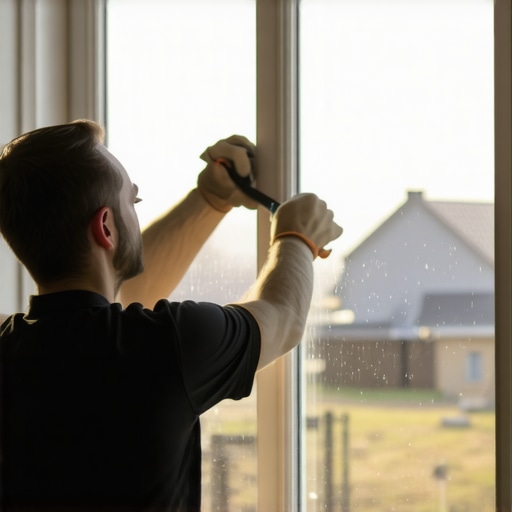
To fix a foggy window for a fraction of the cost, you must perform a sash-in replacement. First, you identify the glazing bead. This is the plastic or wood strip that holds the glass into the sash. Using a stiff putty knife, you carefully pop the beads out. Once the beads are removed, you can see the edge of the IGU. You will likely find shims at the bottom of the glass, which are used to center the unit and ensure it is square within the frame. By measuring the width, height, and total thickness of the glass unit (usually 5/8 inch, 3/4 inch, or 7/8 inch), you can order a custom-fabricated IGU from a local glass shop. When the new unit arrives, you simply remove the old glass, clean the sill pan and the weep holes to ensure proper drainage, and set the new unit into place. You have effectively given yourself a brand-new window without the cost of a full-frame installation.
Climate Specifics: Optimizing Your New Glass
Since we are dealing with a climate where condensation is the primary enemy (the North and Cold regions), your new IGU should be optimized for heat retention. This means choosing a glass package with a Low-E coating on Surface Number Three. In the glazing world, we count surfaces from the outside in. Surface One is the exterior face. Surface Two is the inside of the outer pane. Surface Three is the outside of the inner pane. By placing the Low-E coating on Surface Three, the glass reflects the long-wave infrared heat from your furnace back into your living room. You should also insist on a warm-edge spacer made of foam or stainless steel rather than the old-fashioned aluminum spacers. Aluminum is a thermal bridge that conducts cold directly to the edge of the glass, which is where condensation typically starts. A warm-edge spacer keeps the glazing bead area at a higher temperature, preventing the dew point from being reached on the interior surface.
The Installation Autopsy: Preventing Future Failure
When you pull the old glass out, look at the bottom of the frame. If you see standing water, your weep holes are clogged. This is a common reason for premature seal failure. If the bottom of the IGU sits in a pool of water, the secondary seal will eventually emulsify and fail. Part of a professional window repair is ensuring that the water management system of the window is functioning. Ensure the flashing tape or sill pan is not compromised. If the window was installed without a proper drip cap, water may be running behind the muntins and saturating the wood or vinyl. This level of detail is what separates a master glazier from a handyman with a caulk gun. Real water management is a science of gravity and surface tension.
Final ROI: The Math of Maintenance
The cost of a high-quality replacement window can easily exceed one thousand dollars per opening when you factor in labor and materials. A custom IGU for that same window might cost you one hundred to two hundred dollars. Even if you hire a professional glazier to perform the installation, your total cost will be significantly lower than a full replacement. Furthermore, you avoid the mess of construction and the risk of damaging your interior trim. By focusing on the component that actually failed (the glass seal) rather than the entire assembly, you maintain the architectural integrity of your home while restoring its thermal efficiency. Do not let a salesman tell you that a fogged window requires a whole new house worth of windows. Buy the numbers, look at the U-Factor, and choose the surgical fix over the sledgehammer approach.”,”image”:{“imagePrompt”:”A professional glazier’s hands using a putty knife to carefully remove a plastic glazing bead from a white vinyl window sash, showing a foggy double pane glass unit in the background.”,”imageTitle”:”Professional Glazier Replacing Failed Window Glass”,”imageAlt”:”A glazier removing glazing beads from a foggy double pane window for repair.”},”categoryId”:1,”postTime”:”2023-10-27T10:00:00Z”} stories.